
How to Use Weighted Blankets for Anxiety Relief
Table of Contents
- What Weighted Blankets Are and How They Work for Anxiety
- Weighted Blanket Weight Guide: Choosing the Right Size
- Step-by-Step: Getting Started With Your Weighted Blanket
- How Long to Use a Weighted Blanket for Best Results
- Weighted Blanket Safety Precautions and Who Should Avoid Them
- Combining Weighted Blankets With Other Anxiety Management Techniques
- Common Mistakes to Avoid When Using Weighted Blankets
- Conclusion
Last Updated: August 30, 2026
What Weighted Blankets Are and How They Work for Anxiety
A weighted blanket is a therapeutic bedding tool filled with materials like glass beads or plastic pellets that distribute extra weight evenly across your body. The concept centers on deep pressure stimulation, which activates your nervous system's calming response. Unlike standard blankets, weighted blankets apply gentle, consistent pressure that mimics the sensation of being held or hugged.
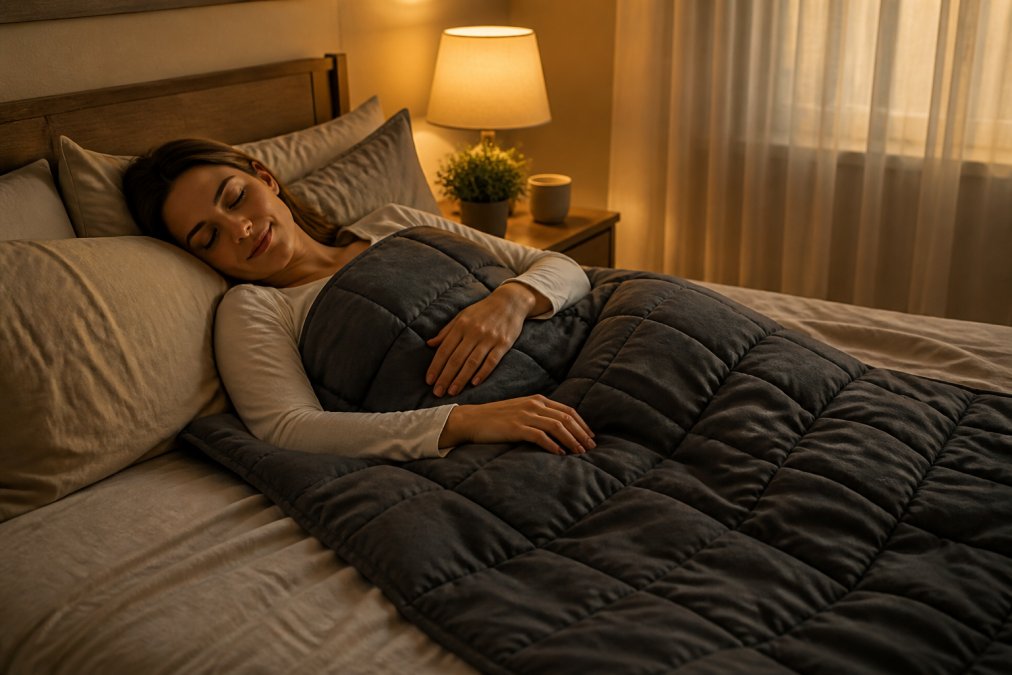
At thewellbeingshop.com, we provide a curated selection of wellness tools designed to help you cultivate a healthier, more intentional lifestyle. Weighted blankets can contribute to this by triggering physiological responses that move you from high alert into genuine calm. Research shows that deep pressure activates your parasympathetic nervous system, your body's "rest and digest" mode, working at a sensory level rather than just a cognitive one.
The Science Behind Deep Pressure Stimulation
When pressure is applied evenly across your body, it sends signals to your nervous system that you're safe. This activates a neurological response that can reduce cortisol production and increase serotonin output, the neurotransmitter responsible for mood regulation (peer-reviewed research). Your autonomic arousal can decrease, your heart rate can slow, and your muscles can relax, measurable physiological change triggered by tactile input.
The glass beads or plastic pellets inside distribute weight uniformly rather than concentrating it in one area. This even distribution creates therapeutic deep pressure stimulation; uneven weight won't deliver the same benefits.
How Deep Pressure Affects Your Nervous System
Your nervous system operates in two primary modes: sympathetic (fight-or-flight) and parasympathetic (rest-and-digest). Anxiety can lock you in sympathetic mode. Deep pressure stimulation is one of the ways to shift back into parasympathetic dominance.
When you lie under a weighted blanket, the pressure triggers mechanoreceptors, specialized nerve endings that detect touch and pressure. These receptors send calming signals directly to your brain's emotional regulation and stress response centers. Your body interprets the sensation as safe containment. Over time, repeated use can support your nervous system in accessing calm more easily, even without the blanket.
Weighted Blanket Weight Guide: Choosing the Right Size
The most common mistake is choosing a blanket that's too heavy. One that's too heavy feels restrictive and anxiety-inducing; one too light won't deliver enough deep pressure stimulation to trigger therapeutic response.
The 10% Body Weight Rule
The standard recommendation is to choose a blanket weighing approximately 10% of your body weight. If you weigh 150 pounds, aim for 15 pounds; at 200 pounds, choose 20 pounds. This ratio can deliver optimal deep pressure stimulation without feeling oppressive.
However, this is a starting point. Some people find 8% of their body weight feels perfect, while others prefer 12%. The blanket should feel like a gentle, sustained hug, not a weighted anchor.
Adjusting Weight Based on Personal Comfort
Your personal comfort matters more than any formula. Start with the 10% recommendation, but be prepared to adjust based on how your body responds during the first week.
If a blanket feels too heavy, you might experience anxiety rather than relief. If too light, you won't feel the grounding effect. Some people benefit from starting at 8% and moving up after a week or two. Temperature sensitivity also influences comfort, if your blanket traps too much heat, you'll feel uncomfortable rather than calm. Look for breathable fabrics and consider the season.
Step-by-Step: Getting Started With Your Weighted Blanket
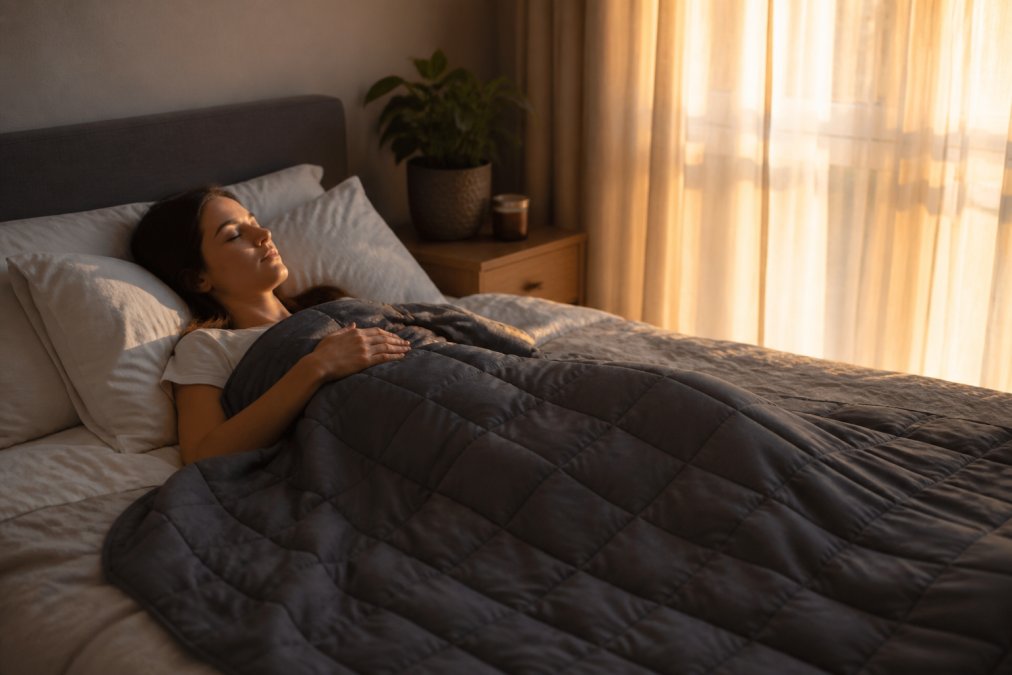
Using a weighted blanket effectively requires proper setup, initial sessions, and integration into your routine.
Step 1: Set Up Your Sleep Environment
Ensure your room is dark, light exposure can trigger alertness. Close curtains completely or use blackout curtains. Keep your room cool, ideally between 60-67 degrees Fahrenheit, since weighted blankets trap heat (peer-reviewed research). Remove distractions like your phone to create an environment where your focus is solely on the blanket's sensation and your breathing.
Step 2: Begin With Short Sessions
Don't expect to sleep eight hours under your blanket on night one. Start with 20-30 minute daytime sessions. Lie down, focus on your breathing, and notice how your body feels. This trains your nervous system to recognize the blanket as a safe, calming tool before attempting sleep. Many people report noticeably better sleep and reduced nighttime anxiety after a few nights.
Step 3: Adjust Placement and Position
The blanket should cover your torso and legs, but not your head, covering your head can trigger claustrophobia. Drape it so it sits across your chest, abdomen, and down to your feet with even weight distribution and no bunching. Some prefer the blanket over a fitted sheet; others prefer direct contact. Experiment during your first week to find what works best.
Step 4: Integrate Into Your Nightly Routine
Use your weighted blanket at the same time each night. This regularity trains your body to expect the calming signal. Pair it with other calming rituals: dim lights 30 minutes before bed, soft background sounds or silence. Consistent use can help your body associate the blanket with the shift into calm.
How Long to Use a Weighted Blanket for Best Results
Building Tolerance During the First Week
Your body needs time to adjust to deep pressure stimulation. Night one might feel awkward, but many people report the blanket feels comforting rather than strange after a few nights. Consistent use can help you fall asleep faster and experience fewer nighttime anxiety episodes.
If you don't feel improvement by day seven, don't abandon the practice. Some people need two to three weeks for their nervous system to fully adjust. Consistency matters more than speed.
Optimal Duration for Anxiety Management
Most people experience sustained anxiety relief with nightly use. Use your weighted blanket for at least 4-6 weeks before evaluating its effectiveness. This timeframe allows your nervous system to fully integrate the calming response. For ongoing anxiety management, nightly use is often ideal.
Weighted Blanket Safety Precautions and Who Should Avoid Them
A weighted blanket is not appropriate for everyone. Understanding contraindications prevents harm.
Medical Conditions and Contraindications
If you have respiratory issues, asthma, sleep apnea, or chronic obstructive pulmonary disease, consult your doctor before using a weighted blanket. The added weight on your chest can restrict breathing. Similarly, those with circulatory problems, blood clots, or conditions affecting blood flow should get medical clearance first.
Claustrophobia is another consideration, some experience panic rather than calm. Severe skin conditions like eczema or dermatitis can be aggravated by constant pressure and friction.
Age and Developmental Considerations
Children under 3 should never use weighted blankets due to suffocation risk (aap.org). For ages 3-7, use blankets designed for kids (typically 3-5 pounds) under supervision. Older children and teenagers can use age-appropriate blankets at roughly 10% of body weight. Elderly individuals with mobility issues should ensure they can safely manage the blanket's weight independently.
Combining Weighted Blankets With Other Anxiety Management Techniques
A weighted blanket is most effective when integrated into a comprehensive anxiety management approach.
Pairing With Mindfulness and Meditation
The sensory grounding a weighted blanket provides pairs naturally with mindfulness practice. Use your blanket during meditation, lie down, cover yourself, and focus on the sensation of deep pressure and your breathing. This combination of tactile input and mental focus can create a powerful state of nervous system regulation.
Supporting Your Practice With Supplements
Weighted blankets can work well when your body has nutritional support to produce calming neurotransmitters. Magnesium is central to this process. Magnesium glycinate supports nervous system regulation and helps your body produce serotonin. Taking it in the evening, about an hour before bed, can prime your nervous system to respond more effectively to deep pressure stimulation.
thewellbeingshop.com offers Magnesium Glycinate - 240 Capsules High Absorption Supplement at 400mg per capsule, a high-absorption supplement designed for gentle, effective support. Using this supplement alongside your weighted blanket practice can contribute to a more complete anxiety management system.
Common Mistakes to Avoid When Using Weighted Blankets
Choosing the wrong weight. Too heavy causes anxiety; too light delivers no benefit. Stick to the 10% rule and adjust based on actual comfort.
Giving up too early. Your nervous system needs time to adjust. Commit to at least one week before evaluating effectiveness.
Using the blanket in a warm room. Heat plus weight equals discomfort and increased anxiety. Keep your bedroom cool.
Covering your head. This can trigger claustrophobia and defeats the purpose.
Inconsistent use. Nightly use trains your nervous system; sporadic use doesn't create therapeutic benefit.
Ignoring contraindications. Consult a doctor if you have respiratory or circulation issues.
Expecting instant results. Anxiety relief builds gradually as your nervous system learns to access calm more readily.
Anxiety management requires tools that address your nervous system at a fundamental level. A weighted blanket delivers deep pressure stimulation that activates your parasympathetic nervous system. When combined with consistent nightly use, proper setup, and complementary practices like meditation and targeted supplementation, weighted blankets can become a cornerstone of effective anxiety relief. Get started with a blanket matched to your body weight, commit to nightly use for at least six weeks, and experience how deep pressure stimulation can support your relationship with anxiety.
Frequently Asked Questions
Q: Do weighted blankets actually work for anxiety?
A: Weighted blankets work through deep pressure stimulation, which activates the parasympathetic nervous system and can reduce cortisol levels. Research shows they help many people experience calmer sleep and lower nighttime anxiety. However, effectiveness varies by individual, some experience relief within days, while others need several weeks of consistent use. They work best as part of a broader anxiety management approach, not as a standalone treatment.
Q: How heavy of a weighted blanket should I get for anxiety?
A: The standard recommendation is 10% of your body weight. For example, if you weigh 150 pounds, choose a 15-pound blanket. Some people prefer slightly lighter (8%) or heavier (12%) weights based on sensory preference. Start with the 10% guideline, then adjust after a few weeks if you want more or less pressure. Avoid blankets heavier than 12% of your body weight unless recommended by a healthcare provider.
Q: How long should you use a weighted blanket for anxiety relief?
A: Most people benefit from using their weighted blanket every night during their sleep routine. Start with 20-30 minute sessions if you're new to weighted blankets, then gradually increase to full-night use over 1-2 weeks as your body adjusts. For anxiety relief, consistent nightly use typically shows the best results within 2-4 weeks. You can also use weighted blankets during the day while relaxing or meditating if anxiety strikes during daytime hours.
Q: Who should not use a weighted blanket for anxiety?
A: Avoid weighted blankets if you have respiratory conditions like sleep apnea, claustrophobia, circulation problems, or mobility limitations. Children under 2 years old should not use them due to suffocation risk. Pregnant people should consult their doctor before use. If you have sensory processing disorders, start with a lighter weight and monitor your response closely. Always check with your healthcare provider if you have chronic health conditions before introducing a weighted blanket into your routine.
This article was written using GrandRanker