
7 Best Essential Oils for Deep Relaxation and Sleep
Table of Contents
- Why Essential Oils for Sleep Work: The Science of Calm
- How to Use Essential Oils for Sleep: Diffuser, Topical, and Bath Methods
- Safety Precautions and Dilution Guidelines
- Choosing High-Quality Essential Oils
- 1. Lavender: The Most Researched Essential Oil for Sleep
- 2. Cedarwood: Grounding Support for Deeper Rest
- 3. Roman Chamomile: Gentle Nervous System Regulation
- 4. Bergamot: Anxiolytic Effects Without the Sedation
- 5. Frankincense: Calming Agent for a Racing Mind
- 6. Vetiver: The Heavyweight for Insomnia Relief
- 7. Ylang Ylang: Floral Support for Restful Sleep
- Essential Oils to Avoid Before Bed
- Best Essential Oil Diffuser Blends for Sleep
- Building a Complete Nighttime Routine
- Frequently Asked Questions
Last Updated: September 13, 2026
Why Essential Oils for Sleep Work: The Science of Calm
Essential oils for sleep work because scent molecules travel straight to the brain's emotional control center, bypassing conscious thought. Inhaled compounds bind to receptors in the olfactory bulb, which sits directly above the limbic system, which is why a single breath of lavender can shift your nervous system before you've formed a coherent thought (peer-reviewed research).
The limbic system regulates emotion, memory, and arousal, and governs the hypothalamus, which manages the cortisol and melatonin rhythms that determine whether you fall asleep easily. This is the mechanism behind aromatherapy for sleep: certain plant compounds nudge the nervous system toward parasympathetic activity, lowering arousal and shortening sleep latency.
At thewellbeingshop.com, we offer products that can be integrated into a broader nighttime routine. The oils below are often recommended for relaxation, each with a distinct profile and use case.
How to Use Essential Oils for Sleep: Diffuser, Topical, and Bath Methods
The three main ways to use essential oils for sleep are inhalation through a diffuser, topical application with a carrier oil, and bath or shower methods. Each delivers the aroma differently, with trade-offs worth knowing.
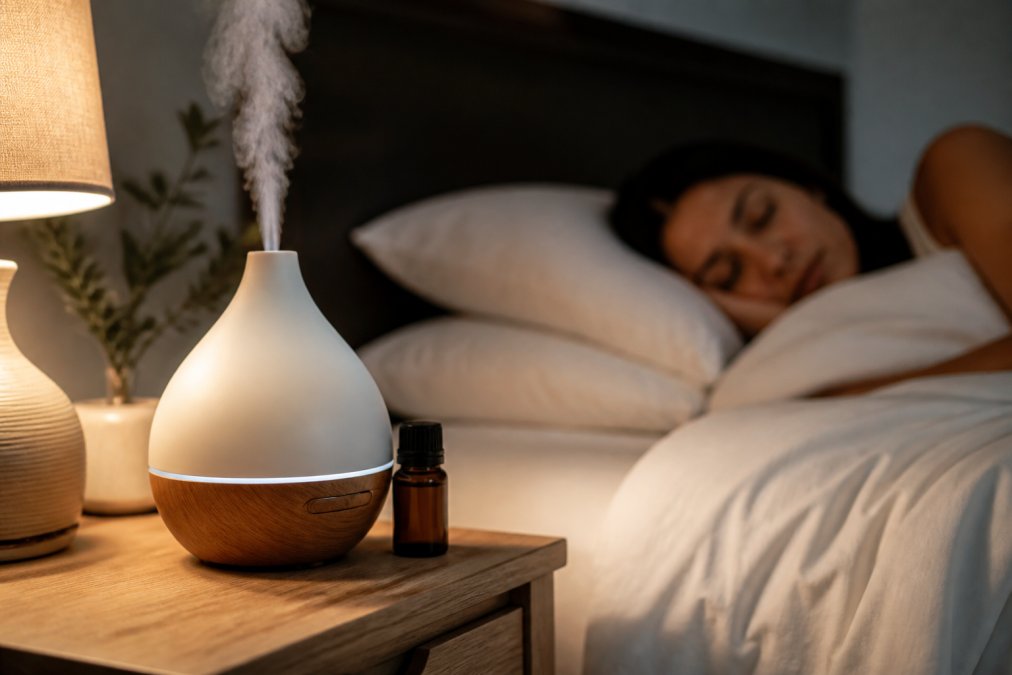
Diffusion is the simplest. Add a few drops to water in an ultrasonic diffuser and run it for 30 to 60 minutes before bed. The scent fills the room without touching your skin, which matters if you're sensitive to concentrated oils.
Topical application works faster for some people because the oil absorbs through the skin while you also inhale it. Always dilute first: 2 to 3 drops per teaspoon of carrier oil such as jojoba, sweet almond, or fractionated coconut (naha.org). Apply to wrists, temples, or the soles of the feet.
A bath combines both routes. Add diluted oil to a tablespoon of carrier oil or unscented bath salts before pouring it into warm water, since oil alone floats and can irritate skin. Soak 15 to 20 minutes.
Safety Precautions and Dilution Guidelines
Safety comes down to dilution, patch testing, and knowing which oils to avoid. Essential oils are concentrated plant chemistry, and the same compounds that make them effective can cause irritation or photosensitivity in the wrong dose or person.
Follow these baseline rules:
- Dilute before skin contact. A 1 to 2 percent dilution is standard for adults (naha.org). That's roughly 6 to 12 drops per ounce of carrier oil.
- Patch test first. Apply a small diluted amount to your inner forearm and wait 24 hours before broader use.
- Respect photosensitivity. Citrus oils such as bergamot can make skin more reactive to sunlight. Keep treated skin covered or apply at night only.
- Skip ingestion. Unless a qualified practitioner directs otherwise, do not swallow essential oils.
- Store away from heat and light. Oxidation changes the chemistry and can increase irritation risk.
People who are pregnant, nursing, managing epilepsy, or taking medication should talk to a healthcare provider before using any essential oil. Children and pets metabolize these compounds differently, so consult a professional before diffusing around them.
Choosing High-Quality Essential Oils
Quality determines whether an oil helps or just smells pleasant. Two bottles labeled "lavender" can differ enormously depending on species, growing conditions, and extraction method.
Look for these markers on the label:
- Botanical name. "Lavandula angustifolia" tells you the exact species. "Lavender fragrance" tells you nothing.
- Extraction method. Steam distillation and cold-pressed are the standards for pure essential oil. Solvent-extracted absolutes are different products.
- Origin. Reputable brands state the country or region where the plant was grown.
- No "fragrance" on the ingredient list. That term can hide synthetic additives.
"Therapeutic grade" is a marketing term, not a regulated standard, no independent body certifies it. Third-party testing reports, batch numbers, and transparent sourcing tell you far more about what's in the bottle.
If sustainability matters, look for brands that publish sourcing information and support the farming communities that grow their plants.
1. Lavender: The Most Researched Essential Oil for Sleep
Lavender is the default recommendation for a reason: it's the most studied oil in aromatherapy, and its primary compounds, linalool and linalyl acetate, are associated with sedative and anxiolytic effects. If you try one oil, start here.
The scent is floral, slightly herbaceous, and gentle enough for most people. Diffuse it 30 minutes before bed, or dilute a few drops with a carrier oil and apply to your wrists. It blends well with cedarwood, bergamot, and Roman chamomile.
Where it falls short: lavender is so common that low-quality versions flood the market. A cheap bottle may smell sharp or soapy rather than soft and rounded. Buy from a source that lists the botanical name and origin.
2. Cedarwood: Grounding Support for Deeper Rest
Cedarwood is the oil for people whose minds won't stop working. Its warm, woody scent is grounding and pairs well with the physiological shift toward rest.
The compound cedrol appears to support nervous system regulation, which is why cedarwood shows up in so many sleep and meditation formulas. It's also one of the more affordable oils.
Cedarwood is heavier than floral oils, so a little goes a long way. Two or three drops in a diffuser is usually plenty. It layers beautifully under lavender or bergamot.
3. Roman Chamomile: Gentle Nervous System Regulation
Roman chamomile is the gentlest oil here, a good starting point for anyone sensitive to stronger scents. Its sweet, apple-like aroma comes from compounds traditionally used to calm an overactive nervous system.
Diffuse it in the evening, or add a diluted drop to a warm bath. Because it's mild, Roman chamomile is often recommended for people who find lavender too intense or too floral.
The trade-off is cost. True Roman chamomile takes a large amount of plant material to produce a small amount of oil, so authentic bottles are rarely cheap. If the price seems unusually low, check the label carefully.
4. Bergamot: Anxiolytic Effects Without the Sedation
Bergamot does something the heavier oils don't: it lifts mood while calming the nervous system. Its citrus-floral scent has documented anxiolytic effects, reducing anxiety without the grogginess sedating oils can leave behind.
That makes bergamot useful if your sleep problem is really a stress problem. Diffuse it in the hour before bed while you wind down, and the shift in mood often makes it easier to transition into sleep. Combining this citrus-forward aromatherapy with the calming properties found in hemp products for sleep can create a more comprehensive nightly ritual for those struggling to quiet a restless mind.
One caution: bergamot is phototoxic. If you apply it topically, keep that skin out of direct sun for 12 to 24 hours. For nighttime use this is rarely an issue, but it's worth knowing if you also use it during the day.
5. Frankincense: Calming Agent for a Racing Mind
Frankincense has been used in meditation for thousands of years, and its resinous, slightly spicy scent still earns its place in a modern nighttime routine. It's a calming agent that slows mental chatter rather than simply sedating.
The oil is distilled from tree resin, which gives it a depth that floral oils lack. It blends well with cedarwood, vetiver, and lavender for a blend that feels grounding without being heavy.
Frankincense is one of the pricier oils because of how it's harvested, and quality varies widely. Look for Boswellia species named on the label.
6. Vetiver: The Heavyweight for Insomnia Relief
Vetiver is the heaviest oil here, in scent and effect. Its deep, earthy, smoky aroma is traditionally used for insomnia relief when lighter oils aren't enough.
The oil comes from the roots of a grass, and it's thick enough that you may need to warm the bottle slightly to get a drop out. A single drop in a diffuser blend is usually sufficient; more can overwhelm the room.
Vetiver pairs exceptionally well with lavender and bergamot. If you've tried floral oils and found them too light, this is the one to test next.
7. Ylang Ylang: Floral Support for Restful Sleep
Ylang ylang is the most intensely floral oil here, with a sweet, heady scent that works best in small doses. It's traditionally used to support restful sleep and ease the tension of a long day.
The oil contains compounds associated with calming and mood-lifting effects, and it's a common ingredient in nighttime blends. Because it's so potent, one or two drops is typically enough. Too much can trigger headaches in sensitive people.
Ylang ylang blends well with bergamot, lavender, and cedarwood. It's a good choice if you want your bedroom to smell pleasant as well as calming, since the floral profile is more traditionally "perfume-like" than the woodier oils.
Essential Oils to Avoid Before Bed
Not every oil belongs in your nighttime routine. Some are stimulating and can work against everything else you're doing.
- Peppermint and eucalyptus. Both are invigorating and can increase alertness, which is the opposite of what you want at bedtime.
- Rosemary. Traditionally used for focus and memory, it's better suited to morning.
- Citrus oils other than bergamot. Lemon, grapefruit, and sweet orange tend to be uplifting rather than settling.
- Cinnamon, clove, and other hot oils. These can irritate skin and airways even when diluted, and their strong scent is more stimulating than calming.
If you're unsure whether an oil is calming or stimulating, smell it and notice how your body responds. That instinctive reaction is often more reliable than any list.
Best Essential Oil Diffuser Blends for Sleep
Simple single-oil diffusion works, but blends of the 7 best essential oils for deep relaxation and sleep often outperform single oils because the compounds interact. Here are three combinations worth trying:
- Deep Rest Blend: 3 drops lavender, 2 drops cedarwood, 1 drop vetiver. Diffuse for 45 minutes before bed.
- Quiet Mind Blend: 3 drops bergamot, 2 drops frankincense, 1 drop Roman chamomile. Best for stress-driven sleeplessness.
- Soft Landing Blend: 3 drops lavender, 2 drops ylang ylang, 1 drop bergamot. Floral and gentle, good for winding down after a long day.
Add the drops to your diffuser's water reservoir, not directly onto the heating element, and clean the reservoir between blends so old oils don't muddy the scent.
Building a Complete Nighttime Routine
Scent is one lever among several. Sleep hygiene, a consistent schedule, and a dark, cool room matter as much as what's in your diffuser. Think of essential oils as the signal that the day is ending, and the rest of your routine as the conditions that let that signal work.
A magnesium supplement can support the muscle relaxation side of winding down. Our Magnesium Glycinate is chelated for better absorption and gentle on the stomach, available in a 240-capsule bottle for $19.95.
For the aromatic side, our Leleshwa Meditative Essence offers a soothing natural fragrance built for meditation and relaxation practices, priced at $15.05. If you prefer candlelight to a diffuser, the Forest State of Mind Candle blends cedarwood, sandalwood, and fir needle notes in a soy wax candle with a 30 to 50 hour burn time, priced at $29.99.
A supportive seat also helps if you meditate before bed. The Premium Buckwheat Meditation Cushion adapts to your body and promotes spinal alignment, priced at $37.90.
Frequently Asked Questions
What is the strongest essential oil for sleep?
Lavender has the most research behind it for sleep, but vetiver is often considered the strongest for deep sedation. For most people, lavender is the best starting point because it is well-tolerated and widely studied. If lavender alone does not work, try vetiver or a blend of lavender and cedarwood.
Which essential oil is good for deep sleep?
Cedarwood and vetiver are both excellent for deep sleep. Cedarwood has sedative properties that slow the nervous system, while vetiver is deeply grounding and often used for insomnia relief. Roman chamomile is also often used to support deep sleep. Many people find that blending cedarwood with lavender creates a more restful sleep than either oil alone.
How do you use essential oils for sleep safely?
Always dilute essential oils with a carrier oil before applying to skin. A safe dilution ratio is 2-3 drops of essential oil per teaspoon of carrier oil. For diffusion, run your diffuser for 30-60 minutes before bed, then turn it off. Do a patch test on your inner arm before using a new oil. Avoid photosensitive oils like bergamot before sun exposure. If you are pregnant, nursing, or have a health condition, consult your doctor first.
What is the best essential oil combo for sleep?
The classic combination is lavender and cedarwood. Lavender promotes relaxation while cedarwood deepens the sedative effect. Another effective blend is bergamot, frankincense, and vetiver: bergamot calms anxiety, frankincense quiets a racing mind, and vetiver grounds the body. For a diffuser blend, try 3 drops lavender, 2 drops cedarwood, and 1 drop vetiver.
Are there any side effects to using essential oils for sleep?
Yes. Undiluted oils can cause skin irritation or burns. Some oils like bergamot cause photosensitivity, making skin more sensitive to UV rays. Inhaling too much oil can lead to headaches or nausea. People with asthma should be cautious with diffusers. If you experience dizziness, skin redness, or breathing issues, stop use immediately. Always follow safety precautions for essential oils and consult a healthcare provider if symptoms persist.