


 Link label

What Are the 7 Pillars of Wellness? A 2026 Guide
Table of Contents
- What Are the 7 Pillars of Wellness? A Complete Breakdown
- Pillar 1: Physical Wellness
- Pillar 2: Emotional Wellness
-
Pillars 3-7: Mental, Social, Spiritual, Environmental, and Financial Wellness
- Pillar 3: Mental Wellness
- Pillar 4: Social Wellness
- Pillar 5: Spiritual Wellness
- Pillar 6: Environmental Wellness
- Pillar 7: Financial Wellness
- How the Common Seven-Pillar Frameworks Differ
- A Quick Self-Assessment and How to Track Progress
- When Self-Care Is Not Enough
- Accessibility, Culture, and Life Stage
- Building a Daily Wellness Routine That Sticks
- Tools and Products for Your Home Wellness Practice
- Conclusion: Start With One Pillar, Build From There
- Frequently Asked Questions
Last Updated: October 16, 2026
What Are the 7 Pillars of Wellness? A Complete Breakdown
The 7 pillars of wellness are physical, emotional, mental, social, spiritual, environmental, and financial wellness: seven connected areas that shape your quality of life. This guide from thewellbeingshop.com breaks down each pillar and how to build a daily routine that lasts.
Wellness is not a single habit or a month-long challenge. It is the sum of small, repeated choices across all seven areas: miss one and the others quietly suffer.
Most guides treat the pillars as a checklist to perfect. In practice, you rotate your attention: some weeks you sleep more, some weeks you reconnect with friends, some weeks you sort out your budget. The goal is balance over months, not perfection in a day.
How the Pillars Differ From the Seven Dimensions of Wellness
The seven dimensions of wellness is a broader academic framework describing wellness as a web of interdependent life areas, while the 7 pillars of wellness is a simpler structure built around daily habits. The dimensions model, popularized by university wellness programs, typically includes occupational and cultural wellness; the pillars model folds those into adjacent categories.
A pillar framework gives you something to schedule; a dimensions framework gives you something to reflect on.
Pillar 1: Physical Wellness
Physical wellness is your body's ability to move, recover, and function day to day, built through movement, sleep, and nutrition. It is the pillar most people start with because results show up fast: better energy, steadier mood, less stiffness.
Movement, Sleep, and Nutrition: The Three Levers
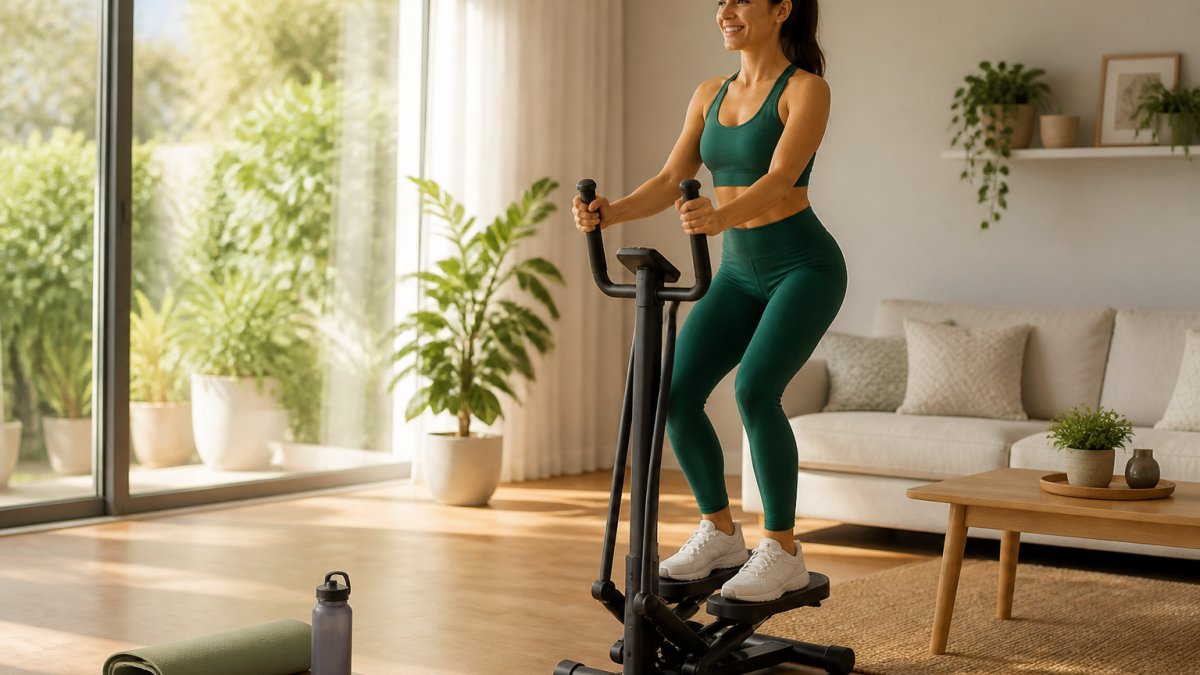
Movement is the lever you control most directly. You do not need a gym membership or a two-hour block. Short, consistent sessions beat occasional long ones. A hydraulic stepper machine gives you adjustable resistance and a compact footprint for indoor cardio, which matters when your living room doubles as your office.
Sleep is the lever people skip: most adults need seven to nine hours, and no supplement replaces a consistent bedtime. Nutrition is the third lever, regular meals, enough protein, and water do more than any "superfood."
Pillar 2: Emotional Wellness
Emotional wellness is your ability to notice, understand, and manage your feelings without letting them run your decisions. It is not about staying positive. It is about staying steady.
Stress Management and Resilience in Practice
Resilience is built through small, repeatable practices: naming what you feel, breathing slowly for a few minutes, and talking to someone you trust. A common mistake is waiting until you are overwhelmed to try any of it. The practices work best when they are boring and routine.
Stress management also means knowing your limits. If your sleep, appetite, or mood have changed for weeks, talk to a healthcare professional. Self-care is a support, not a substitute for care.
Pillars 3-7: Mental, Social, Spiritual, Environmental, and Financial Wellness
The remaining five pillars round out the framework, and each connects back to how you feel day to day. Each gets the same treatment: what it is, the mechanism, one concrete action, and the trade-off that makes it hard.
Pillar 3: Mental Wellness
Mental wellness is your capacity to learn, focus, solve problems, and stay curious. It is distinct from emotional wellness, which is about managing feelings; mental wellness is about the machinery of thinking. Your brain strengthens what you repeatedly ask it to do, so passive scrolling weakens sustained attention while active learning strengthens it.
- Action: Read or study something outside your work for 15 minutes a day.
- Trade-off: Deep focus feels worse before it feels better. The first week of a reading habit usually feels like wasted time.
- Watch for: Persistent brain fog, memory changes, or difficulty concentrating for weeks is a reason to talk to a healthcare professional, not a reason to try harder.
Pillar 4: Social Wellness
Social wellness is your sense of connection and belonging. The mechanism is not the number of contacts you have but the frequency of meaningful exchange, people with large networks often feel isolated because their interactions are transactional.
- Action: Schedule one real conversation, by phone or in person, each week.
- Trade-off: Social time competes directly with the other six pillars for the same hours. It is usually the first thing dropped when work gets busy, and the last thing restored.
- Watch for: Withdrawal from people you used to enjoy is a signal worth taking seriously.
Pillar 5: Spiritual Wellness
Spiritual wellness is your sense of purpose, values, and meaning. It does not require religious affiliation. A clear sense of what matters gives you a filter for decisions, reducing the friction of saying yes to everything.
- Action: Spend ten quiet minutes reflecting on what matters to you this month.
- Trade-off: Reflection produces no visible output, so it feels optional until you notice you have been busy and directionless for a quarter.
- Watch for: A sudden loss of meaning or persistent hopelessness is a reason to seek professional support.
Pillar 6: Environmental Wellness
Environmental wellness is the relationship between your surroundings and your state of mind. Clutter, poor light, and stale air keep your nervous system in a low-level alert state, draining energy the other pillars depend on.
- Action: Clear one surface in your home and open a window for fresh air.
- Trade-off: Environmental fixes are cheap but easy to postpone because they never feel urgent.
- Watch for: If your home or workspace feels unsafe, that is a safety issue, not a wellness optimization.
Pillar 7: Financial Wellness
Financial wellness is your sense of security about money. Financial uncertainty drives sleep disruption and irritability, which then undermines physical and emotional wellness. The goal is not wealth; it is knowing where you stand.
- Action: Track your spending for one week without changing anything.
- Trade-off: Tracking often surfaces uncomfortable numbers. That discomfort is the point, it is the baseline you need before any change is meaningful.
- Watch for: If money stress is affecting your sleep, appetite, or relationships for weeks, a nonprofit credit counselor or a financial therapist is a reasonable next step.
How the Common Seven-Pillar Frameworks Differ
There is no single official set of seven pillars. Knowing which framework you are reading helps you decide whether it fits your life.
| Framework | Pillars Included | Best For |
|---|---|---|
| Habit-based pillars (this guide) | Physical, emotional, mental, social, spiritual, environmental, financial | People who want something to schedule |
| Dimensions of wellness (common in university wellness programs) | Physical, emotional, intellectual, social, spiritual, occupational, environmental | People reflecting on life roles and identity |
| Financial-inclusive models | Adds financial wellness to the dimensions list, sometimes dropping occupational | People whose main stressor is money |
| Faith- or values-centered models | Substitutes spiritual for religious or vocational pillars | People whose meaning comes from a specific tradition |
None of these is clinically validated as a diagnostic tool; they are organizing frameworks, not medical models. A framework is useful if it helps you notice a neglected area and act on it, and useless if it becomes another checklist to fail.
A Quick Self-Assessment and How to Track Progress
Wellness has no universal score, and any guide that gives you a single number is oversimplifying. Establish a baseline and watch for direction of change.
Rate each pillar from 1 to 5, where 1 means "this is actively causing me problems" and 5 means "this is steady right now."
- Physical, energy, sleep, movement
- Emotional, mood stability, stress recovery
- Mental, focus, curiosity, learning
- Social, connection, support
- Spiritual, purpose, values clarity
- Environmental, home and workspace calm
- Financial, money stress, awareness
Your lowest score is not automatically your priority. Ask which low score is most within your control this month: a 2 in financial wellness may take a year to move, while a 2 in environmental wellness may take an afternoon.
Realistic indicators to track over 30 days:
- Physical: Average sleep duration and how many days you moved for at least 10 minutes.
- Emotional: How often you used a stress practice before you felt overwhelmed, not after.
- Mental: Number of days you read or studied for 15 minutes.
- Social: Number of real conversations per week.
- Spiritual: Whether you can state what matters to you this month in one sentence.
- Environmental: Whether one surface stays clear for a week.
- Financial: Whether you logged spending on at least five of seven days.
Re-rate the same seven pillars after 30 days. The point is not a higher total, but seeing which pillar moved and which one you avoided.
When Self-Care Is Not Enough
A wellness framework is a support structure, not a treatment plan. These signals mean the next step is a qualified professional, not another habit:
- Sleep, appetite, or mood have changed for more than two weeks.
- You have stopped doing things you used to enjoy.
- Physical symptoms are persistent, worsening, or unexplained.
- You are relying on alcohol, substances, or compulsive behavior to get through the day.
- Money stress is affecting your ability to eat, sleep, or work.
In those cases, a primary care physician, licensed mental health provider, or nonprofit credit counselor is the appropriate resource. Wellness practices can continue alongside professional care, but they are not a substitute for it.
Accessibility, Culture, and Life Stage
What is feasible for one person is not feasible for another. A few honest adjustments:
- Disability and chronic illness: Movement may mean physical therapy, seated exercise, or range-of-motion work rather than cardio. The physical pillar still applies; the form changes.
- Caregiving: Time is the binding constraint. Anchor habits to tasks you already do, stretching while a child naps, a phone call during a commute.
- Income: Financial wellness starts with awareness, not investing. Tracking spending costs nothing.
- Culture: Spiritual wellness may be communal and tradition-based rather than solitary reflection. Both count.
- Life stage: A 22-year-old and a 62-year-old will weight the pillars differently. The framework is stable; the priorities are not.
Building a Daily Wellness Routine That Sticks
A daily wellness routine that sticks is short, specific, and tied to something you already do. Routines rarely fail from lack of motivation; they fail because they were too big to survive a busy Tuesday.
What most guides rarely give you is a staged plan that respects the fact that you cannot build seven habits at once. Here is a four-week structure that does.
The Four-Week Staged Plan
Week 1, Baseline only. Do not change anything. Track your current patterns: sleep hours, movement minutes, spending, and how often you talk to someone you care about. The purpose is a baseline, not improvement. Most people are surprised by what the numbers actually show.
Week 2, Add one physical habit. Choose the smallest movement or sleep habit you can repeat daily: five minutes of stretching after coffee, or a consistent bedtime within a 30-minute window. One habit, one pillar.
Week 3, Add one emotional or mental habit. Layer a five-minute breathing or journaling practice onto an existing anchor, or a 15-minute reading block. Do not add a third habit yet.
Week 4, Add one social, spiritual, environmental, or financial habit. Pick the pillar where your Week 1 baseline showed the most strain. One action, repeated.
After four weeks you have three active habits and a baseline for the other four pillars. Launching all seven at once is the most common reason people quit by week two.
The Mechanics of Habit Anchoring
- Anchor each habit to an existing one. After coffee, stretch for three minutes; after lunch, walk for ten. The existing habit is the cue, so you are not relying on memory or willpower.
- Make the first version almost too easy. One set, not three; five minutes, not thirty. The goal in the first two weeks is repetition, not results.
- Track it visibly. A paper calendar with a checkmark beats an app you forget to open.
- Review weekly, not daily. Ask what worked and what you dropped; daily review turns a missed day into a crisis.
- Expect to miss days. Missing one day is normal; missing three in a row is the pattern to catch.
- Change the environment, not just the intention. Put the resistance band where you will see it and move tempting snacks out of arm's reach. Environment beats motivation over a month.
A Simple Weekly Template
| Pillar | Daily Action | Time Needed | Best For |
|---|---|---|---|
| Physical | Short movement session or stepper workout | 10-20 min | Energy and posture |
| Emotional | Breathing or journaling | 5 min | Stress and mood |
| Mental | Reading or focused learning | 15 min | Focus and clarity |
| Social | One real conversation | 10 min | Connection |
| Spiritual | Quiet reflection | 10 min | Purpose |
| Environmental | Tidy one space, open a window | 5 min | Calm and focus |
| Financial | Log spending | 5 min | Peace of mind |
Use the table as a menu, not a schedule. In any given week, you are actively building two or three rows and maintaining the rest. The full table is the destination, not the starting line.
What to Do When the Routine Breaks
It will break. Travel, illness, a heavy work month, or a family crisis can wipe out a routine that took a month to build. The recovery protocol is the same every time:
- Do not try to make up missed days. The debt is not real.
- Restart with the smallest version of one habit, not the full routine.
- Rebuild over one week, not one day.
- Re-check your baseline. Circumstances change, and so should the plan.
Tools and Products for Your Home Wellness Practice
The right tools remove friction, and friction is what kills routines. For physical wellness at home, our picks store easily and work in a small space.
Our hydraulic stepper machine ($655.30) offers adjustable hydraulic resistance, oversized non-slip pedals, and an integrated display that tracks time, speed, calories, distance, and pulse. It is built for indoor cardio and lower-body movement without a gym trip.
For resistance work, the foot pedal resistance band trainer ($92.92) anchors under your foot and adds elastic resistance for arms, shoulders, legs, and core. It is compact, beginner-friendly, and easy to store.
If you want to add strength load, the detachable home gym dumbbell ($160.72) comes in 10kg to 40kg options with a metal and plastic build. For travel or small spaces, the water-filled dumbbell ($16.18) adjusts by how much water you add and packs flat.
For core work, the abdominal roller wheel ($54.45) is made from steel and PU and fits into a home or office routine. And for recovery support, our creatine powder ($56.97) is a 300g powder for adults.
Conclusion: Start With One Pillar, Build From There
The hardest part of wellness is not knowing what to do; it is starting small enough to keep going when life gets busy. Pick the pillar where you feel the most strain, choose a single action from it, and repeat it for two weeks before adding anything else.
At thewellbeingshop.com, we curate fitness equipment, mind-body training tools, and nutritional support designed to make home wellness routines easier to sustain. Our hydraulic stepper, resistance band trainer, and adjustable dumbbells each target a specific part of your physical practice without demanding a full home gym.
Get started with thewellbeingshop.com and build one habit you will still be keeping next year.
Frequently Asked Questions
What are the 7 pillars of wellness?
The 7 pillars of wellness are physical, emotional, mental or intellectual, social, spiritual, environmental, and financial wellness. Each pillar represents a distinct area of life that contributes to overall health and quality of life. Physical wellness covers movement, sleep, and nutrition. Emotional wellness focuses on managing stress and building resilience. Mental wellness supports learning and focus. Social wellness involves meaningful relationships. Spiritual wellness connects to purpose and values. Environmental wellness addresses your surroundings. Financial wellness relates to security and reduced money stress.
How are the seven dimensions of wellness different from the pillars?
The terms are often used interchangeably, but the seven dimensions of wellness typically include occupational or vocational wellness as a distinct category, while many seven-pillar frameworks fold career satisfaction into financial or mental wellness. Both models agree that wellness is interconnected. The main practical difference is emphasis: dimensions frameworks tend to highlight work-life balance and career fulfillment, while pillar frameworks often place more weight on daily habits and self-care routines. Choose whichever model maps better to your current life stage.
Can I focus on one pillar of wellness at a time?
Yes, and it often works better than trying to improve everything at once. Start with the pillar where you feel the most immediate friction, whether that is physical wellness (poor sleep, back pain from sitting) or emotional wellness (chronic stress). Build one small habit for two to three weeks before adding another. Because the pillars interact, progress in one area tends to lift others. Better sleep improves emotional regulation; regular movement reduces financial stress by cutting healthcare costs over time.
How do I create a daily wellness routine that I will actually stick with?
Keep it short and tie each action to something you already do. A workable daily wellness routine might include five minutes of stretching after your morning coffee, a 15-minute walk at lunch, and a two-minute breathing exercise before bed. The key is consistency over intensity. Track your streak on a calendar or phone. If you miss a day, resume the next day rather than abandoning the routine. Small habits compound. Most people see meaningful change within four to six weeks of daily practice.
What equipment helps support physical wellness at home?
Compact, versatile tools tend to get used more than bulky machines. A hydraulic stepper provides adjustable cardio and lower-body movement in a small footprint. Resistance bands with a foot pedal add strength training for arms, legs, and core without heavy weights. An abdominal roller targets core stability. Adjustable dumbbells let you progress as you get stronger. The best choice is the one you will use consistently, so pick equipment that fits your space and your current fitness level.