


 Link label

Best Low-Impact Home Exercise Tools in 2026
Table of Contents
- Best Low-Impact Home Exercise Tools: Quick Comparison
- Elliptical Trainers for Joint Health
- Recumbent Bikes vs. Upright Bikes for Comfort
- Rowing Machines for Full-Body Cardio
- Best Low-Impact Exercise for Bad Knees
- How to Start a Low-Impact Fitness Routine
- Additional Low-Impact Tools for Home Wellness
- How to Choose the Right Low-Impact Equipment
Last Updated: August 6, 2026
Best Low-Impact Home Exercise Tools: Quick Comparison
Finding the right low-impact home exercise tools transforms your fitness routine without stressing your joints. Whether recovering from injury, managing chronic pain, or building sustainable movement habits, the equipment you choose determines whether you'll stick with it.
At thewellbeingshop.com, we understand that low-impact exercise means doing smarter, not less. This guide breaks down the best low-impact home exercise tools available in 2026, with honest assessments of what works and who each option suits.
Quick Picks:
- Best Overall Value: Sunny Health & Fitness SF-E902 Air Walk Trainer, affordable, joint-friendly, and portable
- Best for Comfort: Schwinn 270 Recumbent Bike, lumbar support and 29 programs for effortless extended sessions
- Best Full-Body Option: WaterRower Natural Rowing Machine, engages 84% of muscle mass with zero joint impact
- Best for Small Spaces: Stamina InMotion E1000 Elliptical Trainer, works seated or standing, fits under a desk
| Tool | Starting Price | Best For | Key Advantage |
|---|---|---|---|
| Sunny Health & Fitness SF-E902 | $95.97-$146.99 | Budget-conscious beginners | Compact, full-body, folding design |
| Stamina InMotion E1000 | $119.99-$146.99 | Desk-based movement | Portable, quiet, dual-position use |
| Schwinn 270 Recumbent Bike | $649-$799.99 | Back support seekers | 29 programs, lumbar support, app sync |
| Peloton Bike+ | $2,495 | Class-motivated cyclists | Rotating screen, auto-resistance, live classes |
| WaterRower Natural | $1,095 | Full-body strength | Smooth resistance, aesthetic design, app integration |
| TRX All-in-One Suspension | $135-$239.95 | Minimal-space athletes | Portable, 300+ exercises, bodyweight strength |
| Gaiam Classic Balance Ball Chair | $69.98 | Desk workers | Core engagement during sitting, posture support |
Elliptical Trainers for Joint Health
Elliptical trainers deliver cardiovascular benefits without the joint stress of running. The fluid motion protects knees and hips while building aerobic capacity. Unlike treadmills, ellipticals distribute force evenly across a smooth arc, making them ideal for anyone with joint concerns or those recovering from injury.
A quality elliptical maintains consistent resistance throughout the full range of motion, preventing jolts that aggravate joints. Your feet stay planted with no pounding or shock transmission up your legs. This is why orthopedic specialists often recommend ellipticals for rehabilitation.
Sunny Health & Fitness SF-E902 Air Walk Trainer
For under $150, this delivers a legitimate low-impact cardio tool. The air-walking motion combines arm and leg engagement, working your core, shoulders, and legs simultaneously. The compact footprint folds for storage and weighs around 50 pounds.
The LCD monitor tracks time, strides, and calories. What you're trading: no programmed workouts, no heart rate monitor, lower weight capacity than commercial machines. If you're under 250 pounds and want straightforward cardio, these limitations don't matter.
Stamina InMotion E1000 Elliptical Trainer
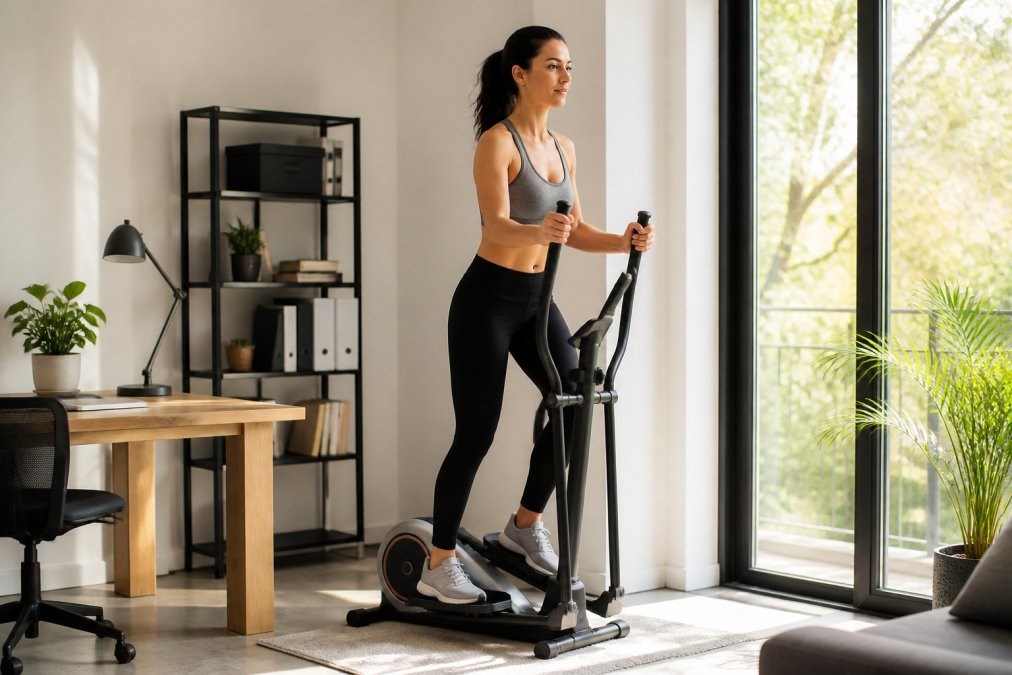
This machine redefines "compact." At 25 pounds, it's genuinely portable and designed to fit under a desk. The seated or standing flexibility is unusual: sit down for low-intensity cardio while working, or stand up for full-body engagement.
The electronic monitor tracks strides, time, and calories with 8 resistance levels. Quiet operation matters in shared spaces. The main limitation: compressed stride length makes it uncomfortable for people over 6 feet tall, and there's no heart rate monitor.
Recumbent Bikes vs. Upright Bikes for Comfort
The recumbent position changes everything. Your back is supported, legs extend in front, and weight distributes across a larger surface. This is biomechanically smarter for people with lower back pain or knee issues.
Upright bikes mimic outdoor cycling with more core engagement, but create more strain on your lower back and pressure on sit bones. For most people starting low-impact routines, recumbent wins because you sustain longer sessions without fighting discomfort.
Schwinn 270 Recumbent Bike
This recumbent doesn't feel like a compromise. The ventilated, contoured seat has lumbar support that keeps your lower back neutral. The 29 built-in programs range from steady-state cardio to interval training. The eddy current resistance system has 25 levels, providing enough range to stay challenged as you progress.
The Schwinn DualTrack LCD displays 13 metrics including heart rate, calories, distance, and time. Bluetooth connectivity syncs to MyFitnessPal and other apps. Assembly takes about an hour with clear instructions.
The display isn't interactive like premium models, so you're not getting live classes. But if you want a solid, reliable machine that supports your back, this delivers.
Peloton Bike+
This combines recumbent biking with premium connectivity. The 23.8-inch rotating screen flips between cycling classes and floor-based workouts, strength training, stretching, and yoga. Auto-Follow adjusts resistance automatically as instructors cue changes.
Apple GymKit integration pairs with your Apple Watch. The 2.2-channel stereo system delivers clear audio. The rotating screen means you're not locked into cycling.
The cost is substantial and requires an All-Access Membership for most features. You're paying for the ecosystem: live classes, on-demand content, and community. If you're motivated by live instruction and accountability, this investment pays off.

Rowing Machines for Full-Body Cardio
Rowing engages 84% of your muscle mass in a single, low-impact motion. Your legs drive power, your core stabilizes, and your back and arms pull through. It's rare to find a machine delivering full-body conditioning without impact.
Poor form transmits stress to your lower back instead of distributing it through your legs. Spend time learning the sequence: legs first, then core, then arms. Done right, rowing is joint-friendly.
The WaterRower Natural stands apart because water resistance is self-regulating. Push harder and resistance increases proportionally. This natural feedback loop makes proper form easier to maintain.
Water rowers provide consistent, smooth resistance that forces control throughout each stroke. Air rowers create momentum that can mask poor form. Magnetic rowers are quiet but feel less connected.
The WaterRower Natural delivers smooth, quiet, joint-friendly workouts. Water resistance is self-regulated, and the S4 Performance Monitor tracks split times, distance, and power output. Bluetooth connectivity syncs to rowing apps for structured training.
The handcrafted ash wood design is aesthetically distinctive and stores upright to save space. The fluid motion rewards proper technique. The trade-off: it's expensive and requires occasional maintenance. But if rowing is your primary cardio, this machine rewards proper form.
Best Low-Impact Exercise for Bad Knees
Bad knees eliminate running and jumping but not fitness. Recumbent bikes are ideal because your knees bend and extend in a controlled arc without supporting your body weight. Ellipticals work similarly, protecting knee joints while building supporting muscles. Rowing is excellent with solid form.
Resistance bands offer targeted knee support. Strengthening quadriceps, hamstrings, and glutes builds stability that protects the joint itself. Many people avoid exercise to protect their knees when strategic strengthening improves knee health.
Start with low resistance and high reps to build muscular endurance. As your knees adapt, increase resistance gradually. Consistency beats intensity when managing joint health.
How to Start a Low-Impact Fitness Routine
Most people fail by starting too hard. The sustainable approach is different: start small, build consistency, then increase intensity.
Week one: Move for 15 minutes, 3 times per week. This establishes the habit. Use whatever tool feels easiest.
Weeks two through four: Increase to 20-25 minutes, still 3 times per week. Add one session of light resistance work with bands or bodyweight exercises.
Weeks five and beyond: Gradually increase duration or intensity. Add a fourth session and introduce variety, mixing cardio with resistance days.
Fifteen minutes done consistently beats sporadic 60-minute sessions. Track progress in ways that matter to you: numbers like calories and distance, or how you feel, more energy, better sleep, less back pain.
Additional Low-Impact Tools for Home Wellness
Under-Desk Pedal Exercisers and Balance Balls
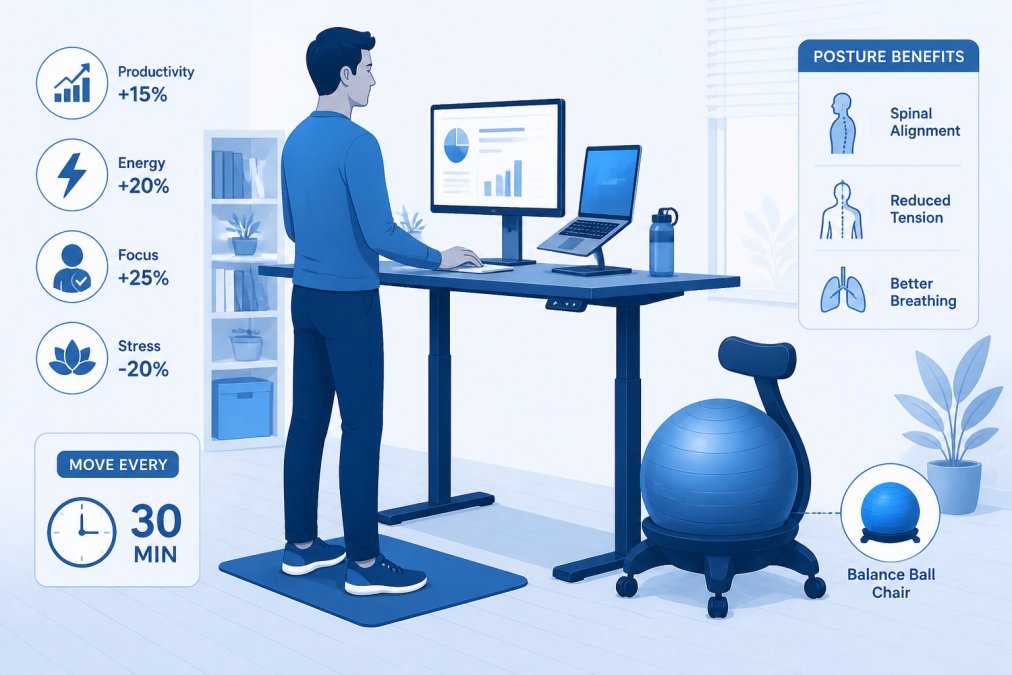
Under-desk pedal exercisers are deceptively effective. They're small, quiet, and work while you answer emails or take calls. Simple foot pedal machines cost under $50. Fifteen minutes of pedaling during work calls adds meaningful caloric expenditure over a week.
Balance balls as office chairs engage your core throughout the day, promoting better posture and spinal alignment. The Gaiam Classic Balance Ball Chair builds strength passively. Start with 30 minutes per day and gradually increase. If it causes back strain, you likely need foundational strengthening first.
Suspension Training and Resistance Bands
The TRX All-in-One Suspension Training System anchors to a door or beam and uses your bodyweight as resistance. Over 300 exercises are possible. Suspension training forces stabilization, building functional strength that transfers to daily life.
Start with basic movements like rows, chest presses, and squats before adding complexity. Resistance bands are affordable, portable, and effective for building strength and mobility. Loop bands work for lower body; long bands with handles work for upper body. Variable resistance builds strength through the full range of motion, making them perfect for rehabilitation work.
How to Choose the Right Low-Impact Equipment
Start with your primary goal: cardiovascular fitness, injury recovery, muscle strengthening, or integrating movement into sedentary work? Different tools serve different purposes.
For cardiovascular fitness, ellipticals and recumbent bikes are proven. For full-body strength, rowing or suspension training. For specific injuries, consult a physical therapist for tool recommendations.
Consider your space and budget. The best tool is the one you'll actually use, which often means the one that fits your life. Test equipment if possible, five minutes on a machine tells you more than reviews. Does the seat feel supportive? Is the motion smooth? Does resistance feel natural?
Choose equipment with adjustable resistance and enough range to grow into. Research from the American Council on Exercise emphasizes that consistency matters more than equipment sophistication. A simple tool used regularly beats expensive equipment gathering dust.
According to the NIH's guidance on exercise for joint health, low-impact activities that maintain range of motion while building strength are foundational for long-term musculoskeletal health.
Building a sustainable fitness routine starts with choosing tools that support your body and fit your life. The low-impact home exercise tools covered here deliver real results when used consistently. Whether recovering from injury, managing chronic joint concerns, or building intentional daily movement, the right equipment transforms how you approach fitness.
At thewellbeingshop.com, we believe wellness is built through smarter routines, not harder workouts. Our curated selection of low-impact fitness equipment helps you push your limits while protecting your joints. Start with equipment that feels right, commit to consistency over intensity, and let your body adapt at its own pace. That's how you achieve lasting life shifts through small, intentional habits.
Frequently Asked Questions
What is the best low-impact exercise equipment for home use?
The best equipment depends on your space and goals. Elliptical trainers and recumbent bikes provide excellent cardiovascular workouts with minimal joint stress. Rowing machines engage 84% of your muscle mass for full-body conditioning. Under-desk pedal exercisers suit remote workers needing constant movement. Suspension trainers and resistance bands offer versatility in small spaces. Consider your available room, budget, and whether you prefer cardio or strength work.
Is low-impact exercise effective for weight loss?
Yes. Low-impact cardio equipment like ellipticals, recumbent bikes, and rowing machines burns significant calories while protecting your joints. Consistency matters more than intensity. Thirty minutes daily on a recumbent bike or elliptical creates the caloric deficit needed for weight loss. Pairing cardio with resistance training through suspension systems or adjustable dumbbells accelerates results by building muscle, which increases resting metabolism.
What exercise equipment is easiest on the knees?
Elliptical trainers and recumbent bikes are the gentlest on knees because they eliminate impact. Rowing machines are also knee-friendly since you're seated and propelled by your legs and back without pounding. Under-desk pedal exercisers provide movement without weight-bearing stress. Avoid treadmills and high-impact activities if you have knee concerns. Start with short sessions and monitor comfort levels as you build tolerance.
How do I know if low-impact equipment will actually help my posture and back pain?
Equipment designed for spinal alignment, like recumbent bikes with lumbar support and balance ball chairs, directly addresses posture. Rowing machines strengthen your back and core, which stabilizes your spine. Consistency is key: using equipment for 20-30 minutes daily yields noticeable improvements in posture within 2-4 weeks. Choose equipment that feels comfortable during use; discomfort signals poor positioning. Start slowly and focus on form rather than intensity.
Can you get a full-body workout with low-impact equipment?
Rowing machines deliver the most complete full-body workout, engaging arms, legs, back, and core simultaneously. Suspension trainers like TRX systems offer hundreds of full-body exercises using bodyweight. Combining equipment, such as pairing a recumbent bike with adjustable dumbbells or resistance bands, creates comprehensive workouts. Low-impact doesn't mean low-effectiveness; proper programming ensures you build strength, endurance, and stability across all major muscle groups.
This article was written using GrandRanker