
How to Set Up a Home Gym on a Budget
Table of Contents
- How to Set Up a Home Gym on a Budget: The Real Cost
- Essential Home Gym Equipment for Beginners: Your Starting Lineup
- Space-Saving Home Gym Ideas for Small Areas
- Protect Your Floors and Keep the Noise Down
- Effective 20 Minute Home Workout Routines That Get Results
- Build Your Gym in Phases Without Breaking the Bank
- Maintenance, Resale Value, and Common Mistakes to Avoid
- Your Home Gym Setup: Start Today
- Frequently Asked Questions
Last Updated: September 5, 2026
A functional home gym rarely requires the full catalog of a commercial facility. A home gym on a budget is achievable if you prioritize compound movements, buy versatile gear, and ignore aesthetic extras. Below, we'll show you how to sequence your purchases so you start training this week.
The real cost of a home gym is buying specialized machines you will use twice. Start with fundamentals that support progressive overload, and you will rarely need more than a few hundred dollars for serious strength gains.
How to Set Up a Home Gym on a Budget: The Real Cost
A practical home gym on a budget costs between $150 and $400 to launch, covering a weight bench, adjustable dumbbells, resistance bands, and flooring protection (the CDC). A power rack and olympic barbell are phase-two purchases once you outgrow lighter loads.
Buying everything brand new from a single retailer adds a premium; sourcing pieces from marketplace listings can cut the total by a third or more. Allocate your first $100 to resistance bands and an adjustable dumbbell set, which cover most upper and lower body exercises for a beginner.
Essential Home Gym Equipment for Beginners: Your Starting Lineup
Essential home gym equipment for beginners is a core group of versatile tools, not a long list of machines. Focus on gear for compound movements like squats, presses, rows, and hinges, which recruit multiple muscle groups for the most return on investment.
The Core Four: Must-Have Gear
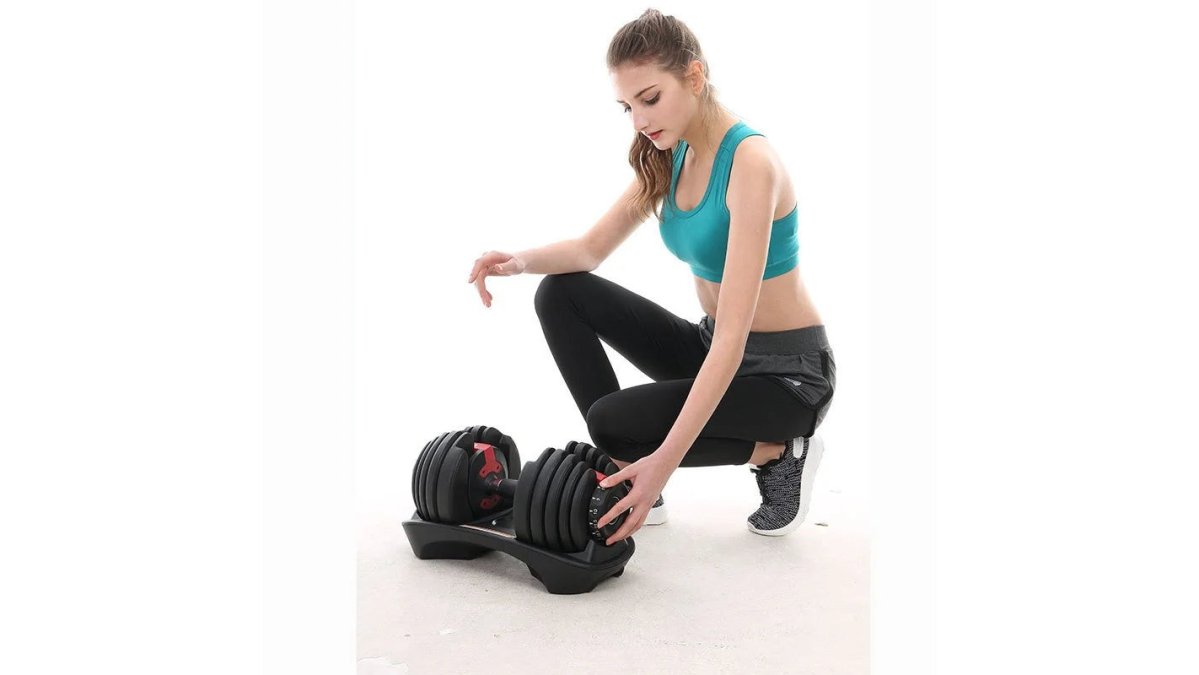
Your starting lineup includes four categories: an adjustable dumbbell set that replaces a rack of fixed weights; resistance bands for warm-ups, mobility, and accessory movements; a doorway pull-up bar for vertical pulling without floor space; and a yoga mat or exercise mat to protect your spine during floor work.
Budget-Friendly Alternatives That Actually Work
If your budget is tighter, bodyweight exercises cover the first month completely: push-ups, squats, lunges, and planks build a foundation. A sturdy backpack filled with books acts as a weighted vest. For under $30, a Fitness equipment abdominal wheel from thewellbeingshop.com targets your entire core for less than a single gym session.
Space-Saving Home Gym Ideas for Small Areas
Training in a small apartment requires a layout strategy, not just smaller equipment. Effective space-saving ideas prioritize vertical storage and equipment that folds, stacks, or mounts to the wall. A six-by-six-foot corner of a living room is enough for most strength routines with deliberate choices about what enters the room.
Measure Your Training Radius First
Before buying anything, map out the space for each movement. A standard yoga mat (68 x 24 inches) defines your floor footprint for core work. For dumbbell exercises, add two feet of clearance on each side. For a doorway pull-up bar, confirm the frame is at least 24 inches wide and sturdy enough for a 300-pound bar (osha.gov). Measuring first prevents buying gear that fits but cannot be used safely.
Use Vertical Space Before Floor Space
Wall-mounted storage is the best investment for a small home gym. A pegboard (around $25) holds bands, jump ropes, and light dumbbells off the floor. Heavy items belong on a low, sturdy shelf. Resistance bands should hang on hooks, since visible storage reminds you to train. A wall-mounted folding bench ($100-$200) flips down for pressing and folds flat, reclaiming roughly six square feet.
The Two-Minute Setup Rule
Your training area should be ready in under two minutes, because friction kills consistency. Keep your mat rolled in a basket, dumbbells within arm's reach, and your pull-up bar mounted permanently. In a living room, use a foldable mat that rolls out over carpet and into a closet when guests visit. Make the transition from couch to workout seamless so setup never feels like a chore.
Small-Space Equipment That Earns Its Footprint
Some equipment earns its footprint by collapsing, stacking, or serving multiple purposes. A jump rope delivers high-intensity cardio in virtually no space. Adjustable dumbbells are the gold standard for apartment gyms. A suspension trainer anchors to a door or beam for a full-body workout from a single strap. Avoid bulky machines like treadmills unless you have a dedicated room; they dominate floor space and often become clothes racks.
Lighting and Ventilation Matter More Than You Think
A cramped, dim corner feels like a punishment, not a gym. Add a daylight-temperature LED bulb or clip-on work light to see your form clearly. A small fan keeps air moving during high-intensity intervals. These upgrades cost under $30 combined and make it more likely you will stick with the habit.
Protect Your Floors and Keep the Noise Down
Floor protection determines whether your setup survives in a rental or above a neighbor. Rubber interlocking mats (around $40 at hardware stores) protect hardwood and carpet from dropped weights and dampen sound (hud.gov). A single dropped dumbbell can dent a floor or crack a tile, costing far more than the mat.
Noise reduction also comes from your equipment choices. Resistance bands are silent, while bumper plates and rubber-coated dumbbells are significantly quieter than metal plates. If you train early in the morning or late at night, prioritize rubber-coated weights and place a thick mat under any area where you stand during lifts.
Effective 20 Minute Home Workout Routines That Get Results
Short workouts work when structured properly. Effective 20 minute routines rely on compound movements with minimal rest, keeping your heart rate elevated while building strength. But a list of exercises is not a routine; you need structure, a progression model, and a way to measure intensity. Below are three scripted routines for exactly 20 minutes with minimal equipment.
Routine 1: Full-Body Strength Circuit (Dumbbells + Bands)
This routine pairs compound movements with short rest periods to build muscle and elevate heart rate. Perform each pair back-to-back, rest 60 seconds, and repeat for 4 rounds, completing the circuit in 20 minutes.
| Pair | Exercise A | Exercise B | Sets x Reps | Rest |
|---|---|---|---|---|
| 1 | Goblet Squat (dumbbell) | Push-Up | 4 x 10-12 | 60 sec |
| 2 | Bent-Over Row (dumbbell) | Reverse Lunge | 4 x 10-12 per leg | 60 sec |
| 3 | Overhead Press (dumbbell) | Glute Bridge (weighted) | 4 x 10-12 | 60 sec |
| 4 | Plank (band around thighs) | Band Pull-Apart | 4 x 30-45 sec / 15 reps | 60 sec |
Progression rule: When you can complete all sets and reps with perfect form, increase the dumbbell weight by 2.5 to 5 pounds, or add 2 reps per set. Do not sacrifice form for heavier weight.
Routine 2: HIIT Cardio Blast (Bodyweight Only)
This routine maximizes calorie burn and conditioning with no equipment beyond a mat and timer. Perform each exercise for 40 seconds of work followed by 20 seconds of rest. Complete the circuit twice for 16 minutes, then finish with a 4-minute cool-down.
| Exercise | Work | Rest |
|---|---|---|
| Jumping Jacks | 40 sec | 20 sec |
| High Knees | 40 sec | 20 sec |
| Burpees (no push-up modification allowed) | 40 sec | 20 sec |
| Mountain Climbers | 40 sec | 20 sec |
| Squat Jumps | 40 sec | 20 sec |
| Skater Hops | 40 sec | 20 sec |
| Plank Shoulder Taps | 40 sec | 20 sec |
| Bicycle Crunches | 40 sec | 20 sec |
Intensity check: During work intervals, you should be breathing heavily and unable to hold a full conversation. If you can chat easily, push harder. If you cannot complete the interval, slow down but keep moving.
Routine 3: Mobility and Core Flow (Mat + Light Band)
This routine is for recovery days or active rest, improving joint mobility, core stability, and posture without significant muscle fatigue. Move through each exercise slowly, holding the end range of each stretch for 2-3 breaths. Complete the sequence twice for 20 minutes.
| Exercise | Duration | Focus |
|---|---|---|
| Cat-Cow Stretch | 60 sec | Spinal mobility |
| World's Greatest Stretch | 60 sec per side | Hip and thoracic mobility |
| Dead Bug (band around feet) | 60 sec | Core stability |
| Bird Dog | 60 sec per side | Core and glute activation |
| 90/90 Hip Switch | 60 sec per side | Hip mobility |
| Banded Pallof Press | 60 sec per side | Anti-rotation core strength |
| Glute Bridge March | 60 sec | Glute activation and core |
| Child's Pose with Reach | 90 sec | Full-body relaxation |
How to Progress Without Adding Time
The key to long-term results is progressive overload. Since your workout window is fixed at 20 minutes, you must increase intensity within that time. Three reliable methods work well:
- Add resistance: Increase dumbbell weight or band tension every 2-3 weeks when the current load feels easy.
- Add reps or time: Increase your rep target by 2 reps per set, or extend your work intervals from 40 to 45 seconds.
- Shorten rest: Reduce rest periods from 60 seconds to 45 seconds, then to 30 seconds, as your conditioning improves.
Train three days per week, alternating between the strength circuit and HIIT routine, with the mobility flow on off days. This schedule provides enough stimulus for growth while allowing recovery. Short, consistent sessions fit schedules better than hour-long gym visits, which is why they sustain the habit.
Build Your Gym in Phases Without Breaking the Bank
Building a home gym in phases protects your budget. Phase one (weeks 1-4) covers bodyweight training plus resistance bands for under $50. Phase two (months 2-3) adds an adjustable dumbbell set and mat for roughly $200. Phase three (month 4+) introduces a weight bench and possibly a squat rack if dumbbells no longer challenge you.
This approach prevents the most common failure: buying a power rack in month one, losing motivation by month two, and selling at a loss. Each phase should feel necessary before moving on. If you are still progressing with bands and bodyweight, there is no rush to spend more.
The Home Multifunctional Fitness Training Equipment from thewellbeingshop.com, priced at $29.99, fits naturally into phase two or three. It supports strength conditioning and functional movement patterns, giving you a full body workout machine without dedicating a room to it.
Maintenance, Resale Value, and Common Mistakes to Avoid
Budget equipment lasts when maintained. Wipe down dumbbells and bands after each session to prevent rust. Check bands for cracks monthly, since a snapped band can cause injury. Lubricate moving parts on adjustable dumbbells per manufacturer instructions, and store everything out of direct sunlight.
Resale value is a hidden benefit of quality brands. Adjustable dumbbells and benches from reputable manufacturers retain significant value on the second-hand market. When you upgrade, list old gear to recoup costs that effectively lower the price of new equipment.
Your Home Gym Setup: Start Today
The barrier to starting a home gym is the belief that you need everything at once. Begin with bodyweight exercises and a single set of resistance bands this week. Add equipment only when your routine demands it, and you will build a gym that matches your actual training needs.
At thewellbeingshop.com, we curate fitness equipment and mind-body training tools that support sustainable home wellness routines. Our adjustable dumbbells, abdominal wheels, and multifunctional training systems are designed to help you cultivate home strength through small, consistent habits. Get started with thewellbeingshop.com and build a training space that pushes your limits daily without pushing your budget past its breaking point.
Frequently Asked Questions
What is a realistic budget for a basic home gym?
A realistic starting budget is $150 to $300 for a functional home gym. For about $200, you can get a set of adjustable dumbbells, resistance bands, an ab wheel, and a yoga mat. This covers the essential home gym equipment for beginners without needing a power rack or Olympic barbell. Start with this core setup and add gear as your strength grows.
Is it cheaper to build a home gym or pay for a gym membership?
A gym membership costs around $40 to $60 per month, or $480 to $720 per year. A basic home gym setup costs $200 to $300 upfront and lasts for years with proper care. After about six months, a home gym pays for itself. Plus, you save on commute time and can squeeze in effective 20 minute home workout routines whenever your schedule allows.
How can I maximize a small space for home fitness?
Use vertical storage to keep equipment off the floor. Install wall-mounted racks for dumbbells and resistance bands, and use a doorframe pull-up bar that doesn't take up floor space. A corner of a bedroom or living room works fine for space-saving home gym ideas. Choose multi-purpose tools like adjustable dumbbells to avoid clutter.
Which pieces of equipment offer the best value for a home gym?
Adjustable dumbbells offer the best value because they replace an entire rack of weights. Resistance bands are also cost-effective and versatile for strength training and stretching. A simple ab wheel costs under $30 and delivers serious core work. These items support progressive overload, which is key for building strength at home.
This article was written using GrandRanker