


 Link label

Intentional Living Wellness Products: 2026 Reviews
Table of Contents
- What Defines Intentional Living Wellness Products
- Mindful Wellness Essentials for Your Daily Practice
- Best Wellness Apps for Mindfulness and Meditation
- Building an Intentional Living Daily Routine
- Sustainability and Ethical Sourcing in Wellness Choices
- Budget-Conscious Intentionality Without Compromise
- How to Choose Products That Align With Your Values
- Conclusion
Last Updated: August 11, 2026
What Defines Intentional Living Wellness Products
Intentional living wellness products are tools designed to help you align your daily habits with your deeper personal values and health goals. These aren't impulse purchases or trendy gadgets, they're deliberate choices that support conscious decisions about how you spend your time, energy, and money. At thewellbeingshop.com, we focus on products that bridge the gap between intention and action, helping you move from aspirational thinking into sustainable practice.
The distinction matters. A wellness product becomes "intentional" when it serves a specific purpose within a larger framework of your life design. That might mean a journal that forces you to examine your priorities each morning, a wearable that holds you accountable to sleep and recovery goals, or an app that anchors your meditation practice during high-stress moments. The product itself is secondary to the intentional choice you're making by using it.
What separates intentional wellness choices from random consumption is transparency about trade-offs. You're not just buying something because it's popular or because an influencer recommended it. You're asking: Does this align with my values? Will I actually use this consistently? What am I getting for the investment? Does it support my specific wellness goals, or am I paying for features I don't need?
This matters more in 2026 than ever. The wellness market is saturated with products claiming to transform your life. Most won't. The ones that stick are the ones you chose deliberately, understanding exactly why they fit your life.
Mindful Wellness Essentials for Your Daily Practice
Building a sustainable wellness practice starts with the right foundational tools. These aren't the flashy devices that promise everything, they're the reliable essentials that support daily consistency and self-awareness.
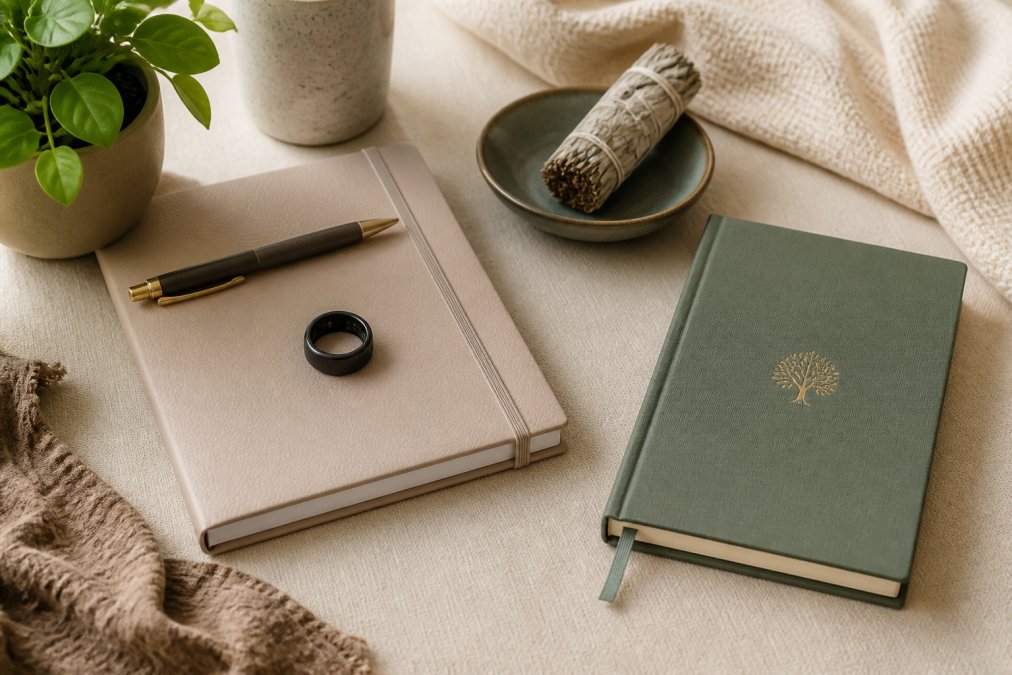
Journals and Reflection Tools
A structured journal is one of the most underrated wellness tools available. Unlike meditation apps or fitness trackers, journaling creates a direct line between your internal state and conscious action. You're not passively receiving guidance; you're actively examining your own patterns.
The Five Minute Journal works because it removes decision fatigue. The prompts are fixed: gratitude in the morning, reflection in the evening. You spend five minutes, not thirty, and the constraint forces clarity. Many people find that the brevity actually increases consistency, it's hard to skip something that takes less time than checking email.
What makes this work: the prompts are research-backed. Morning gratitude and evening reflection aren't arbitrary. They're designed to shift your attention toward what's working in your life, which changes how you show up the next day. The downside is the repetition. After three months, you might find yourself writing the same things. That's when you either accept the ritual for what it is or move to something with more flexibility.
The 6-Minute Diary takes a deeper approach. It includes morning affirmations, intention-setting, and evening reflection with prompts asking "why" behind your actions. The production quality is excellent, thick paper, lay-flat binding, minimalist design. This one appeals to people who want more space for freeform writing alongside the structured prompts.
The trade-off: it actually takes longer than six minutes if you're doing it properly. If you're rushed or tired, you'll either skip it or rush through it. That defeats the purpose.
Papier Daily Wellness Journal sits in the middle. It's visually beautiful, which matters more than people admit. A journal you enjoy looking at gets used. It includes sections for mood tracking, sleep insights, habits, and energy levels. The aesthetic design encourages consistent use, and the tracking sections help you spot patterns over time.
The limitation: it's lighter on guidance than Five Minute Journal, so it requires more self-direction. If you're someone who needs structure, this might feel too open-ended.
Wearables and Health Tracking
A wearable transforms invisible data into visible accountability. You can't ignore a sleep score or a readiness metric that shows you're running on empty.
Oura Ring Gen 3 is the most comprehensive wearable for sleep and recovery tracking. It monitors sleep stages, heart rate variability, body temperature, and activity, then synthesizes that into a daily readiness score. The ring itself is discreet, you wear it like a regular ring, which means you'll actually keep it on, unlike a bulky watch.
What works: the insights are actionable. If your readiness score is low, the app tells you to prioritize recovery. If your sleep efficiency dropped, it identifies potential causes. The data goes deeper than step counts or calorie burns. You're tracking the metrics that actually predict performance and health span.
The cost is significant. The ring runs several hundred dollars plus a monthly membership. That's a commitment. But for people serious about understanding their recovery patterns, it's worth the investment.
Withings Body Scan Smart Scale takes a different angle. Instead of tracking movement and sleep, it measures body composition, nerve health, and cardiovascular function through an ECG. You step on the scale and get segmental body composition data, how much muscle and fat you're carrying in each body part.
This appeals to people who want to understand their body beyond weight. You might weigh the same but have gained muscle and lost fat. The scale shows you that. The ECG feature adds cardiovascular insights most scales miss.
The limitation: like Oura, it's expensive and requires consistent use to track trends. A single measurement is interesting. Tracking over weeks and months is what creates actionable insight.
Best Wellness Apps for Mindfulness and Meditation
The meditation app market is crowded. What separates the effective tools from the noise is consistency in design, quality of instruction, and whether the app actually fits how you live.
Calm leads with breadth. It offers guided meditations for specific needs (stress, anxiety, focus), sleep stories narrated by recognizable voices, breathing exercises, and music designed for focus or relaxation. The library is enormous, which means you'll find something that matches your mood on any given day.
The strength is variety. If you get bored easily, Calm's rotating content keeps the practice fresh. The sleep stories are genuinely popular, many people use them specifically for sleep, not meditation.
The weakness: most premium features require a paid subscription. The free tier is limited. And the app tries to do everything, which means it doesn't excel at any single thing.
Headspace takes the opposite approach: depth over breadth. It focuses on teaching you how to meditate through structured courses. You start with foundational skills and progress through increasingly sophisticated practices. The interface is clean, the instruction is clear, and the progression feels intentional.
This appeals to beginners who want to understand meditation, not just consume guided audio. The courses build on each other. You're not jumping randomly between different teachers and styles.
The trade-off: if you're already experienced with meditation, Headspace might feel too basic. And like Calm, the free tier is limited.
Presently is the outlier. It's a gratitude journaling app, not a meditation app, but it belongs in this category because gratitude practice is foundational to intentional living. The app rotates through diverse prompts to keep the practice fresh, tracks your streak to encourage consistency, and lets you add photos to entries.
What makes it work: it's simple and low-friction. Opening the app, answering a prompt, and moving on takes two minutes. That simplicity is why people stick with it.
Building an Intentional Living Daily Routine
Intention without routine is just wishful thinking. A routine is the structure that turns intention into habit.
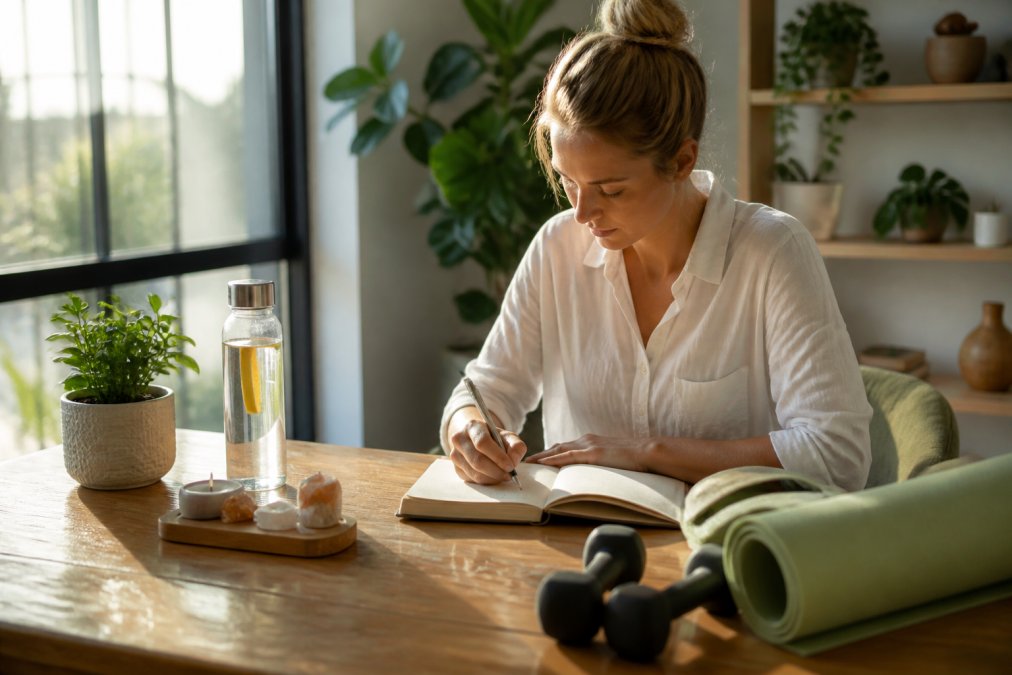
The most effective routines start small and build. Many people fail because they try to overhaul everything at once. They buy five new products, commit to daily meditation, start journaling, and add a workout, all on the same Monday. By Friday, they've abandoned most of it.
Instead, stack one habit at a time. Start with a morning gratitude practice using Five Minute Journal. Spend one week making that automatic. Then add a meditation session using Headspace or Calm. Once that's consistent, introduce a wearable to track sleep. Each addition builds on the previous one.
The reason this works: behavior change is cumulative. Small wins create confidence. Confidence makes the next change easier. A person who's been journaling for three weeks is more likely to stick with meditation than someone trying both for the first time.
A practical routine for most people looks like this: morning journaling (five minutes), meditation (ten minutes), evening reflection (five minutes), and sleep tracking through a wearable. That's thirty minutes total, spread throughout the day. The products support each step: journal for reflection, app for meditation, wearable for accountability.
The key is consistency over intensity. A ten-minute daily practice beats a ninety-minute practice you do once a month. Habits form through repetition, not heroic effort.
Sustainability and Ethical Sourcing in Wellness Choices
Intentional living extends beyond your personal habits to the products you buy. A wellness choice that contradicts your values isn't truly intentional.
This means asking harder questions: Where was this product made? What are the labor conditions? Is the company using sustainable materials or just marketing sustainability? Are there certifications backing up the claims?
For journals, look for companies using responsibly sourced paper. For supplements and wellness products, check for third-party testing and certifications. For wearables, research the company's environmental practices and data privacy policies.
The Well Being Shop curates products with this lens. Rather than stocking everything, we focus on items that align with values of durability, ethical sourcing, and genuine efficacy. That means fewer products, but ones you can feel confident about.
This doesn't mean everything has to be premium-priced. It means being intentional about where your money goes. A journal from a company committed to sustainable practices might cost slightly more than a generic alternative, but the value alignment matters.
Budget-Conscious Intentionality Without Compromise
You don't need to spend thousands of dollars to build an intentional wellness practice. The most expensive products aren't always the most effective.
A strong foundation costs less than you think. The Five Minute Journal runs under thirty dollars. Headspace or Calm subscriptions are around fifteen dollars monthly. A quality notebook for evening reflection costs ten to twenty dollars. You can build a meaningful practice for under one hundred dollars.
The expensive items, Oura Ring, Withings scale, high-end fitness equipment, are valuable but optional. They accelerate insight and accountability, but they're not prerequisites. Many people build exceptional habits with just a journal and a meditation app.
The strategy is to start with low-cost essentials and upgrade selectively. Use the free tier of Calm or Headspace for two months. If you're consistent, upgrade. Use a basic notebook before investing in a designed journal. If you're still writing daily after a month, upgrade to something more refined.
This approach has another advantage: it filters for real commitment. You discover what you'll actually use before spending serious money. The people who stick with a free meditation app for three months are the people who'll use a premium subscription. The people who abandon it in week two would waste money on an expensive wearable.
How to Choose Products That Align With Your Values
The decision framework is straightforward but requires honesty.
First, identify your actual wellness goal. Not what sounds impressive or what everyone else is doing. What's the specific outcome you want? Better sleep? Reduced stress? Stronger posture? Clearer thinking? More consistent exercise? Write it down.
Second, research products that directly address that goal. Not products that claim to do everything. A meditation app for stress is different from a fitness tracker for strength. They're both wellness products, but they solve different problems.
Third, check the evidence. Does the product have research backing its claims? For meditation apps, look for studies on their effectiveness. For wearables, check what metrics they actually measure and whether those metrics matter for your goal. For journals, consider whether the structure matches how you think.
Fourth, assess the commitment. How much time does this require? How much does it cost? Do you have the bandwidth to use it consistently? A product that requires thirty minutes daily won't work if you have twenty minutes available. Be realistic.
Finally, start with the minimum viable version. Buy the basic journal, not the premium one. Try the free tier of the app. Borrow a friend's wearable if possible. You're testing fit, not making a permanent decision.
The products reviewed here represent different points on the spectrum. The Five Minute Journal is accessible and low-commitment. Oura Ring requires significant investment but delivers comprehensive data. Calm offers breadth; Headspace offers depth. Presently is free and simple. Choose based on your actual life, not your aspirational life.
Building an intentional wellness practice requires tools that match your values and fit your life. The products covered here, from journals and meditation apps to wearables and tracking systems, each serve a specific purpose within a larger framework of conscious living. Rather than chasing every new wellness trend, focus on the essentials that address your actual goals. Start small, build consistency, and upgrade selectively as your practice deepens. At thewellbeingshop.com, we help you find the right tools for your specific wellness journey, ensuring your choices align with both your health goals and your personal values. Explore our curated selection of fitness equipment, mind-body training tools, and wellness support designed to help you cultivate lasting life shifts through intentional daily practice.
Frequently Asked Questions
What are the best wellness products for intentional living?
The best intentional living wellness products combine three elements: they support daily rituals (like journaling or meditation), track meaningful health metrics, and align with your personal values. Meditation apps like Calm and Headspace build mindfulness into your routine. Journals such as The Five Minute Journal and The 6-Minute Diary create consistent reflection habits. Wearables like the Oura Ring Gen 3 provide actionable health data. The key is choosing tools that you'll actually use, not ones that sit unused. Start with one product that addresses your biggest wellness gap, then layer in others as habits stick.
How do I know if a wellness product will actually help me stick with my routine?
Real adherence comes from products that remove friction and provide immediate feedback. Journaling tools with simple prompts (five to six minutes) create faster habit loops than open-ended notebooks. Apps with streak tracking, like Presently, use behavioral psychology to reinforce consistency. Wearables that show personal data, sleep stages, recovery readiness, body composition, give you concrete reasons to check in daily. Before buying, ask: Does this fit my existing schedule? Will I see results within two weeks? Does it solve a problem I actually experience? Products addressing real pain points (poor sleep, afternoon posture collapse, stress spikes) have higher stick rates than aspirational wellness purchases.
Are wellness apps enough, or do I need physical tools too?
Apps and physical tools serve different functions. Meditation apps like Headspace and Calm excel at building mental clarity and stress management through guided audio. Journals create tangible reflection and habit tracking you can physically review. Wearables like the Oura Ring or Withings Body Scan provide biometric data that apps alone cannot capture. For intentional living, the strongest approach combines all three: use an app for daily mindfulness, a journal for conscious reflection, and a wearable for objective health feedback. This layered approach creates accountability across mental, emotional, and physical dimensions of wellness.
What makes a wellness product 'intentional' versus just another gadget?
Intentional wellness products are designed around three principles: they support conscious decisions about your health, they align with your personal values (sustainability, efficacy, simplicity), and they encourage long-term habit formation rather than quick fixes. Products with scientific backing, like Headspace's stress-reduction research or the Oura Ring's sleep analysis, demonstrate real efficacy. Ethical sourcing and sustainable materials reflect value alignment. Tools that require reflection, journaling, meditation, tracking, force conscious engagement rather than passive use. Before buying, verify the product's track record with users who have similar goals and values to yours.
This article was written using GrandRanker