


 Link label

Affordable Pilates Alternatives: Studio-Quality Workouts at Home
Table of Contents
- Why Studio Pilates Costs So Much (And Why You Don't Need It)
- At-Home Pilates Reformer Alternatives That Deliver Results
- Effective 20-Minute Home Workout Routines for Pilates Practitioners
- Best Online Pilates Subscription Services vs. Studio Memberships
- How to Start Pilates at Home for Beginners: Equipment and Setup
- Cost Comparison: Studio vs. Home Setup
- Technique Safety When Practicing Pilates at Home
- Hybrid Training Models: Combining Home Practice With Occasional Studio Sessions
- Frequently Asked Questions
Last Updated: October 1, 2026
Why Studio Pilates Costs So Much (And Why You Don't Need It)
Studio pilates classes command premium prices, often $25 to $35 per session or $150 to $300 monthly for unlimited access. The overhead is real: instructors, studio rent, equipment maintenance, and liability insurance add up quickly.
The core pilates principles, controlled movement, core engagement, proper alignment, and progressive resistance, work just as well at home as pilates alternatives do. The studio environment has value for community and accountability, but the actual workout doesn't require a reformer costing thousands or an instructor standing over you. According to fitness industry research on home workout effectiveness, people who exercise at home show comparable adherence and strength gains when they have the right equipment and a structured routine.
At thewellbeingshop.com, we are dedicated to helping you cultivate a healthier, more intentional lifestyle through smarter wellness routines and home practices.
At-Home Pilates Reformer Alternatives That Deliver Results
A reformer costs $2,000 to $8,000. Its main functions, spring-based resistance and carriage positioning, can be replicated with cheaper tools.
Reformer-Style Equipment for Home Use
The American Council on Exercise guidance on home fitness equipment confirms that resistance-based training tools, springs, bands, and bodyweight, produce equivalent strength and stability gains when used with proper form and progressive overload.
The Pilates Orbit Figure Roller Balance Board ($269) replicates a reformer's carriage function with a wheeled platform for plank variations, core work, and dynamic stretching, storing under a bed.
For spring-based resistance, PersonalHour Pilates Springs ($29) offer color-coded difficulty adjustment.
Budget-Friendly Substitutes Using Resistance and Bodyweight
Three affordable tools can support your home practice:
Pilates Ball ($13.80): Adds instability for bridges, inner-thigh work, and stretches.
Six-Tube Pedal Tension Rope ($10): Provides full-body resistance via foot pedals and handles.
Yoga Block ($60): Provides alignment support under hands, sacrum, or for balance work.
Effective 20-Minute Home Workout Routines for Pilates Practitioners
A focused 20-minute session beats a scattered 45-minute class. Structure it in three phases: warm-up (3 minutes), strength work (14 minutes), cool-down (3 minutes), focusing on one or two movement patterns.
Sample 20-minute session:
- Warm-up: 3 minutes spinal articulation and breathing
- Strength block 1: 7 minutes core work (bridges, dead bugs, planks with ball)
- Strength block 2: 7 minutes lower body with pedal rope (step-ups, leg presses)
- Cool-down: 3 minutes stretching
Consistency beats intensity. Four 20-minute sessions weekly outperform one 60-minute session monthly. Progress via reps, tempo, or resistance.
Best Online Pilates Subscription Services vs. Studio Memberships
Subscription platforms like Peloton Digital, Alo Moves, and Apple Fitness+ cost $10 to $30 monthly versus $150 to $300 for studio membership. Online classes work best if you understand pilates fundamentals. A hybrid approach, $15 monthly subscription plus one studio class monthly, costs roughly $30 monthly versus $200-plus for unlimited access.
How to Start Pilates at Home for Beginners: Equipment and Setup
You need a 6-by-8-foot space, a yoga or pilates mat ($20-$40), and one piece of equipment:
- Core focus: Pilates Ball ($13.80)
- Full-body strength: Six-Tube Pedal Tension Rope ($10)
- Balance: Exercise Equipment Yoga Balance Board ($39.99)
- Advanced core: Fitness Equipment Abdominal Wheel ($29.99)
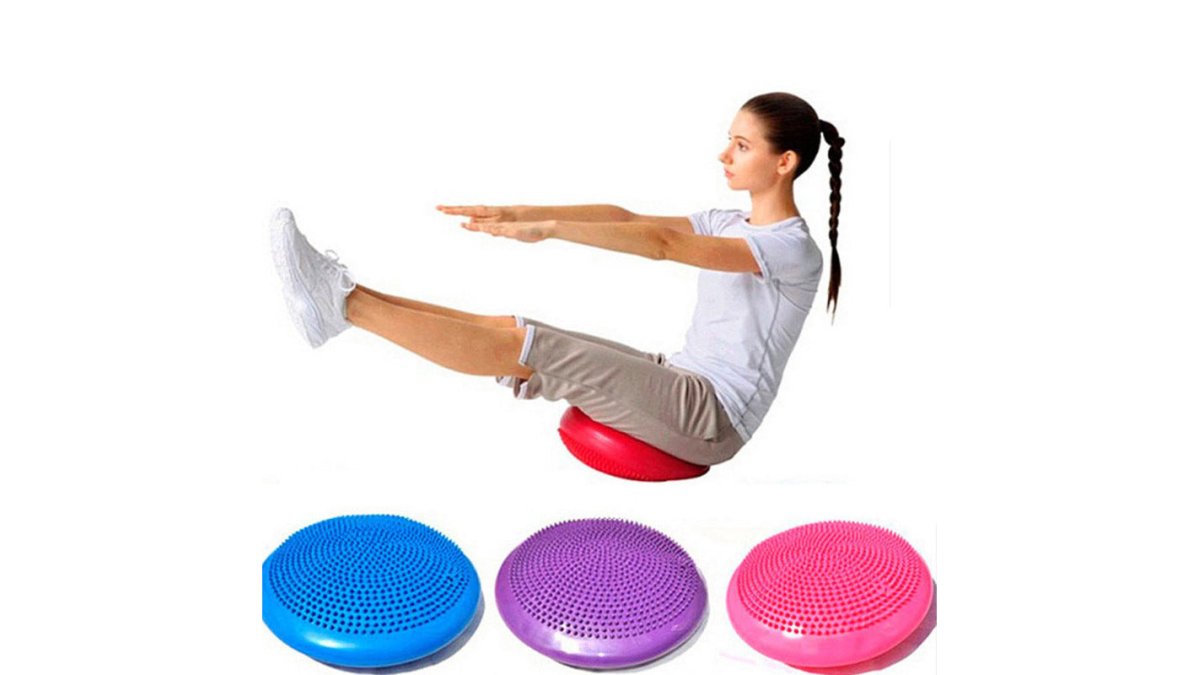
Start with one tool and master it for 4 to 6 weeks before adding more. Most people never need more than two or three tools.
Cost Comparison: Studio vs. Home Setup
The financial case for home pilates is straightforward on the surface, but the real decision hinges on cost-per-session and how quickly your home investment pays for itself. Here's the full picture.
Annual Cost Breakdown
| Setup Type | Initial Cost | Monthly Cost | Annual Cost (Year 1) | Cost Per Session (52 sessions/year) |
|---|---|---|---|---|
| Studio membership (unlimited) | $0 | $200 | $2,400 | $46.15 |
| Studio membership (8 classes/month) | $0 | $120 | $1,440 | $34.62 |
| Studio + hybrid (1 class/month) | $0 | $30 | $360 | $6.92* |
| Home setup (basic: mat + 1 tool) | $85 | $0 | $85 | $1.63 |
| Home setup (complete: mat + 3 tools) | $400 | $0 | $400 | $7.69 |
| Home setup (complete + subscription) | $400 | $15 | $580 | $11.15 |
*Assumes 1 studio class per month + home practice 3x weekly (48 sessions at home, 12 studio sessions).
The Payback Period: When Home Equipment Pays for Itself
This is the metric that matters most.
Basic home setup ($85 total): After 2 sessions, your home setup is cheaper per session than a studio class.
Complete home setup ($400 total): After 9-10 sessions (2-3 weeks), your equipment becomes cheaper per session.
Complete home setup + subscription ($580 total): After 13-14 sessions (3-4 weeks), your investment becomes cheaper per session.
Five-Year Cost Projection: The Long-Term Advantage
Most people stay with pilates for years, not months. Here's what the numbers look like over five years:
Studio membership (unlimited, $200/month):
Fitness equipment abdominal wheel →
- Year 1: $2,400
- Year 2-5: $2,400 × 4 = $9,600
- Total 5-year cost: $12,000
- Cost per session (assuming 52 sessions/year): $46.15 per session
Home setup (complete, $400 upfront, no subscription):
- Year 1: $400 (equipment)
- Year 2-5: $0 (equipment lasts; no monthly fees)
- Total 5-year cost: $400
- Cost per session (assuming 52 sessions/year × 5 years = 260 sessions): $1.54 per session
Home setup + subscription ($400 upfront, $15/month):
- Year 1: $400 + ($15 × 12) = $580
- Year 2-5: $15 × 12 × 4 = $720
- Total 5-year cost: $1,300
- Cost per session (260 sessions): $5.00 per session
Hybrid model (1 studio class/month + home practice, $30/month):
- Year 1: $30 × 12 = $360
- Year 2-5: $30 × 12 × 4 = $1,440
- Total 5-year cost: $1,800
- Cost per session (assuming 48 home sessions + 12 studio sessions per year = 300 sessions): $6.00 per session
Over five years, home setup saves $11,600 versus studio membership, or $10,700 with a subscription. Even with both, you spend roughly 11 percent of unlimited studio costs.
The Hidden Costs of Studio Membership
Hidden studio costs include: commute time ($650 annually), missed classes (20 percent of membership), parking ($260 annually), and upgrades ($300-$500 annually). True annual cost: roughly $1,510, not $2,400. Home practice eliminates these.
When Studio Membership Still Makes Sense
Studio membership is worth the cost if: you need accountability and community; you're a beginner (1-3 months of classes builds proper form); you have an injury requiring personalized modification; or you want rapid progression in advanced techniques.
The Hybrid Model: Best of Both Worlds
For most people, the hybrid model works best: home practice 3-4 times weekly, one studio class monthly. Cost: $30-$40 monthly ($360-$480 annually). Five-year cost: $1,800-$2,400 versus $12,000 for unlimited membership.
Technique Safety When Practicing Pilates at Home
Without an instructor watching, form breakdown compounds silently. Home practice requires self-correction, which is the biggest safety risk.
Understanding Common Form Breakdowns and Their Injury Risks
Pilates emphasizes neutral spine.
Bridge work: Engage your core by drawing your navel toward your spine.
Plank variations: Rib flare causes core disengagement. Place one hand on your lower ribs, feel them draw inward, not outward.
Leg work with resistance: Hip hiking overloads one side of your lumbar spine. Use a mirror to check hip level.
Three Concrete Safety Rules for Home Practice
Rule 2: Slow down and breathe consciously. If you can't maintain neutral spine and steady breathing, you're moving too fast or resistance is too heavy.
Rule 3: Use external feedback tools. Use mirrors to watch for rib flare, hip hike, and spine alignment. Record yourself every two weeks to spot asymmetries.
Progressive Overload Without Injury Risk
The National Academy of Sports Medicine guidelines on progressive overload and injury prevention emphasize that progression should happen gradually and only when form is perfect. Here's a safe progression framework:
Phase 1 (Weeks 1-2): Learn the movement. Use zero or very light resistance. Focus on alignment and breathing. Perform 10-12 reps. Own the pattern, not fatigue muscles.
Phase 2 (Weeks 3-4): Build consistency. Same movement and light resistance, increase to 12-15 reps.
Phase 3 (Weeks 5-6): Add resistance or instability. After two weeks of perfect 15-rep sets, increase resistance or add a stability challenge.
If you feel sharp pain (not muscular fatigue), stop immediately. Sharp pain is a red flag.
When to Seek Professional Form Assessment
Seek professional form assessment if you experience persistent lower-back pain, asymmetrical strength, inability to maintain neutral spine, sharp pain in joints, or inability to progress for 4+ weeks. A single $60-$80 form-check session prevents months of pain or injury.
Hybrid Training Models: Combining Home Practice With Occasional Studio Sessions
The shift from expensive studio classes to home-based pilates is a strategy, not a sacrifice. You trade convenience and community energy for control, flexibility, and cost efficiency. Start with one tool, commit to 20 minutes 4 times weekly, and reassess in 8 weeks. Home practice delivers better long-term adherence because you eliminate friction and build genuine habit.
Frequently Asked Questions
What are the best at-home alternatives to a Pilates reformer?
The Pilates Orbit Figure Roller Balance Board ($269) offers a rolling mechanism for strengthening, stretching, and challenging you on multiple planes. For budget options, combine mat work with the Pilates Ball ($13.80) for core activation, resistance bands like the Six-Tube Pedal Tension Rope ($10) for full-body strength, and the Yoga Peanut Ball Set ($10) for muscle recovery. These tools together cost under $35 and can support your core stability and functional movement training.
Can you get the same results from mat Pilates as reformer Pilates?
Mat Pilates builds core strength and body awareness through bodyweight resistance and alignment focus. Reformer Pilates adds spring-based resistance that challenges stabilizer muscles differently. You can achieve comparable full-body strength gains at home by layering mat work with resistance tools like kettlebells ($69.99), adjustable dumbbells ($185.36), and balance boards ($39.99). The key difference is intensity progression, reformers adjust resistance easily, while home setups require strategic equipment choices.
What are the most affordable ways to practice Pilates without a studio membership?
Start with mat work using your bodyweight and a yoga block ($60 for eco-friendly balsa, or skip it initially). Add the Pilates Ball ($13.80) and Yoga Peanut Ball Set ($10) for under $25 in recovery tools. Progress to the Six-Tube Pedal Tension Rope ($10) for resistance-based training. Online subscription services offer on-demand classes for $10-20 monthly. This approach costs $30-50 upfront plus minimal monthly fees, versus $150-300 per month for studio memberships.
How can I build a home Pilates routine on a budget?
Begin with free YouTube Pilates videos or low-cost subscriptions ($10-15/month). Invest in one foundational tool: the Pilates Ball ($13.80) for core work, or the Exercise Equipment Yoga Balance Board ($39.99) for proprioceptive training. Use your body weight for mat work focusing on alignment and posture correction. Add the Six-Tube Pedal Tension Rope ($10) for full-body strength. Progress to kettlebells ($69.99) or dumbbells ($185.36) only when ready for advanced resistance training. Total startup: under $75.