


 Link label

Yoga Equipment for Beginners: What's Essential
Table of Contents
- Is Yoga Equipment Really Necessary for Beginners?
- Essential Yoga Equipment vs. Optional Props
- How to Choose a Yoga Mat for Your Home Practice
- Benefits of Using Yoga Blocks and Props
- DIY and Household Alternatives to Yoga Gear
- Common Beginner Mistakes with Yoga Equipment
- Getting Started: Your First Practice Without Spending a Lot
- Frequently Asked Questions
Last Updated: September 30, 2026
Is Yoga Equipment Really Necessary for Beginners?
You don't need yoga equipment beginners to start, but the right props support consistency. Beginners who invest in one or two foundational pieces, a mat and a block, often practice longer and more safely than those who skip them.
A mat that grips prevents injury. Blocks that support alignment let you access deeper poses without strain. These tools help your body learn correct positions from day one.
Essential Yoga Equipment vs. Optional Props
Not all yoga equipment serves the same purpose. Some pieces are genuinely foundational. Others are nice to have once your practice deepens.
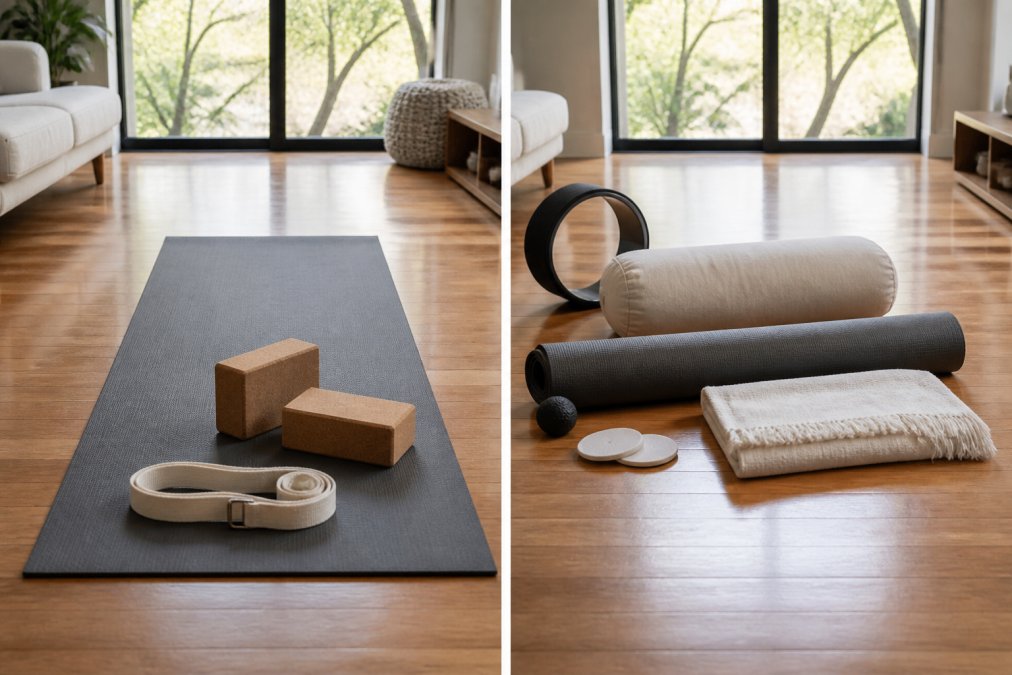
What You Actually Need to Start
A quality yoga mat is essential. It protects your joints, provides traction, and prevents slipping hazards. It also signals to your brain that this is intentional practice time.
Yoga blocks are foundational, not advanced. They close the gap between your current flexibility and what poses require, letting you practice proper alignment immediately instead of compensating with your back or shoulders.
The baseline yoga equipment beginners need: a mat with real grip, at least one block for forward folds and standing poses, and 15-20 minutes of consistent practice time. Everything else builds from there.
Props That Support Your Progress
After establishing basic poses, add a strap for deeper stretches and a bolster for restorative work. These aren't necessary to start but become valuable as your practice deepens.
Yoga blocks reduce the distance needed in forward folds, provide elevation in seated poses, and stabilize balance work.
The Cork & Natural Rubber Meditation Mat from thewellbeingshop.com ($34.95) is ideal for seated practice and breathwork.
| Equipment | Purpose | When to Add | Cost Range |
|---|---|---|---|
| Yoga mat | Foundation, grip, joint protection | Immediately | $30-80 |
| Yoga block | Alignment support, pose modification | Week 1-2 | $15-60 |
| Yoga strap | Stretch deepening, flexibility work | Month 2+ | $10-25 |
| Meditation mat | Seated practice, breathwork | When adding meditation | $25-50 |
| Balance board | Proprioception, core stability | Month 3+ | $30-50 |
How to Choose a Yoga Mat for Your Home Practice
The right mat depends on understanding how home practice differs from studio practice. Most beginners buy studio mats and struggle with stability at home. The right mat for your environment makes practice sustainable.
Home vs. Studio Mat Requirements
Studio mats (2-3mm) are lightweight and portable but provide minimal cushioning. Home mats (4-6mm) are thicker for varied flooring and need stronger grip. Buying the wrong type wastes money and creates frustration.
Mat Thickness: Finding Your Balance
2-3mm mats are studio mats, lightweight but minimal cushioning. 4-6mm mats are ideal for home practice, protecting knees and wrists while keeping balance poses stable. 7-8mm mats suit restorative practice but feel unstable for balance work. Test by pressing your hand in; it should sink less than a quarter-inch.
Material: Safety and Durability
PVC ($20-40) is affordable but off-gases chemicals, problematic for daily home practice. Natural rubber ($40-80) is grippy and non-toxic but heavier. Cork and rubber blends ($50-100) are naturally antimicrobial and don't off-gas. TPE ($30-60) is lightweight and eco-friendly. For home practice, prioritize non-toxic materials like natural rubber, cork, or TPE.
Grip: The Non-Negotiable Factor
Your mat must not slide, this is a safety issue. Test grip by pressing your palm into the mat and trying to slide it. Rubber and cork grip better than PVC. Grip changes with moisture, so test your mat on your actual flooring before committing.
Durability and Long-Term Value
Look for reinforced edges and consistent thickness. Rinse after sweaty practice, air-dry completely, and store in a cool, dry place away from direct sunlight.
Benefits of Using Yoga Blocks and Props
Yoga blocks solve a key problem: most beginners can't reach the ground in forward folds without rounding their spine. Blocks bring the ground to you, letting your spine stay straight. Your nervous system learns movement patterns in the first weeks, so proper alignment from the start prevents months of relearning.
Yoga Block | Balsa Wood + Beeswax →
The Yoga Block in Balsa Wood + Beeswax from thewellbeingshop.com ($60.00) is 100% plastic-free and non-toxic, with no off-gassing chemicals, important for breathwork and mindfulness practice.
Blocks also support restorative poses: lying back over one opens your chest; placing one under your sacrum in bridge pose reduces lower back strain.
The Yoga Peanut Ball Set from thewellbeingshop.com ($10.00) includes tools for muscle recovery. Used after practice, they reduce soreness and speed recovery as your body adapts to new movement patterns.
DIY and Household Alternatives to Yoga Gear
Household items can support beginner practice for weeks or months. The key is knowing which substitutions work and when to upgrade.
Effective Household Substitutes
Blocks: Stacked hardcover books (4-6 inches) work for forward folds if secured with a rubber band. A pillow works for gentle poses but compresses and shifts. An ottoman can substitute for a bolster.
Straps and extension tools: A belt, scarf, or old towel works surprisingly well as a yoga strap for stretches that require extension. A resistance band (often found in home fitness kits) serves the same purpose.
When to Upgrade from Household Items
Most beginners can practice effectively with household alternatives for 2-4 weeks. After that, limitations become apparent:
- Blocks: Stacked books work initially but become frustrating when they shift during transitions. A proper block lasts indefinitely.
- Straps: Belts and towels work for basic stretches but lack the grip needed for deeper flexibility work. A yoga strap provides consistent tension and doesn't stretch.
- Mats: A towel on a rug pad works temporarily, but the instability creates tension in your shoulders and core. A mat removes this friction and makes practice more enjoyable, which directly impacts consistency.
- Bolsters: Pillows compress and shift. A proper bolster maintains its shape and supports restorative poses safely.
The Real Cost of Delaying Equipment
The practical reality is that household alternatives work as a trial period, not a long-term solution. They let you test whether you'll commit to practice before spending money. But if you find yourself practicing 3+ times per week after two weeks, the friction created by inadequate equipment will eventually discourage you. A beginner who practices with a slipping towel instead of a mat often quits within a month, not because yoga isn't for them, but because the experience is frustrating.
Common Beginner Mistakes with Yoga Equipment
The biggest mistake is buying too much too fast. Beginners often purchase a mat, blocks, strap, bolster, and meditation cushion all at once. Then they practice twice and the gear sits unused. Start minimal. Add tools as your practice reveals what you need.
Getting Started: Your First Practice Without Spending a Lot
You can begin today with what you have. Your body. A clear space. 15 minutes.
Here's a realistic beginner timeline:
- Week 1: Mat only. Learn basic poses. Focus on alignment and breathing.
- Week 2-3: Add one block. Use it in forward folds and standing poses.
- Week 4-6: Add a strap if forward folds feel limited. Begin meditation practice.
- Month 2+: Add recovery tools like the Yoga Peanut Ball Set ($10.00). Experiment with balance work.
Frequently Asked Questions
Is a yoga mat really necessary for beginners?
A yoga mat isn't absolutely required, but it's highly recommended. A mat provides cushioning for your joints, improves traction to prevent slipping during poses, and creates a defined space for your practice. For home practice, a mat also protects your floor and helps establish a consistent routine. If budget is tight, a towel on carpet works temporarily, but a proper yoga mat supports better alignment and safety as you develop your foundational practice.
Do I need yoga blocks and straps as a beginner?
Blocks and straps aren't essential when starting out, but they're valuable tools that accelerate progress. Yoga blocks help you achieve proper alignment in poses when you lack flexibility, reducing injury risk and allowing deeper engagement with each posture. Straps extend your reach and support proper form. Many beginners skip these initially, but adding blocks early, especially for vinyasa and hatha yoga, prevents compensatory movements that can lead to strain. They're affordable investments that improve your practice quality from day one.
What type of yoga equipment should I buy if I'm on a tight budget?
Start with a quality meditation mat, like the Cork & Natural Rubber Meditation Mat from thewellbeingshop.com ($34.95), as your foundation; it's the single most important piece for home practice. If you need additional support, a single Yoga Block in Balsa Wood + Beeswax from thewellbeingshop.com ($60.00) covers most beginner needs for alignment and stability. Skip expensive straps initially, a belt or towel works temporarily. Massage balls or peanut balls, such as the Yoga Peanut Ball Set from thewellbeingshop.com ($10.00), are affordable additions for muscle recovery and flexibility work. Prioritize one good mat over multiple cheap props; durability and grip matter more than quantity.
Can I practice yoga without any equipment at all?
Yes, you can begin yoga without equipment. Bodyweight practices like basic hatha and gentle yoga work on any flat surface. However, equipment removes barriers to consistent practice. A mat prevents slipping and joint discomfort, blocks help you maintain alignment when flexibility is limited, and props like towels under your spine support proper posture. Many beginners who skip equipment initially experience frustration or discomfort that leads them to quit. Starting with at least a mat and one block sets you up for sustainable, injury-free progress.