
Best Home Workout Tools 2026: Complete Guide
Table of Contents
- Best Home Workout Tools 2026: Quick Comparison
- Home Gym Weight Equipment for Strength Training
- Cardio Equipment That Fits Small Spaces
- Essential Home Gym Setup for Beginners
- Recovery Tools for Home Workouts
- Smart Home Gym Technology and Wearable Integration
- How to Choose the Right Equipment for Your Goals
- Conclusion
Last Updated: August 27, 2026
Best Home Workout Tools 2026: Quick Comparison
Building a functional home gym doesn't require a garage full of equipment or a four-figure investment. The right tools, chosen for your specific goals and space constraints, deliver results that rival expensive gym memberships. What separates a cluttered spare room from an effective workout space is intentional selection, not quantity.
At thewellbeingshop.com, we provide a curated selection of fitness equipment, mind-body training tools, and nutritional support designed to help you push your limits and achieve lasting life shifts. The best home workout tools combine durability, versatility, and genuine usability. They fit your space, match your fitness level, and integrate with how you actually move.
This guide covers the essentials: adjustable weights for progressive strength training, cardio equipment that doesn't dominate a room, recovery tools that prevent injury, and smart technology that tracks your progress. We'll address how to choose equipment for your goals, what beginners actually need, and why some tools collect dust while others become daily habits.
Quick Picks:
- Best Overall: Adjustable Dumbbell Set, adaptable resistance for every fitness level, compact storage
- Best for Space: Exercise Stationary Folding Bike, cardio without consuming your living room
- Best for Recovery: Aura Cork Yoga Mat, sustainable materials with genuine grip and joint support
- Best for Core Strength: Fitness Equipment Abdominal Wheel, professional-grade results in a compact tool
Best Home Workout Tools 2026: Quick Comparison
| Tool | Starting Price | Best For | Key Feature |
|---|---|---|---|
| Adjustable Dumbbell Set | $185.36 | Progressive strength training | Space-efficient, adaptable resistance |
| Exercise Stationary Folding Bike | $169.00 | Cardio in small spaces | Folds for storage, LCD tracking |
| Powder Coated Kettlebell | $69.99 | Functional strength | Single-cast durability, textured grip |
| Fitness Equipment Abdominal Wheel | $29.99 | Deep core engagement | Professional-grade, compact design |
| Aura Cork Yoga Mat | $99.00 | Recovery and flexibility | Renewable materials, improved grip |
| Six-Tube Pedal Tension Rope | $10.00 | Full-body resistance training | Foot pedals plus arm resistance |
| 25cm Yoga Balance Ball | $10.00 | Core stability and balance | Explosion-proof PVC, compact |
| The "Moment" Balance Board | $185.00 | Advanced balance training | Adjustable center rail, 300 lb capacity |
Home Gym Weight Equipment for Strength Training
Strength training at home requires equipment that adapts to your progression. Adjustable weights eliminate guessing, you dial in resistance precisely and increase it weekly as you get stronger.
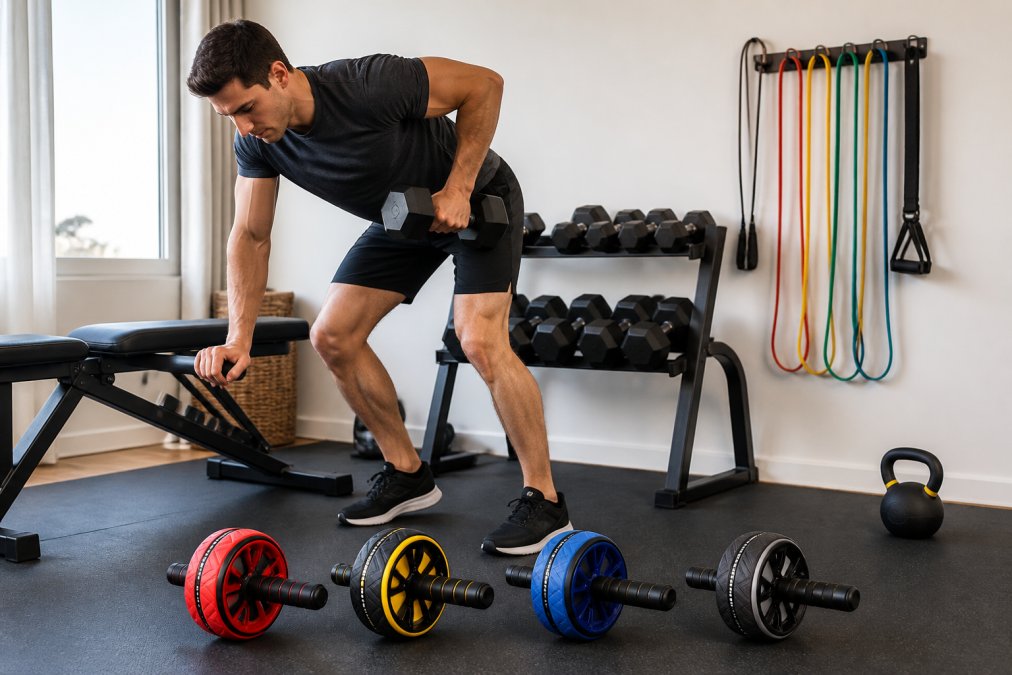
Adjustable Dumbbells and Kettlebells
The Adjustable Dumbbell Set ($185.36) solves the storage problem that kills most home gyms. Rather than keeping 15 pairs of dumbbells, you adjust a single pair from light to heavy. Progressive overload, increasing weight incrementally, drives strength gains and becomes seamless with adjustable dumbbells.
The set compresses what would be 20+ pounds of equipment into a footprint smaller than a shoe box. You start light, build form, then add resistance week by week. For remote workers doing resistance training between meetings, this is essential.
The Powder Coated Kettlebell ($69.99) fills a different role. Where dumbbells isolate muscles, kettlebells demand stabilization. A kettlebell swing engages your posterior chain, glutes, hamstrings, and lower back in ways dumbbells can't. The powder-coated surface grips during sweaty sessions, and single-cast construction eliminates handle fatigue.
Kettlebells excel for functional fitness: movements that transfer to real life like picking up and carrying heavy objects. Start with one kettlebell at moderate weight and master the fundamentals before scaling up.
Core and Functional Training Tools
The Fitness Equipment Abdominal Wheel ($29.99) is deceptively simple and brutally effective. Rolling out from your knees or toes forces your core to resist spinal extension, the exact movement that protects your lower back during daily life. This professional-grade tool disguises itself as compact equipment that lives in a closet.
The Six-Tube Pedal Tension Rope ($10.00) delivers full-body resistance training in a weightless tool. Step on the foot pedals and pull the handles for rows, chest presses, and shoulder raises. The six tubes provide more resistance than standard models, and the pedal design keeps bands secure during lower-body work. This forces compound movements that engage legs and upper body simultaneously, ideal for 20-30 minute workouts.
Cardio Equipment That Fits Small Spaces
The Exercise Stationary Folding Bike ($169.00) folds to nearly half its assembled size, making cardio viable in studio apartments. Magnetic resistance runs silently, and the LCD monitor tracks heart rate, speed, distance, and calories burned. The seat accommodates users up to 330 pounds and adjusts for heights from 4'11" to 6'3".
You can fold it and store it vertically in a closet. Arm resistance bands work upper body while you pedal, creating a full-body workout. Eight resistance levels let you start easy and build intensity as fitness improves.
Essential Home Gym Setup for Beginners
Beginners often buy too much equipment too fast. A barbell, dumbbells, kettlebell, resistance bands, and a yoga mat is enough to build real strength and conditioning.
Start with three categories: something for resistance (dumbbells or kettlebell), something for stability and mobility (yoga mat and balance ball), and something for recovery (foam tools or a balance board). This combination addresses strength, movement quality, and injury prevention.
Here's the hard truth: beginners don't need the most expensive equipment. They need equipment they'll actually use. A $185 adjustable dumbbell set sits unused if you hate strength training. A $10 resistance band gets daily use if conditioning is your actual goal. Match the tool to your real preferences, not what Instagram fitness accounts recommend.
Recovery Tools for Home Workouts
Strength training creates the stimulus for adaptation. Recovery is where the actual adaptation happens. Your muscles grow during the 48 hours after, when you're resting and eating protein. Recovery tools prevent the injuries that derail consistency.
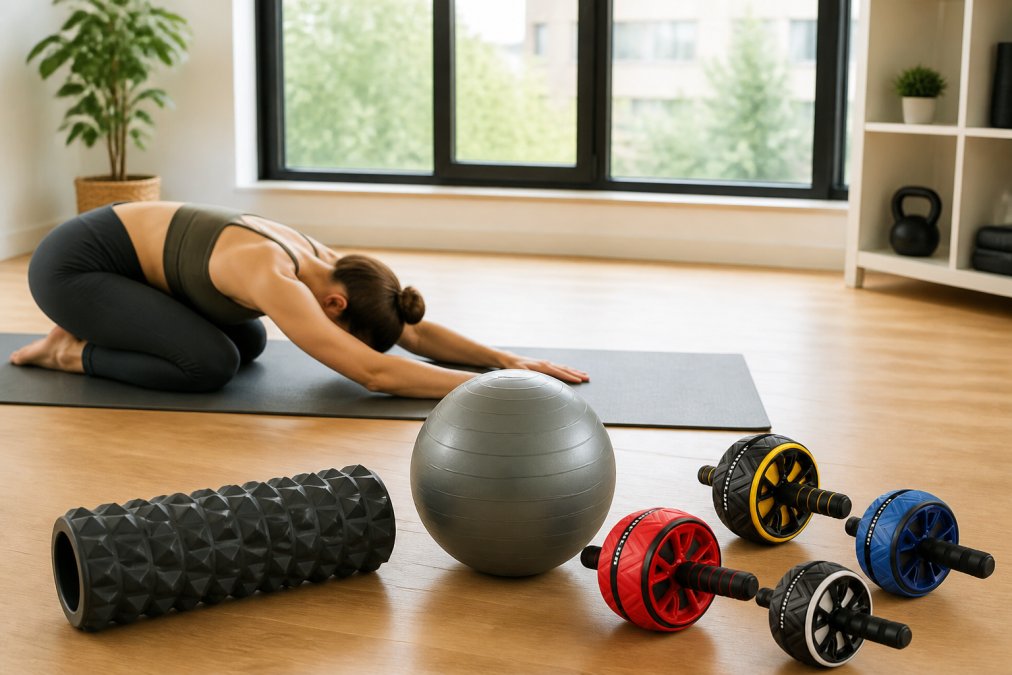
The Aura Cork Yoga Mat ($99.00) is built from renewable materials, cork and plant-based foam. The cork surface grips better as it gets wet, opposite of rubber mats that get slippery. Joint support is genuine: the cushioning protects knees and wrists during floor work without losing stability.
What separates this from a $15 mat: the grip consistency and durability. Cheap mats compress over months and lose grip. This mat maintains performance for years.
The 25cm Yoga Balance Ball ($10.00) serves double duty: core training and desk sitting. Using it as a chair forces stabilizer muscles to work continuously, improving posture and core endurance. For core training, it adds instability to exercises like bridges and crunches. The thick PVC material is explosion-proof, deflating gradually rather than popping.
The The "Moment" Balance Board ($185.00) is the advanced recovery tool. Balance training improves proprioception, your body's awareness of position in space. This transfers directly to injury prevention. The adjustable center rail lets you progress from traditional balance work to advanced positioning.
Smart Home Gym Technology and Wearable Integration
The Exercise Stationary Folding Bike includes heart rate monitoring through hand pulse sensors and an LCD display showing real-time metrics. You can see your effort and track progress across sessions. Consistency becomes measurable.
Integration with wearables matters more than built-in tech. Your smartwatch already knows your resting heart rate, sleep quality, and recovery status. The best home gym tools play well with existing devices rather than forcing proprietary ecosystems.
What's missing from most home equipment: real-time form feedback. Set up your workout space so you can see your form, or record videos to review later.
How to Choose the Right Equipment for Your Goals
Equipment selection starts with honest assessment: what's your actual goal, and what will you realistically use?
If your goal is cardiovascular fitness and you hate running, a stationary bike makes sense. If you want strength and have 30 minutes three times weekly, adjustable dumbbells and a kettlebell cover everything. If you're recovering from injury, focus on mobility and balance tools first.
Second: what's your space constraint? Folding equipment and wall-mounted tools become non-negotiable in small spaces. Vertical storage matters more than footprint.
Third: what's your budget? You can build a functional home gym for $200 or $2,000. The $200 version, adjustable dumbbells, resistance bands, a yoga mat, delivers 80% of the results. More money doesn't guarantee better results; consistency does.
Finally: will you actually use it? A $500 rowing machine collecting dust is worse than a $10 resistance band you use daily. Match equipment to your lifestyle and preferences.
Conclusion
The best home workout tools 2026 aren't the newest or most expensive. They're the ones that match your goals, fit your space, and integrate into your actual routine. Start with adjustable weights for strength, a recovery tool for mobility, and maybe one piece of cardio equipment if conditioning matters to you.
At thewellbeingshop.com, we've curated equipment specifically for people building sustainable home wellness practices. The Adjustable Dumbbell Set ($185.36) and Aura Cork Yoga Mat ($99.00) form a foundation that works for almost any fitness level. Add the Powder Coated Kettlebell ($69.99) for functional strength, and you have a complete system that costs less than three months of gym membership.
The real investment is in consistency. Choose tools that remove friction between you and the workout. Then use them.
Supporting Resources
For more on building intentional fitness routines, explore American College of Sports Medicine guidelines on resistance training. Their evidence-based recommendations help you structure workouts that actually work.
Research from Journal of Sports Sciences on home-based exercise adherence shows that people stick with home training when equipment matches their lifestyle and goals.
For recovery and mobility, the National Institutes of Health research on balance training and injury prevention demonstrates that proprioceptive work, like balance board training, genuinely reduces fall risk and improves functional movement in aging populations.
Frequently Asked Questions
What are the best home workout tools for beginners?
Start with resistance bands, adjustable dumbbells, and a yoga mat. These tools build foundational strength without requiring much space or assembly. Resistance bands offer progressive resistance, dumbbells let you control weight, and a mat provides cushioning for floor exercises. Many beginners find success with the six-tube pedal tension rope ($10) for full-body engagement and the 25cm yoga balance ball ($10) for core stability work before investing in larger equipment.
How do I set up an essential home gym setup for beginners without spending too much?
Prioritize versatile, budget-friendly tools: resistance bands ($10), a small balance ball ($10), an abdominal wheel ($29.99), and a kettlebell ($69.99). These cover strength, core, and functional fitness with minimal floor space. Add a yoga mat ($99) for comfort and safety. This foundational essential home gym setup for beginners costs under $230 and works for multiple fitness styles, from strength training to mobility work.
What recovery tools for home workouts actually help with soreness and mobility?
The Aura Cork Yoga Mat ($99) supports restorative poses and stretching, while the 25cm Yoga Balance Ball ($10) engages stabilizer muscles during recovery work. Balance boards like the Moment Balance Board ($185) improve proprioception and joint stability. These recovery tools for home workouts target muscle tension, improve flexibility, and support low-impact movement that accelerates recovery between strength sessions.
Can I build serious strength at home with adjustable dumbbells and resistance bands?
Yes. Adjustable dumbbells ($185.36) support progressive overload across upper and lower body exercises, while resistance bands add variable resistance that challenges muscles differently than fixed weights. Combined with functional tools like kettlebells ($69.99) and the multifunctional fitness board ($512.46), you can perform compound movements, isolation work, and stability training that rival gym-based routines for muscle and strength gains.
Is a folding exercise bike worth the investment for home cardio?
The Exercise Stationary Folding Bike ($169) delivers cardio without consuming permanent space. It folds for storage, includes a pulse sensor and LCD display to track progress, and supports users up to 330 lbs. For remote workers or people with limited space, this compact cardio option enables consistent cardiovascular training without requiring a dedicated gym room, making it practical for long-term adherence.
This article was written using GrandRanker