
Can 20-Minute Workouts Work? A Science-Backed Guide
Table of Contents
- The Short Answer: Yes, 20-Minute Workouts Can Work
- Is 20 Minutes Enough to Meet Exercise Guidelines?
- The Importance of Exercise Intensity in Short Sessions
- High-Intensity Interval Training Benefits for Time-Efficient Workouts
- Effective 20-Minute Home Workout Routines That Deliver Results
- Best Equipment for Quick Home Workouts
- Common Myths About Short Workouts and What Actually Matters
- Building Consistency: Why Frequency Beats Duration
Last Updated: August 26, 2026
The Short Answer: Yes, 20-Minute Workouts Can Work
Can 20 minute workouts work? The answer is unequivocally yes, but only if you approach them strategically. The shift from "more time equals better results" to "smarter time equals better results" has reshaped modern fitness. A 20-minute session built around high-intensity interval training, functional movement patterns, or progressive resistance can trigger the same metabolic adaptations that longer, moderate-intensity workouts produce. The key difference lies in how you structure those minutes.
This isn't permission to slack off. A 20-minute workout demands focus. You can't coast through it the way some people do in hour-long gym sessions. But for remote workers dealing with back pain by 2pm, professionals struggling to find consistency, and fitness enthusiasts transitioning from gym-based routines to sustainable home practice, 20 minutes becomes not just feasible, it becomes the foundation of lasting habit change.
Is 20 Minutes Enough to Meet Exercise Guidelines?
Official physical activity guidelines recommend 150 minutes of moderate-intensity aerobic activity per week, or 75 minutes of vigorous-intensity activity (the CDC). On the surface, 20 minutes sounds nowhere near sufficient. But the framework changes when you understand how intensity and frequency interact.
If you perform three 20-minute high-intensity interval training sessions per week, you're accumulating 60 minutes of vigorous activity, roughly 80% of the weekly recommendation. Add two moderate-intensity sessions of 20 minutes each, and you've hit the guidelines while maintaining a sustainable schedule. The math works when your sessions prioritize intensity over duration.
The real insight here is that meeting exercise guidelines isn't about one workout, it's about weekly accumulation. Many people waste time trying to cram everything into a single long session when distributed short sessions actually produce better adherence rates. Someone who does four 20-minute workouts consistently will see more progress than someone who plans three 45-minute sessions and skips two of them.
The Importance of Exercise Intensity in Short Sessions
Duration and intensity exist in inverse relationship. When you have less time, intensity becomes non-negotiable. A 20-minute moderate-intensity walk won't produce the same metabolic conditioning as a 20-minute high-intensity interval training session, even though both consume the same clock time.
Intensity determines how hard your body works and how much physiological adaptation occurs. During high-intensity effort, your muscles recruit more motor units, your cardiovascular system pushes toward anaerobic threshold, and your metabolic rate elevates for hours after exercise ends, a phenomenon called excess post-exercise oxygen consumption (EPOC) (peer-reviewed research). This afterburn effect is where short workouts gain their efficiency advantage.
The challenge most people face is accurately gauging intensity. Many believe they're working hard when they're actually in a comfortable moderate zone. True high-intensity work should feel difficult by minute 10 and genuinely challenging by minute 15. Your breathing should be labored, conversation should be impossible, and your muscles should feel fatigued. If you can still chat easily, you're not at the intensity level needed to make 20 minutes count.
This is where equipment makes a real difference. Resistance tools like the Six-Tube Pedal Tension Rope allow you to create progressive overload, increasing resistance over time, which forces your body to adapt. Without external resistance, bodyweight alone limits how much you can challenge yourself as you improve.
High-Intensity Interval Training Benefits for Time-Efficient Workouts
High-intensity interval training (HIIT) represents the gold standard for time-efficient workouts. The format alternates between short bursts of maximum-effort work and brief recovery periods, compressing significant cardiovascular and metabolic stimulus into minimal time.
A typical HIIT structure might look like 30 seconds of maximum effort followed by 30 seconds of active recovery, repeated 10-15 times. That's 10-15 minutes of actual work. Add a 3-minute warm-up and 2-minute cool-down, and you're at 20 minutes total with superior conditioning stimulus compared to a steady-state 20-minute jog.
The physiological benefits extend beyond the workout itself. HIIT training increases VO2 max, your body's ability to use oxygen, more efficiently than steady-state cardio (peer-reviewed research). It also creates greater EPOC, meaning your metabolic rate stays elevated longer after exercise. For someone with only 20 minutes available, this efficiency advantage is profound.
However, HIIT isn't appropriate for everyone. Those with joint issues, cardiovascular concerns, or minimal fitness foundation should progress through moderate-intensity work first. HIIT works best as part of a varied routine, not as the only training method. Mixing HIIT sessions with moderate-intensity work and strength training creates sustainable long-term progress without overtraining.
Effective 20-Minute Home Workout Routines That Deliver Results
The best 20-minute workout is one you'll actually do consistently. Home-based routines remove friction, no commute, no waiting for equipment, no gym intimidation. This accessibility directly supports habit formation.
A functional 20-minute home session typically includes:
Minutes 0-3: Dynamic warm-up, Joint mobility and movement preparation. Hip circles, arm circles, leg swings, bodyweight squats. This isn't optional; it primes your nervous system and reduces injury risk.
Minutes 3-18: Main work block, This is where structure matters. You can follow one of three approaches:
Strength-focused sessions use compound movements like squats, push-ups, lunges, and rows performed with challenging resistance. Perform 4-5 exercises for 3 sets each, resting 30-45 seconds between sets. This builds muscle mass and functional strength.
Metabolic conditioning sessions combine strength movements with cardiovascular elements. Perform 5-6 exercises in a circuit format, moving quickly between stations with minimal rest. This simultaneously builds strength and cardiovascular capacity.
HIIT sessions alternate 20-40 seconds of maximum effort with 20-40 seconds of recovery. Perform 6-8 different movements, cycling through 2-3 rounds. This maximizes cardiovascular stimulus and metabolic demand in minimal time.
Minutes 18-20: Cool-down and mobility, Bring your heart rate down with light movement and static stretching. This facilitates recovery and improves flexibility.
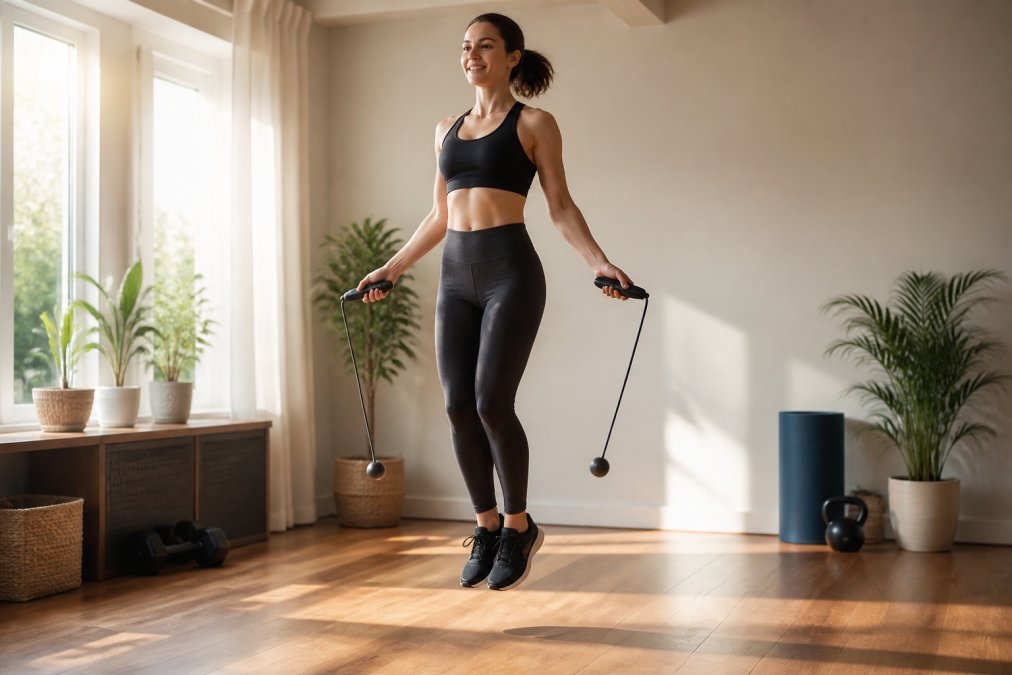
A common mistake is treating the 20 minutes as a single unstructured block. Structure, warm-up, work, cool-down, makes the difference between a session that produces results and one that leaves you confused about what you actually accomplished.
The digital jump rope with electronic counting from thewellbeingshop.com serves this purpose well. It provides immediate feedback on work capacity, you can see exactly how many rotations you completed and calories burned, which creates accountability and tracks progression over time. Knowing you completed 150 rotations last week and 165 this week is concrete evidence of improvement.
Best Equipment for Quick Home Workouts
Equipment selection should prioritize versatility and progressive overload capability. The best tools for 20-minute workouts are those that allow you to increase difficulty as you improve, preventing plateaus.
Resistance bands and tension ropes offer full-body training stimulus in minimal space. The Six-Tube Pedal Tension Rope targets multiple muscle groups, arms, legs, back, chest, core, allowing you to perform dozens of exercises with adjustable resistance. At $10, it's affordable enough to own multiple resistance levels, enabling progressive overload.
Jump ropes, particularly models with electronic counting, provide cardiovascular conditioning while building calf strength and coordination. The cordless digital jump rope from thewellbeingshop.com ($38) tracks calories burned and rotation count, eliminating guesswork about work capacity. This feedback loop drives consistency; people train harder when they can measure progress.
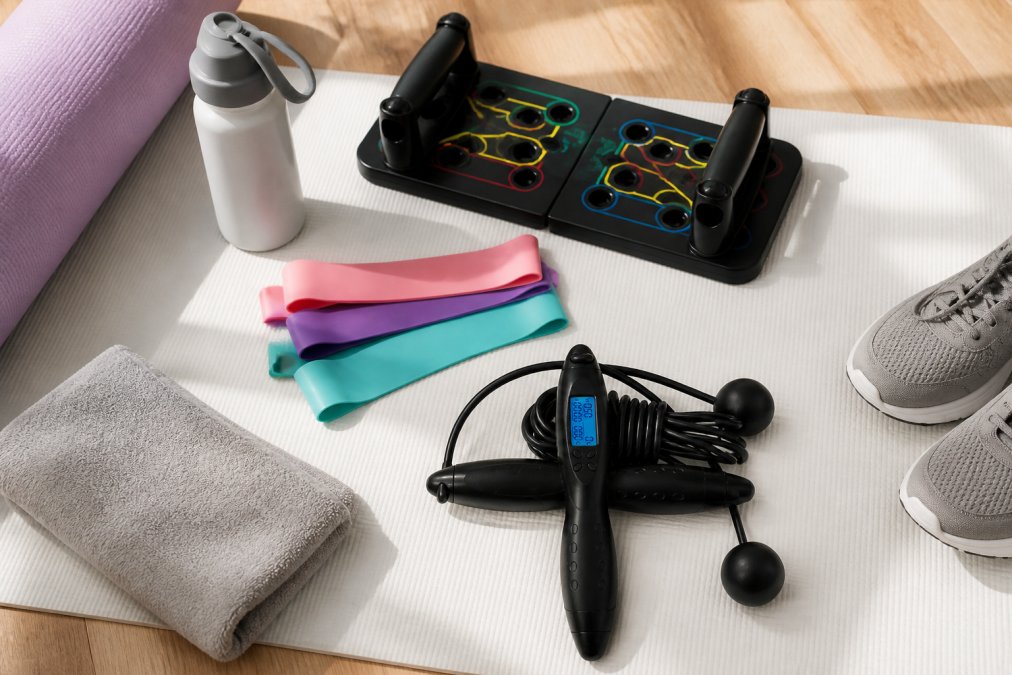
Multifunctional fitness boards ($512.46) serve those ready to invest in serious home training. These tools support strength training, balance work, core training, and flexibility development. They're space-efficient and durable enough to handle years of use without degradation.
The Home Multifunctional Fitness Training Equipment ($29.99) bridges the gap between basic tools and premium equipment. It provides structure for exercises, reduces setup time, and allows you to focus on movement quality rather than figuring out positioning.
What you should avoid: single-purpose equipment that only does one thing. A device that only works for bicep curls limits your options. Versatility matters in small spaces. The best equipment solves multiple training needs, progresses with you as you improve, and requires minimal setup between exercises.
Common Myths About Short Workouts and What Actually Matters
Myth: You need at least 45 minutes for results. Reality: A 20-minute high-intensity session produces greater metabolic stimulus than a 45-minute moderate-intensity session. Duration matters less than what you do with the time. Someone performing 20 minutes of HIIT will see greater improvements in cardiovascular capacity and body composition than someone jogging slowly for 45 minutes.
Myth: Short workouts only work for cardio. Reality: Strength training in 20 minutes is entirely feasible. Compound movements performed with appropriate resistance and minimal rest between sets create significant muscle stimulus. You won't build elite-level strength in 20 minutes daily, but you'll build functional strength and muscle hypertrophy far faster than sedentary alternatives.
Myth: You need expensive gym equipment. Reality: Bodyweight, resistance bands, and jump ropes create sufficient training stimulus for most people. Progressive overload comes from increasing reps, reducing rest periods, or adding resistance, not from equipment sophistication. Many people waste money on equipment they don't need while neglecting consistency, which is actually what drives results.
Myth: Shorter workouts mean less recovery needed. Reality: Intensity determines recovery demand, not duration. A 20-minute HIIT session demands more recovery than a 60-minute easy walk. You can't perform maximum-intensity work daily without degrading performance and increasing injury risk. Recovery days matter regardless of session length.
The pattern connecting these myths is clear: people overestimate the importance of duration and underestimate the importance of intensity and consistency. A 20-minute workout works because it's sustainable, because it removes time as an excuse, and because intensity can be controlled to match available duration.
Building Consistency: Why Frequency Beats Duration
This is where the real advantage of 20-minute workouts emerges. Consistency trumps perfection in fitness. Someone who completes four 20-minute sessions weekly will see dramatically better results than someone who plans three 60-minute sessions and completes one.
The psychological barrier to starting a 20-minute workout is lower. You can fit it before work, during lunch, or after dinner without reorganizing your entire day. A 60-minute commitment requires planning, travel time, and mental preparation. Twenty minutes feels manageable, even on busy days.
Over a year, this difference compounds dramatically. Four weekly 20-minute sessions equals 208 workouts annually. Three weekly 60-minute sessions, if you actually complete them, equals 156 workouts. But most people don't complete them consistently. The realistic completion rate for 20-minute sessions is significantly higher, creating a larger actual training volume.
Sustainable habits build on frequency and manageable duration. Remote workers struggling with posture issues won't fix their problems with sporadic intense sessions. They'll fix them with consistent daily or near-daily movement. A 20-minute mobility and strength session performed five times weekly creates genuine postural adaptation. One 90-minute session weekly creates temporary soreness and nothing more.
This is where thewellbeingshop.com's philosophy of "small habits creating big life shifts" applies directly. The equipment and tools matter less than the commitment to showing up consistently. Digital tracking on a jump rope, progressive resistance on bands, or structured routines on a fitness board, these all support consistency by making progress visible and workouts efficient.
The data on habit formation suggests that 20-minute workouts hit the sweet spot. Long enough to create meaningful stimulus, short enough to fit into any schedule, and manageable enough that willpower depletion doesn't sabotage adherence.
Can 20 minute workouts work? They absolutely can, and for most people with limited time, they're actually superior to longer sessions performed inconsistently. The challenge isn't whether 20 minutes is enough; it's whether you'll commit to the intensity and consistency required. Start with thewellbeingshop.com's curated fitness equipment and tools designed for home-based training. Their jump ropes with electronic tracking, resistance bands, and multifunctional boards remove guesswork from progression and make every minute count toward real results.
Frequently Asked Questions
Q: How effective are 20-minute workouts compared to longer sessions?
A: 20-minute workouts can be highly effective when structured with appropriate intensity. Research shows that high-intensity interval training (HIIT) and resistance work in short windows produce measurable improvements in cardiovascular health, metabolic rate, and muscle mass. The key difference is intensity, a 20-minute workout at moderate to high intensity often produces similar metabolic effects to longer, lower-intensity sessions. Consistency matters more than duration; three 20-minute sessions per week outperforms sporadic longer workouts.
Q: Can you build muscle with effective 20-minute home workout routines?
A: Yes, you can build muscle in 20 minutes if you focus on progressive overload and compound movements. Resistance training that targets major muscle groups, using equipment like resistance bands or multifunctional fitness boards, triggers muscle hypertrophy even in short timeframes. The critical factors are exercise selection, proper form, and gradually increasing resistance. Aim for 3-4 sessions weekly to allow adequate recovery periods between sessions targeting the same muscle groups.
Q: Is 20 minutes of exercise a day enough to meet health guidelines?
A: The CDC recommends 150 minutes of moderate-intensity aerobic activity or 75 minutes of vigorous-intensity activity weekly. A single 20-minute session counts toward this goal if it meets the intensity threshold. Multiple 20-minute sessions throughout the week easily meet guidelines, for example, four 20-minute high-intensity sessions weekly exceeds the 75-minute vigorous recommendation. The structure is flexible as long as total weekly volume and intensity are adequate.
Q: How long does it take to see results from 20-minute workouts?
A: Visible changes depend on your starting point and consistency. Energy levels and mood typically improve within 2-3 weeks of regular 20-minute sessions. Measurable cardiovascular improvements (heart rate, aerobic capacity) appear within 4-6 weeks. Body composition changes, muscle gain or fat loss, usually become noticeable after 6-8 weeks of consistent effort combined with proper nutrition. The timeline accelerates with higher intensity and strict adherence to your routine.
This article was written using GrandRanker