


 Link label

Best Time for Home Workouts: Morning vs. Evening
Table of Contents
- Why Timing Matters for Home Workouts
- Benefits of Morning vs Evening Exercise
- Chronotype and Your Optimal Workout Window
- Effective 20 Minute Home Workout Routines for Any Time
- How to Build a Consistent Home Workout Habit
- Sleep Quality, Recovery, and Post-Workout Timing
- Finding Your Best Time: A Practical Decision Framework
- Conclusion
- Frequently Asked Questions
Last Updated: September 22, 2026
Why Timing Matters for Home Workouts
When you work from home, your schedule is flexible. That flexibility is both a gift and a trap. You can theoretically exercise whenever you want, but that freedom often means you exercise whenever you feel like it, which frequently means never.
The truth is simpler than most fitness advice suggests: the best time for home workouts is the time you'll actually do them consistently. But that doesn't mean timing is irrelevant. Your body's circadian rhythm, hormonal patterns, and energy levels shift throughout the day. Understanding these shifts helps you choose a workout window that aligns with your biology rather than fighting against it.
The rest of this guide walks you through how to do the same.
Benefits of Morning vs Evening Exercise
Morning and evening training deliver different physiological benefits. Neither is universally "best" because your body responds differently depending on when you train and what you're trying to achieve.
Morning Training: Energy, Metabolism, and Mental Clarity
Morning workouts elevate your core body temperature and activate your central nervous system early. This shift in your circadian rhythm signals your body to increase cortisol production, which peaks naturally in the early morning anyway. The result is heightened alertness and mental clarity for the rest of your day.
A morning training session also jumpstarts your metabolic rate. Your body continues burning calories at an elevated rate for hours after you finish. Many practitioners report that morning exercise improves their adherence to other healthy habits throughout the day, from nutrition choices to hydration.
The catch: your muscles are stiffer after sleep. Your glycogen stores are depleted. Your core body temperature is lower. This means morning workouts require more warm-up time, and your absolute strength performance will be lower than it would be later in the day. If you're training for peak performance or pushing heavy loads, morning might not be optimal. But if your goal is consistency and mental clarity, morning training is hard to beat.
Evening Training: Performance Peaks and Recovery
Your muscles reach peak strength and power output in the late afternoon and early evening (Time of Day and Muscle Strength: A Circadian Output?). This is when your core body temperature is highest, your muscles are warmest, and your nervous system has been activated all day. Your glycogen stores are replenished from meals. This is why most powerlifters and strength athletes train in the evening.
Evening training also allows for longer, more intense sessions because your body has had the full day to prepare. Your hormonal response to training is more pronounced. If you're chasing muscle hypertrophy or trying to break through a strength plateau, evening training typically delivers better results.
The trade-off is sleep quality. Training too close to bedtime elevates your heart rate and core body temperature, which can delay sleep latency and reduce deep sleep duration. You also need adequate recovery time between your workout and sleep, which means evening training works best if you finish at least two to three hours before bed.
Chronotype and Your Optimal Workout Window
Your chronotype is your natural tendency toward morning or evening activity. Some people are wired to wake early with high energy; others hit their stride in the late afternoon. This isn't laziness or discipline. It's biology.
Your chronotype is partly genetic and partly shaped by your circadian rhythm, the internal clock that regulates your sleep-wake cycle. If you're a natural early riser, your metabolic rate and hormonal patterns peak earlier in the day. If you're a night owl, these peaks arrive later. Fighting your chronotype is possible but exhausting. Aligning your training with it is sustainable.
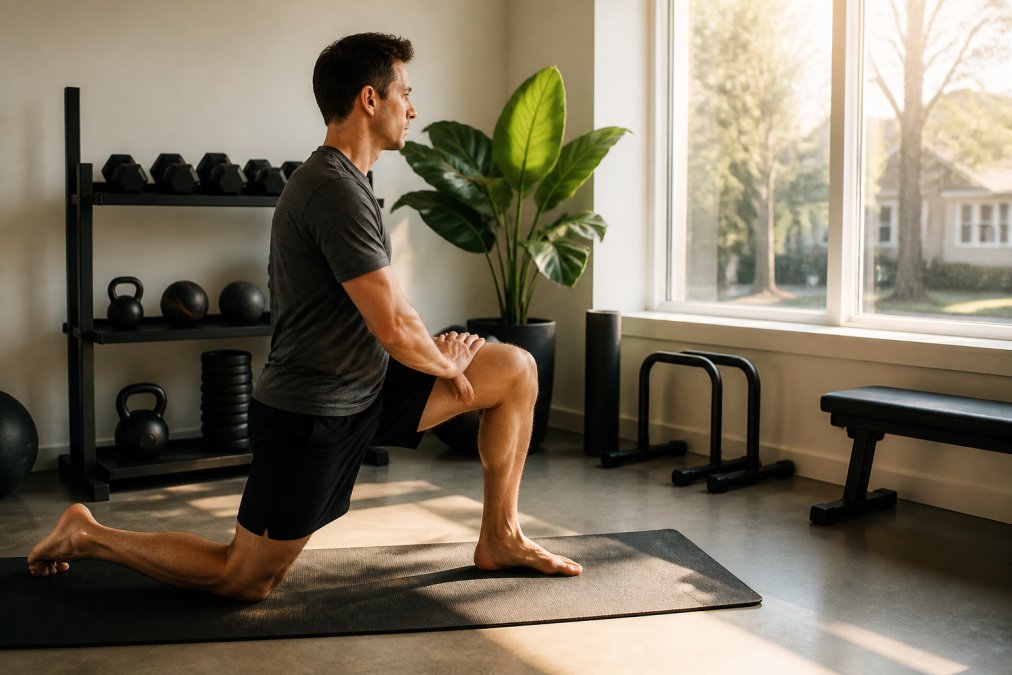
The practical implication: if you're naturally a morning person, morning workouts will feel easier to maintain long-term, even if the absolute performance numbers are slightly lower. If you're a night owl, pushing yourself into 6 a.m. workouts will create constant friction. You'll eventually stop.
Take an honest inventory of when you have the most energy without forcing it. That's your optimal window. Build your home workout routine around that time, not against it.
Effective 20 Minute Home Workout Routines for Any Time
The constraint of 20 minutes forces clarity. You can't waste time. You can't do five different exercises half-heartedly. You need a focused, high-intensity approach that hits multiple muscle groups efficiently.
A 20-minute session works best with compound movements and minimal rest. The Six-Tube Pedal Tension Rope ($10.00) is ideal for this because it targets your entire body in one tool. Step on the pedals and pull the handles for rows, curls, presses, and raises. The foot engagement means your legs work simultaneously with your upper body, maximizing training volume in minimal time.
Here's a structure that works for any time of day:
- Warm-up (2 minutes): Light movement, dynamic stretching, joint mobility
- Main work (15 minutes): 3-4 compound exercises, 40 seconds work / 20 seconds rest
- Cool-down (3 minutes): Light stretching, breathing work
If you're training in the morning when your muscles are stiff, add an extra minute to warm-up. If you're training in the evening when you're already warm, you can jump into intensity faster.
The key is consistency over perfection. A 20-minute session you do five times per week beats a 60-minute session you do twice per month.
How to Build a Consistent Home Workout Habit
Consistency is where most home fitness attempts fail. You start with motivation. Motivation fades. Then you're left with habit, and most people haven't built one.
The most common mistake is treating your workout like an optional task that happens if you have time. You won't have time. Time doesn't exist. You have to create it by making your workout non-negotiable, the same way you don't skip brushing your teeth.
Anchor your workout to an existing habit. If you always have coffee at 6 a.m., work out right after. If you always eat lunch at noon, train beforehand. This creates a trigger that doesn't depend on motivation. The anchor does the work.
Keep your equipment visible and accessible.
Sleep Quality, Recovery, and Post-Workout Timing
Your workout is only half the equation. Recovery determines whether that workout builds strength or just creates fatigue.
Finding Your Best Time: A Practical Decision Framework
The best time for home workouts is the intersection of three factors: your chronotype, your life schedule, and your training goal.
| Factor | Morning Window | Evening Window | Decision Logic |
|---|---|---|---|
| Chronotype match | Natural early riser | Natural night owl | Pick the time that requires no willpower |
| Schedule availability | Free 6-8 a.m. | Free 5-7 p.m. | Choose when you have protected time |
| Training goal | Mental clarity, consistency | Strength peaks, muscle growth | Align timing with your primary goal |
| Sleep impact | None (full day to recover) | Requires 2-3 hour buffer before bed | Evening training demands strict timing |
| Performance level | Lower absolute strength | Higher absolute strength | Accept trade-offs based on your priority |
Start by answering these questions honestly:
- When do you naturally have the most energy without forcing it?
- When is your schedule most protected from interruptions?
- Are you chasing consistency and mental clarity, or peak performance?
- If you train in the evening, can you finish at least two to three hours before bed?
Conclusion
The best time for home workouts isn't determined by fitness gurus or optimal circadian science. It's determined by what you'll actually do consistently.
Frequently Asked Questions
Is it better to do workouts at night or in the morning?
The best time for home workouts depends on your chronotype and schedule. Morning training boosts metabolic rate and mental clarity throughout the day, while evening workouts align with peak muscle strength and core body temperature. Morning exercisers often report better adherence and sleep quality. Evening exercisers benefit from higher performance capacity and hormonal response. Consistency matters more than timing, choose the time you'll actually stick with.
How can I stay consistent with home workouts regardless of the time?
Build consistency by anchoring your workout to an existing habit (morning coffee, lunch break, or post-work routine). Start with effective 20 minute home workout routines that fit your schedule rather than aiming for longer sessions. Use compact equipment like the Six-Tube Pedal Tension Rope ($10) or Adjustable Dumbbell Set ($185.36) so setup takes seconds. Track completion, not perfection. Most people maintain habits better when they remove friction and choose a time that aligns with their natural energy rhythm.
Does the time of day affect workout intensity and results?
Yes. Core body temperature and muscle strength peak in late afternoon and early evening, typically 4-6 PM, meaning your anaerobic capacity and power output are highest then. Morning workouts show lower initial performance but trigger greater metabolic rate elevation and thermogenesis throughout the day. Circadian rhythm influences cortisol levels, glycogen stores, and hormonal response. Both timing windows deliver results, the difference is how your body responds physiologically. Consistency over weeks and months outweighs the daily timing advantage.
What are the benefits of evening home workouts for sleep quality?
Evening workouts completed 2-3 hours before bed can improve sleep latency and sleep quality by promoting physical exertion that naturally regulates your circadian rhythm. However, high-intensity training within 2 hours of sleep may elevate cortisol and heart rate, delaying sleep onset. Moderate evening training supports recovery time and allows your nervous system to downregulate before bed. The key is intensity timing, not the workout itself.