


 Link label

Home Gym Weight Equipment: Best Picks for Small Spaces
Table of Contents
- Quick Comparison: Top Home Gym Weight Equipment
- Adjustable Dumbbells for Home Gym: The Space-Saving Foundation
-
All-in-One Machines and Functional Trainers for Full-Body Training
- The three resistance systems, and what each one actually feels like
- Cable ratio: the spec almost no buyer checks
- Footprint, ceiling height, and the measurements to take first
- Assembly difficulty: a time-to-assemble rating
- Smart-app integration: the gap most iron buyers ignore
- Resistance bands and tension ropes for small spaces
- Kettlebells, Ab Wheels, and Core Tools for Strength and Stability
- Strength Training Routine for Beginners: A Simple 3-Day Plan
- Home Gym Safety Tips: Flooring, Form, and Support Gear
- Maintenance and Longevity: Making Your Home Gym Weight Equipment Last
- Conclusion
- Frequently Asked Questions
Last Updated: September 23, 2026
Quick Comparison: Top Home Gym Weight Equipment
Building a home gym weight setup that actually fits your space starts with one honest question: what will you use every week? According to the American College of Sports Medicine's exercise guidelines, adults need at least two sessions of resistance training per week to build and maintain strength. At thewellbeingshop.com, we've watched home exercisers cycle through bulky machines before landing on compact tools they actually touch daily.
| Equipment | Space Needed | Best For | Starting Price |
|---|---|---|---|
| Adjustable Dumbbell Set | Under 2 sq ft | Full-body strength | $185.36 |
| Home Multifunctional Trainer | Small corner | Full-body workouts | $29.99 |
| Powder Coated Kettlebell | Under 1 sq ft | Swings, carries, core | $69.99 |
| Six-Tube Pedal Tension Rope | Fits in a drawer | Resistance training | $10.00 |
| Abdominal Wheel | Under 1 sq ft | Core stability | $29.99 |
| Hex Dumbbells | Under 2 sq ft | Arm and upper-body toning | $109.04 |
Adjustable Dumbbells for Home Gym: The Space-Saving Foundation
Adjustable dumbbells for home gym training are the most versatile purchase you can make: one pair replaces a rack of fixed weights, letting you progress from warm-ups to heavy compounds without crowding your room.
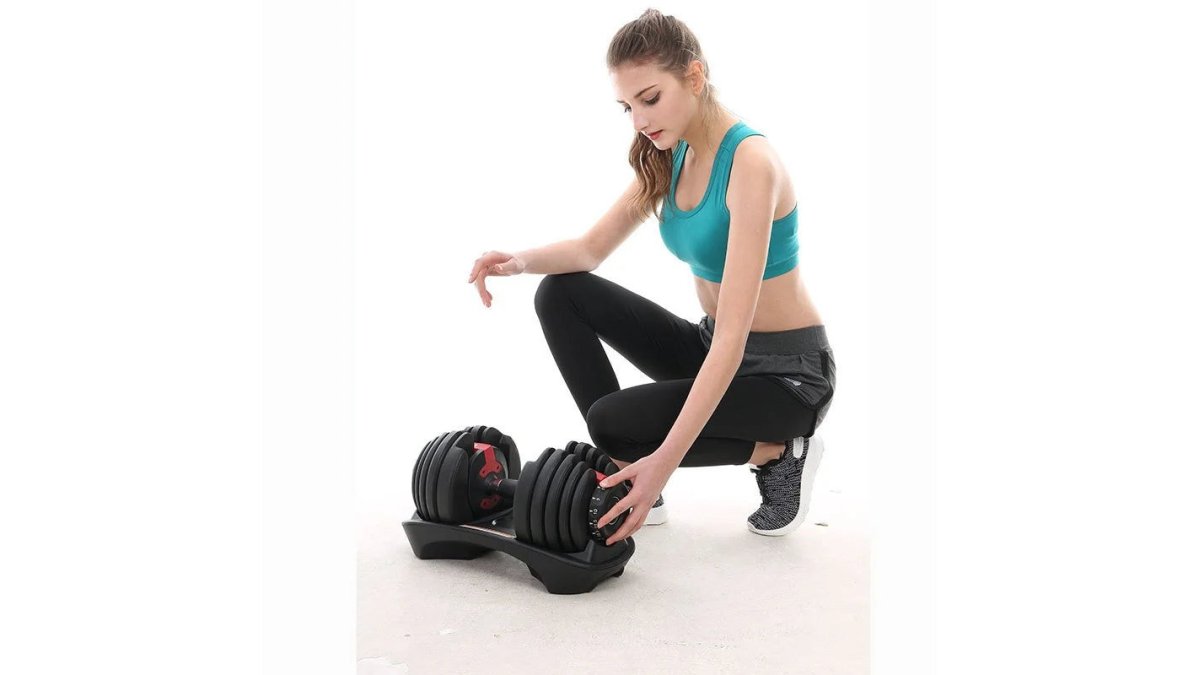
Adjustable Dumbbell Set vs. Fixed Hex Dumbbells
Fixed dumbbells win on grab-and-go speed; adjustable sets win on everything else when space is tight.
All-in-One Machines and Functional Trainers for Full-Body Training
A functional trainer or all-in-one machine delivers cable-style resistance for presses, rows, pulls, and rotational work from one footprint. The trade-off is cost, ceiling clearance, and assembly time, buy one only if you'll use multiple movement patterns weekly.
The three resistance systems, and what each one actually feels like
Every all-in-one falls into one of three resistance families. Knowing which you're buying prevents the most common home-gym regret.
- Weight stacks. A pinned stack of steel plates rides on guide rods. Resistance is smooth, consistent through the range of motion, and changes with a single pin, quietest and easiest to share. The cost is weight: a 150 lb stack plus frame typically pushes a unit past 300 lb, which matters if you plan to move it.
- Plate-loaded. You slide Olympic or standard plates onto a carriage or horn. Cheaper per pound and expandable past any stack, but the load is asymmetric until you balance both sides, and changing weight takes longer.
- Band or tube resistance. Elastic tension rises as you stretch, so the top of a press is harder than the bottom, useful for accommodating leverage on some movements, a liability on others. Elastic also fatigues: tubes cloud, crack, and lose tension over months.
Cable ratio: the spec almost no buyer checks
On a stack machine, the cable ratio tells you how much of the stack you actually lift. A 2:1 ratio means a 100 lb stack gives 50 lb at the handle, but the handle travels twice as far, why functional trainers feel smooth for chest flyes and face pulls. A 1:1 ratio gives the full stack with half the travel, suiting low-row and lat-pulldown work.
Footprint, ceiling height, and the measurements to take first
Before you order, measure three things:
- Floor footprint. Compact functional trainers run roughly 3 ft wide by 4 ft deep. Full all-in-one cages with a smith bar and lat tower can run 6 ft by 6 ft or more.
- Ceiling height. A lat pulldown needs clearance for a full overhead reach plus the bar, at least 7 ft seated, closer to 8 ft for standing overhead cable work.
- Door and stair clearance. A 300 lb assembled frame doesn't fit through a standard interior door. Confirm box dimensions and whether the unit ships in one crate or several.
Assembly difficulty: a time-to-assemble rating
Assembly is the barrier almost no review site quantifies. A rough scale from owner reports:
- Band and tube trainers: 15-45 minutes, one person, hand tools.
- Compact functional trainers (single stack): 2-4 hours, two people recommended. Most arrive partially assembled; pulley routing is the slow part.
- Full all-in-one cages with smith bar and lat tower: 4-8 hours, two people required. Pulley routing, cable tensioning, and aligning the smith bar carriage generate the most support calls.
Smart-app integration: the gap most iron buyers ignore
Most stack machines are mechanically dumb, no sensor, no app. Fine if you track in a notebook, but the machine can't tell you whether you progressed. Two workarounds:
- Add a rep counter or wearable. A wrist tracker or phone-based rep counter logs sets and rest without wiring anything into the machine.
- Use a plate-loaded or band machine with a load cell attachment. A small inline load cell between handle and cable logs actual force per rep, the closest a home setup gets to a commercial smart trainer.
Resistance bands and tension ropes for small spaces
Resistance bands and tension ropes remain the most space-efficient strength tools available: they hang on a hook or slide under a bed, and cost a fraction of a stack machine.
Kettlebells, Ab Wheels, and Core Tools for Strength and Stability
Core and kettlebell tools build the stability heavy lifting depends on, and they're the cheapest way to add variety to a home gym setup.
Strength Training Routine for Beginners: A Simple 3-Day Plan
A beginner strength training routine works best at three sessions per week with a rest day between each, giving muscles time to recover while keeping the habit consistent. The plan below uses the equipment in this article: an adjustable dumbbell pair, a kettlebell, and a band or tension rope.
How to pick your starting weight
Most beginners guess wrong in both directions, too heavy on presses, too light on rows. Use this rule:
Home Multifunctional Fitness Training →
- Pick a load you can lift for two more reps than the target with good form. If the set calls for 8 reps and you could have done 10 cleanly, the weight is right.
- If form breaks before the last rep, drop one increment.
- If you finish feeling you could do 5 more, add one increment next session.
Warm-up: five minutes, every session
Skip static stretching before lifting. Instead:
- Two minutes of easy movement, walking, marching in place, or light jumping jacks.
- One set of 10 bodyweight squats.
- One set of 10 band pull-aparts or arm circles.
- One light set of the first exercise at roughly half your working weight.
That raises core temperature and rehearses the movement pattern before you load it.
The 3-day plan
| Day | Focus | Key Movements | Sets x Reps | Time |
|---|---|---|---|---|
| Day 1 | Full body | Goblet squats, dumbbell rows, chest presses | 3 x 8 | 30 min |
| Day 2 | Rest | Light walking, stretching | , | 15 min |
| Day 3 | Upper body | Shoulder presses, curls, band pull-aparts | 3 x 10 | 30 min |
| Day 4 | Rest | Light walking, stretching | , | 15 min |
| Day 5 | Core and legs | Kettlebell swings, ab-wheel rollouts, lunges | 3 x 10 | 30 min |
| Day 6-7 | Rest | Recovery | , | , |
Start with two sets per movement in week one, add a set in week two, and by week three you're at three sets, the working volume for the rest of the block.
Progression: how to get stronger without changing the plan
Run this plan for six weeks before changing exercises. Progression comes from load, not variety:
- Weeks 1-2: Learn the movements. Add a set each week. Don't chase weight.
- Weeks 3-4: When you hit all target reps on every set, add one increment next session.
- Weeks 5-6: Add a fourth set to your two hardest compounds, usually goblet squats and rows.
Equipment substitutions
If you don't own a piece of equipment, substitute rather than skip:
- No kettlebell: Use a single heavy adjustable dumbbell for swings, gripping both hands on the handle.
- No ab wheel: Do slow plank walkouts or hollow-body holds for the same bracing demand.
- No band: Substitute dumbbell rear-delt raises for pull-aparts.
- No adjustable dumbbells: A fixed hex pair works for weeks 1-4, but you'll stall once the two-reps-in-reserve rule stops being true, the point at which adjustable becomes worth the money.
Home Gym Safety Tips: Flooring, Form, and Support Gear
Home gym safety tips come down to three things: a stable surface, sound form, and support gear that protects joints under load.
Maintenance and Longevity: Making Your Home Gym Weight Equipment Last
Maintenance is the step almost everyone skips, and it's why cheap equipment fails early. Five minutes a month keeps most home gym weight equipment working for years.
- Wipe powder-coated and painted surfaces with a dry cloth to prevent rust
- Check adjustable dumbbell locking mechanisms for looseness before each session
- Inspect resistance tubes for cracks or clouding; replace any tube showing either
- Store kettlebells and dumbbells off the floor on a rack or mat
- Keep gear away from humid rooms like basements and bathrooms
Conclusion
The hardest part of a home gym isn't buying equipment, it's building a routine you return to on the days you don't feel like it. Start with one adjustable pair of dumbbells and a kettlebell, add a compact trainer or tension rope for variety, and protect your joints with knee sleeves and wrist wraps from thewellbeingshop.com.
Frequently Asked Questions
What is the best home gym weight equipment for a small space?
Adjustable dumbbells, resistance bands, and a compact kettlebell cover most strength training needs in under 10 square feet. The Adjustable Dumbbell Set ($185.36) replaces a full rack, while the Six-Tube Pedal Tension Rope ($10.00) adds resistance training for the whole body and stores under a bed. Pair these with an ab wheel ($29.99) for core work and you have a complete home gym weight setup without a dedicated room.
Is 30 minutes of weights a day enough to see results?
Thirty minutes of focused resistance training 3-4 days per week is enough to build strength and support hypertrophy, especially for beginners. The key is compound movements like squats, presses, and rows rather than isolation exercises alone. A strength training routine for beginners using adjustable dumbbells for home gym sessions can fit into 25-30 minutes when you superset exercises and keep rest periods to 60 seconds.
Is it better to buy adjustable dumbbells or a full rack?
Adjustable dumbbells win for most home gyms because they replace 10-15 pairs of fixed weights in a fraction of the footprint. A full rack makes sense only if you have a dedicated 100+ square foot space and train heavy compound lifts regularly. For apartment or spare-room setups, the Adjustable Dumbbell Set delivers the same resistance range with far less clutter and easier storage.
What safety standards should I look for in home gym weight equipment?
Look for equipment rated by organizations like the United States Powerlifting Association (USPA), which approves gear such as the Bear KompleX Knee Sleeves for squats and heavy lifts. Check load capacity ratings, anti-roll designs on hex dumbbells, and non-slip surfaces. Add gym flooring or safety mats under weights to protect floors and reduce impact, and always warm up before loading heavy plates.
How do I stop my home gym equipment from breaking down over time?
Wipe down dumbbells and kettlebells after each session to prevent rust and grip wear. Hand wash neoprene-coated weights and knee sleeves, then air dry; never machine wash compression gear. Check adjustable mechanisms on dumbbells monthly for loose parts. Store weights on a rack or mat rather than the floor to avoid damage, and inspect resistance bands for cracks or thinning before each use.