


 Link label

Natural Sleep Aids for Stress Relief: A Comparison
Table of Contents
- Natural Sleep Aids for Stress Relief: What Works and Why
- Quick Comparison Table: Sleep Supplements and Aromatherapy Options
- Best Natural Sleep Aid for Anxiety: Matching Supplements to Your Stress Type
- Melatonin vs Magnesium for Sleep: Which Should You Choose
- Natural Sleep Aid Side Effects and Interactions: What You Need to Know
- How Long Do Natural Sleep Aids Take to Work: Timing and Expectations
- Quality, Dosage, and Label Evaluation: How to Choose a Reliable Sleep Supplement
- Behavioral Strategies to Pair With Natural Sleep Aids
- Frequently Asked Questions
Last Updated: October 6, 2026
Natural Sleep Aids for Stress Relief: What Works and Why
When stress keeps you awake, natural sleep aids stress relief can mean the difference between another sleepless cycle and genuine rest. At thewellbeingshop.com, we know stress-related sleep problems are personal: what works for racing thoughts won't necessarily calm physical tension.
The key insight most guides miss: it's not about finding the strongest sleep aid, but the one that targets your particular stress response. Some people need to quiet their mind, others to relax their muscles, and still others to shift their nervous system state before bed. Understanding this distinction changes which natural sleep aid you should try.
Quick Comparison Table: Sleep Supplements and Aromatherapy Options
| Product | Type | Primary Use | Price | Best For |
|---|---|---|---|---|
| Magnesium Glycinate | Supplement | Muscle relaxation, racing thoughts | $19.95 | Physical tension, anxiety |
| Organic Mushroom Complex | Supplement | Stress response, focus | $27.99 | Cortisol support, adaptogenic benefit |
| Scent of Nirvana | Aromatherapy | Nervous system calm | $58.00 | Meditation, theta brainwave modulation |
| Forest State of Mind | Aromatherapy | Grounding, mental clarity | $29.99 | Anxiety relief, woodland calm |
| Leleshwa Meditative Essence | Essential Oil | Mindfulness, relaxation | $15.05 | Meditation practice, portable use |
Best Natural Sleep Aid for Anxiety: Matching Supplements to Your Stress Type
Not all anxiety feels the same at night, and not all natural sleep aids work the same way. The most common mistake is treating all stress-related insomnia as one problem.
Some people lie awake with racing minds, replaying conversations and planning tomorrow. Others feel physical tension: tight shoulders, clenched jaw, restless legs. A third group experiences both, plus feeling "wired" despite exhaustion. Each pattern responds differently to natural sleep aids.
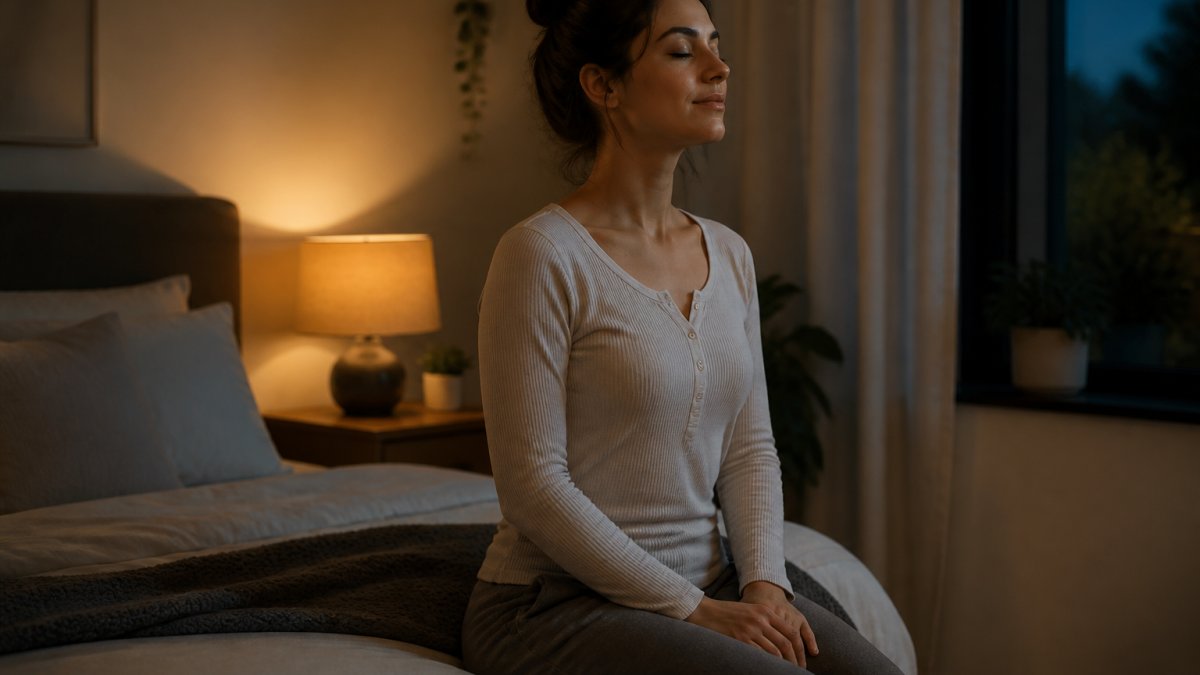
Magnesium for Racing Thoughts and Physical Tension
Magnesium is one of the most researched options for natural sleep aids stress relief. It works on two fronts: calming the nervous system and relaxing muscle tension. If your stress shows up as both a busy mind and a tight body, start here.
The form matters. Magnesium glycinate, the chelated form in our Magnesium Glycinate supplement, absorbs better and is gentler on the stomach than other forms, which can have a laxative effect. At $19.95 for 240 capsules, it's also the most affordable option here.
Take magnesium 30 to 60 minutes before bed, starting with a single dose and adjusting based on response. The typical range is 200 to 400 milligrams, depending on body weight and stress level.
Mushroom Adaptogens for Cortisol and Stress Response
Adaptogens work differently than direct sleep aids: they don't knock you out, but help your body regulate its stress response throughout the day, improving sleep quality at night.
Our Organic Mushroom Complex delivers 12,000 milligrams per serving through quadruple extraction, which determines how many active compounds your body absorbs. Six potent mushrooms in one formula means broad-spectrum adaptogenic support, not just one type.
Mushroom adaptogens suit people whose anxiety is rooted in elevated cortisol or chronic stress.
These take longer to show results than direct sleep aids, typically two to four weeks of consistent use before you notice a real shift in your baseline stress level and sleep quality.
Aromatherapy for Nervous System Calm
Aromatherapy works through a different mechanism: certain scents signal your nervous system to shift into a relaxed state. It's especially effective for situational anxiety or sleep problems that spike during specific stressful periods.
Our Scent of Nirvana meditation candle uses agarwood (oud) essential oil in a proprietary blend designed to modulate theta brainwaves, the frequency present during relaxation and meditation.
For a budget-friendly option, the Forest State of Mind candle at $29.99 offers a grounding, forest-inspired scent with cedarwood and sandalwood.
If you prefer essential oils, the Leleshwa Meditative Essence at $15.05 is portable and versatile, use it in a diffuser, add a drop to your pillow, or inhale directly.
Melatonin vs Magnesium for Sleep: Which Should You Choose
The answer depends on what's actually keeping you awake.
Melatonin is a hormone that signals your body it's time to sleep. It's most effective for disrupted circadian rhythms: shift workers, jet lag, or frequently shifting schedules.
Magnesium works on the nervous system and muscles, making it more effective for sleep problems rooted in stress, anxiety, or physical tension.
Many assume melatonin is the default natural sleep aid, but that's a mistake. If your problem is stress-related racing thoughts or muscle tension, melatonin alone treats the wrong mechanism.
For stress-related insomnia, magnesium is the better choice. Our Magnesium Glycinate is specifically formulated for absorption and gentle digestion, making it a practical natural sleep aid for daily use.
Natural Sleep Aid Side Effects and Interactions: What You Need to Know
Every natural sleep aid comes with considerations. Knowing them helps you choose safely.
Magnesium is generally well-tolerated, but too much can cause digestive upset; the glycinate form minimizes this. If you take medications affecting mineral absorption (certain antibiotics, bisphosphonates), check with your doctor first.
Mushroom adaptogens are safe for most people, but they can interact with blood thinners and immunosuppressants.
Magnesium Glycinate – 240 Capsules High Absorption Supplement →
Aromatherapy and essential oils are generally safe when diffused, inhaled, or applied topically with a carrier oil, but not ingested. Strong scents can trigger headaches or respiratory irritation in sensitive people.
Who should avoid certain natural sleep aids:
- Pregnant or nursing women should avoid most supplements and consult their doctor before using any natural sleep aid
- People on blood thinners should avoid mushroom adaptogens
- People with magnesium sensitivity or kidney disease should avoid magnesium supplements
- People with scent sensitivity or asthma may struggle with aromatherapy
The safest approach: start with one natural sleep aid at a time, use it for at least one week before evaluating results, and watch for any unexpected reactions.
How Long Do Natural Sleep Aids Take to Work: Timing and Expectations
Many people get discouraged because they take a supplement once and expect results that night. That's not how most natural sleep aids work.
Magnesium can work the first night, but many don't notice a real difference until three to five nights of consistent use.
Mushroom adaptogens take longest. They don't knock you out tonight; they support your body's stress regulation system. Expect two to four weeks of consistent daily use before a meaningful shift in baseline anxiety and sleep quality.
Aromatherapy can work immediately for some.
The common mistake: expecting results on day one and giving up on day two. Natural sleep aids work best with patience and consistency.
Quality, Dosage, and Label Evaluation: How to Choose a Reliable Sleep Supplement
Not all supplements are created equal. Label evaluation matters because the supplement industry is less regulated than pharmaceuticals, and quality varies wildly.
What to look for on a supplement label:
- Third-party testing: Look for NSF, USP, or ConsumerLab certification. This means an independent lab verified that the product contains what it claims and is free of contaminants.
- Ingredient transparency: The label should list every ingredient and its amount. If it says "proprietary blend" without breaking down amounts, skip it.
- GMP certification: This means the product was manufactured in a facility that follows Good Manufacturing Practices. Our Magnesium Glycinate is manufactured in a GMP-compliant facility in the USA.
- Extraction method (for mushrooms): Look for "dual-extracted" or "quadruple-extracted." Our Organic Mushroom Complex uses quadruple extraction to maximize active compound concentration.
- Non-GMO and organic certifications: These indicate higher quality standards, though they don't guarantee efficacy.
Dosage guidance:
Magnesium for sleep typically ranges from 200 to 400 milligrams. Start at the lower end and increase if needed. More isn't always better, excess magnesium can cause digestive issues.
Mushroom adaptogens vary by formula. Our Organic Mushroom Complex delivers 12,000 milligrams per serving because quadruple extraction concentrates the active compounds.
Essential oils should never be ingested. Use them in a diffuser, add a drop to a carrier oil for topical application, or inhale directly from the bottle.
Behavioral Strategies to Pair With Natural Sleep Aids
Natural sleep aids work best alongside behavioral changes. Relying on a supplement while keeping poor sleep habits is like taking vitamins while eating poorly: you're fighting yourself.
The most effective behavioral strategies:
- Consistent sleep schedule: Go to bed and wake up at the same time every day, even weekends. This stabilizes your circadian rhythm and makes any natural sleep aid more effective.
- Wind-down routine: Spend 30 minutes before bed on calming activities. This is where aromatherapy shines, lighting one of our candles signals to your nervous system that sleep is approaching.
- Limit screens one hour before bed: Blue light suppresses melatonin production. If you must use screens, use a blue light filter.
- Cool, dark bedroom: Aim for 60 to 67 degrees Fahrenheit. Your body sleeps better when it's cool.
- Avoid caffeine after 2 PM: Caffeine has a half-life of five to six hours. An afternoon coffee can still be in your system at bedtime.
- Exercise earlier in the day: Physical activity improves sleep quality, but exercising close to bedtime can be stimulating. Aim for morning or early afternoon workouts.
The synergy effect: a natural sleep aid plus these behavioral changes creates compounding benefits. You're not just taking a supplement; you're building a sleep system.
Stress-related sleep problems don't require prescription solutions. The right natural sleep aid, paired with consistent behavioral changes, can restore genuine rest. At thewellbeingshop.com, we've curated sleep supplements and aromatherapy tools for different stress patterns, from magnesium for racing thoughts and physical tension, to mushroom adaptogens for cortisol regulation, to meditation candles that shift your nervous system into relaxation.
Frequently Asked Questions
What is the best natural sleep aid for anxiety and stress-related insomnia?
The best choice depends on your specific stress symptoms. Magnesium glycinate works well for physical tension and racing thoughts, while mushroom adaptogens support the stress response system. Aromatherapy using agarwood or forest-scented candles can calm the nervous system before bed. Many people find combining a supplement like magnesium with a calming ritual like lighting a meditation candle creates the most effective routine for stress-related sleep problems.
How does melatonin compare to magnesium for sleep quality?
Melatonin signals your body it's time to sleep by mimicking your natural sleep hormone, making it effective for resetting your sleep-wake cycle. Magnesium works differently, relaxing muscles and calming the nervous system, which addresses stress-related tension. Magnesium glycinate is gentle on the stomach and supports deeper, more restful sleep. Neither is inherently better; melatonin suits circadian rhythm issues, while magnesium suits stress-related insomnia with physical tension.
Can natural sleep aids cause side effects or interact with medications?
Most natural sleep aids are well-tolerated, but interactions are possible. Magnesium can interact with certain antibiotics and bisphosphonates, and high doses may cause digestive upset. Mushroom adaptogens may interact with blood thinners or immunosuppressants. Aromatherapy is generally safe but some essential oils aren't suitable during pregnancy. Always consult your healthcare provider before starting any supplement, especially if you take prescription medications or have existing health conditions.
How long does it take for natural sleep aids to work?
Timeline varies by type. Magnesium and aromatherapy often work within 30 minutes to 2 hours of use, making them suitable for bedtime routines. Mushroom adaptogens build effectiveness over days or weeks of consistent use, supporting your stress response system gradually. For best results, take magnesium 30-60 minutes before bed and light a meditation candle as part of a consistent wind-down routine. Consistency matters more than immediate results with most natural aids.