


 Link label

What Are Natural Alternatives to Stress Medication in 2026?
Last Updated: October 26, 2026
Quick Summary
Natural alternatives to stress medication include herbal options like chamomile and ashwagandha, breathing exercises like box breathing, movement practices such as yoga and tai chi, and supplements like magnesium. These work on different timelines, breathing exercises provide immediate relief within minutes, while adaptogens like ashwagandha require three to six weeks of consistent use to build stress resilience.
- Box breathing activates your parasympathetic nervous system within two minutes by inhaling, holding, and exhaling for four counts each.
- Ashwagandha requires three to six weeks of consistent use before most people notice reduced anxiety and improved sleep quality.
- Magnesium supports nervous system function; most people find 200-400 mg daily in divided doses effective for tension and sleep.
- Valerian root needs two to four weeks of consistent use before effects appear, while chamomile works within 20-40 minutes.
- Third-party certifications like NSF Certified for Sport or USP Verified indicate supplement quality and potency.
Table of Contents
- Understanding Stress vs. Anxiety: Why the Difference Matters
- Natural Remedies for Anxiety and Stress Relief
- Natural Supplements for Anxiety Relief and Nervous System Support
- Breathing Exercises for Stress and Mind-Body Practices
- How Long Do Natural Stress Remedies Take to Work?
- Natural Alternatives vs. Prescription Medication: What You Need to Know
- Lifestyle Changes That Reduce Stress Without Supplements
- Building Your Personal Stress-Management Plan
- Frequently Asked Questions
Understanding Stress vs. Anxiety: Why the Difference Matters
Stress and anxiety are often used interchangeably, but they're fundamentally different. Stress is your body's response to a specific threat or demand, a deadline, a difficult conversation, and typically leaves when the trigger does. Anxiety, by contrast, is a persistent sense of worry or dread that often has no clear external cause. It lingers and can spiral into rumination.
This distinction shapes how you respond. Stress management focuses on removing the stressor; anxiety management requires a toolkit that interrupts the thought patterns and nervous system activation driving the worry. Many people reach for medication for both, assuming they're the same problem. They're not.
Natural Remedies for Anxiety and Stress Relief
Herbal Options: Chamomile, Valerian Root, and Passionflower
Chamomile is one of the most researched calming herbs, binding to brain receptors that promote calm without pharmaceutical sedation. Many find it effective for mild anxiety and sleep disruption, though results vary.
Valerian root has been used for centuries as a relaxation aid. Unlike chamomile, it typically requires two to four weeks of consistent use before effects appear.
Passionflower sits between these two in onset and intensity, traditionally used for nervous tension and mild anxiety.
Adaptogenic Herbs: Ashwagandha and Rhodiola
Ashwagandha is an adaptogenic herb that helps your body modulate its stress response rather than simply sedating you, supporting healthy cortisol levels. Most people report the same external pressures feeling less overwhelming after three to six weeks.
Rhodiola is energizing rather than sedating, better suited for stress that manifests as fatigue or mental fog, though some find it too stimulating late in the day.
Both adaptogens require patience. They're not like anxiety medication that works within hours; they build a stronger foundation over weeks, so consistency matters more than occasional use.
Kava and Other Botanical Approaches
Kava is a Pacific island plant with a long history of ceremonial and social use, producing noticeable calm within 30 minutes to an hour. However, it can stress the liver with heavy or prolonged use and interacts with several medications and alcohol, so treat it as an occasional tool.
Other botanicals include lavender (aromatherapy or supplement), lemon balm (mild, good for mild worry), and skullcap (stronger, for nervous tension). You can also explore organic mushroom complex supplements that support stress resilience and nervous system health.
Natural Supplements for Anxiety Relief and Nervous System Support
Magnesium and Essential Micronutrients
Magnesium is foundational to nervous system function: muscles need it to relax, the brain needs it to regulate neurotransmitters, and the stress response depends on adequate availability.
Magnesium comes in many forms with different absorption rates. Glycinate is gentle and well-absorbed, often preferred for anxiety support. Threonate crosses the blood-brain barrier more effectively, useful for cognitive stress. Citrate has a mild laxative effect.
Dosing matters. Too little produces no effect. Too much causes digestive upset. Most people find 200-400 mg daily in divided doses works well, though individual needs vary.
Beyond magnesium, zinc, B vitamins, and omega-3 fatty acids all support nervous system health, and a deficiency in any can amplify anxiety symptoms. Rather than supplementing randomly, many practitioners recommend testing or working with someone who can assess your needs.
Supplement Quality and Regulatory Verification
Not all supplements are created equal. The industry is less tightly regulated than pharmaceuticals, so quality varies dramatically between brands.
Third-party testing is your verification tool. Look for NSF Certified for Sport, USP Verified, or ConsumerLab testing on the label; these certifications mean the product was independently tested and contains what the label claims.
When evaluating a supplement, check the specific form of the herb (extract vs. whole plant), the extraction method (alcohol vs. water vs. CO2), and any third-party certifications.
Breathing Exercises for Stress and Mind-Body Practices
Box Breathing and Diaphragmatic Techniques
Box breathing is one of the fastest ways to activate your parasympathetic nervous system. Inhale for four, hold for four, exhale for four, hold for four.
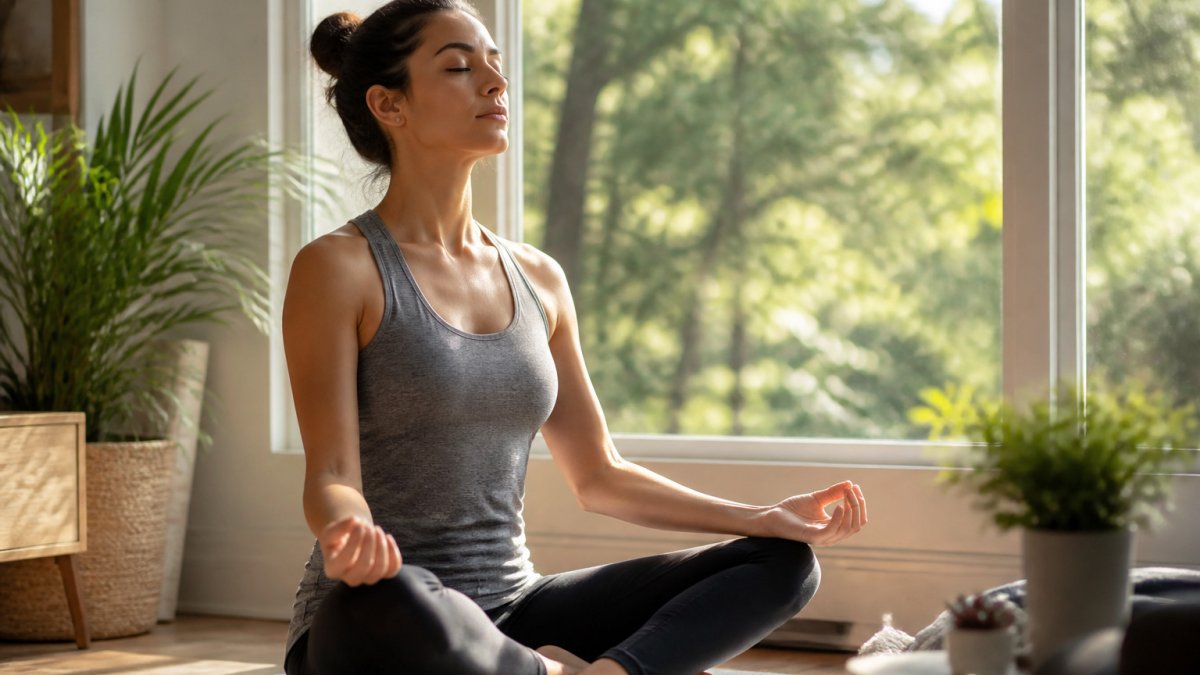
Diaphragmatic breathing (belly breathing) retrains your default breathing pattern.
The practice: place one hand on your chest and one on your belly, and breathe so your belly hand moves while your chest hand stays still.
Yoga, Tai Chi, and Gentle Movement
Yoga combines breathing, movement, and mental focus to directly engage your parasympathetic nervous system.
Tai chi is a moving meditation especially useful for people who find sitting still difficult, combining slow, deliberate movement with breath awareness.
Walking, particularly in nature, is underrated.
The common thread: these practices interrupt the stress cycle at the nervous system level, actively downregulating the physiological state driving anxiety.
You can explore guided practices through meditation apps for stress relief, which help establish routine and provide structure for your practice.
How Long Do Natural Stress Remedies Take to Work?
Adaptogenic herbs like ashwagandha work slowly. Most people notice nothing for two to three weeks; by week four or five, the same stressors feel less overwhelming, sleep improves, and baseline anxiety drops.
Magnesium and micronutrient supplementation also work gradually. If you're deficient, you'll notice improvement in muscle tension and sleep within a week or two; if not, you may notice nothing.
The practical implication: for immediate relief, breathing exercises and certain herbal teas work. For long-term resilience, adaptogens, lifestyle changes, and consistent movement are your foundation.
Natural Alternatives vs. Prescription Medication: What You Need to Know
When Natural Options Are Sufficient
Natural alternatives work best for mild to moderate stress and anxiety clearly tied to specific circumstances.
Postpartum Emotional, Baby Blues →
They're also appropriate early in an anxiety journey, before thought patterns require stronger intervention. Many people find that good sleep, regular movement, and breathing practice prevent anxiety from escalating to the point where medication becomes necessary.
Natural options are also a first choice if you're sensitive to medication side effects or prefer to avoid pharmaceuticals. They offer a lower-risk entry point, though "natural" doesn't mean "completely safe", interactions and contraindications exist.
Drug Interactions and Safety Considerations
Natural approaches require the same caution as pharmaceuticals. **St.
If you're on any prescription medication, consult a healthcare provider before adding supplements. This isn't a suggestion, it's a safety requirement. A five-minute conversation can prevent serious interactions.
Certain groups need extra caution: pregnant or breastfeeding people should verify safety before any herb or supplement, people with liver or kidney disease need to be selective, and people on blood thinners should avoid certain botanicals entirely.
The practical approach: list your current medications and supplements, then research each combination. Many pharmacies offer free interaction checking. Use it.
Medication-Specific Guidance and Safe Transitions
If you're on prescription anxiety or stress medication and considering natural alternatives, the transition requires planning.
During the transition, natural tools become your support system. Establish breathing practice, movement routines, and herbal support before reducing medication, giving your nervous system time to adapt and reducing relapse risk.
Some people find combining natural approaches with lower medication doses works better than either alone.
If you're considering this path, work with a provider who understands both conventional and natural approaches to navigate the transition safely and adjust your plan based on how you respond.
Lifestyle Changes That Reduce Stress Without Supplements
Sleep is your foundation. Poor sleep amplifies anxiety and reduces stress resilience.
Caffeine reduction is underrated.
Social connection buffers stress. Regular time with people you trust, even brief interactions, reduces cortisol and improves mood.
Time in nature reduces stress hormones within minutes. A 20-minute walk in a park produces measurable physiological shifts.
Boundary setting prevents stress accumulation. Saying no, leaving work at a reasonable time, and protecting personal time aren't luxuries, they're foundational.
You can deepen your understanding of how sleep connects to stress management through our guide on natural sleep aids for stress relief.
Building Your Personal Stress-Management Plan
Start by identifying your primary stress driver. Is it situational or persistent?
For situational stress with physical tension: breathing exercises, movement, and magnesium often suffice.
For anxiety severely impacting your functioning: consult a healthcare provider.
Build your plan in layers. Start with sleep, movement, and breathing, your foundation, working for almost everyone.
Track what works. Keep a simple log of what you tried, when, and what you noticed.
Remember that natural alternatives to stress medication aren't one-size-fits-all.
Building a sustainable stress-management routine requires understanding what drives your anxiety and matching your tools accordingly.
National Institute of Mental Health overview of anxiety disorders
American Psychological Association guidance on stress management
Mayo Clinic resource on complementary approaches to anxiety
| Natural Remedy | Typical Onset | Best For | Key Consideration |
|---|---|---|---|
| Breathing exercises | 2-5 minutes | Acute anxiety, immediate relief | Works best with practice |
| Chamomile | 20-40 minutes | Mild anxiety, sleep support | Subtle effects for most people |
| Valerian root | 30-60 minutes (weeks for full effect) | Sleep disruption, physical tension | Requires consistent use |
| Ashwagandha | 3-6 weeks | Long-term stress resilience | Slow but cumulative benefits |
| Magnesium | 1-2 weeks | Muscle tension, sleep quality | Requires adequate dosing |
| Yoga/tai chi | Immediate to 2 weeks | Nervous system regulation, focus | Consistency matters more than intensity |
| Kava | 30-60 minutes | Occasional acute anxiety | Higher interaction risk |
| Lifestyle changes | 1-4 weeks | Foundation for all approaches | Most underutilized tool |
Frequently Asked Questions
Can natural remedies for anxiety actually replace prescription medication?
Natural remedies can help manage mild to moderate stress and anxiety symptoms, but they are not a one-to-one replacement for prescription medication used to treat clinical anxiety disorders. Herbal supplements like chamomile and valerian root may reduce nervousness, while breathing exercises and yoga support the nervous system. However, if you have been diagnosed with generalized anxiety disorder, panic disorder, or social anxiety disorder, prescription medication often provides more reliable symptom control. Never stop or reduce prescription medication without consulting your doctor. A combined approach, natural remedies alongside professional treatment when needed, often works best.
How long do natural stress remedies take to work?
Timeline varies by remedy and individual. Some options work quickly: deep breathing and aromatherapy can calm your nervous system within minutes. Herbal supplements like chamomile tea may show effects within 30 minutes to an hour. Adaptogenic herbs such as ashwagandha and rhodiola typically require 2-4 weeks of consistent use before you notice reduced stress response. Mind-body practices like yoga and tai chi show benefits after 4-8 weeks of regular practice. Lifestyle changes such as sleep improvement and caffeine reduction take 3-6 weeks to meaningfully reduce baseline stress levels. Patience and consistency matter more than immediate results.
What natural supplements for anxiety relief are safest to take?
The safest options include magnesium, chamomile, and passionflower, which have long safety records and minimal side effects at recommended doses. Valerian root and ashwagandha are well-researched and generally safe for most people. However, safety depends on your health status, current medications, and whether you are pregnant or breastfeeding. St. John's wort and kava carry higher interaction risks with prescription medications. Always verify supplement quality by checking for third-party testing certifications on the label. If you take anxiety medication or have liver or kidney conditions, consult your healthcare provider before starting any new supplement.
Can natural stress remedies interact with anxiety medication?
Yes, several natural remedies interact with prescription anxiety medications. St. John's wort reduces the effectiveness of many antidepressants and anti-anxiety drugs. Kava may increase liver stress when combined with certain medications. Magnesium and valerian root can enhance the sedative effects of benzodiazepines, potentially causing excessive drowsiness. Ashwagandha may interact with immunosuppressants and thyroid medications. Always inform your doctor about any herbal supplements or natural remedies you plan to use, especially if you are on prescription medication. Your healthcare provider can help you identify safe combinations and adjust dosages if needed.
