


 Link label

How to Use Essential Oils for Stress Relief: A Practical Guide
Quick Summary
How to use essential oils for stress relief safely: choose a calming scent such as lavender or bergamot, then use it through inhalation, a diffuser, or diluted application at a consistent time of day. Dilute topical oils to about 1 to 2 percent, patch test first, and treat oils as a small part of a wider routine rather than a fix.
- Use 3 to 5 drops in a diffuser and run it for 30 minutes at a time
- For adults, dilute to about 1 to 2 percent, roughly 6 to 12 drops per ounce of carrier oil
- Patch test on the inner forearm and wait 24 hours before wider use
- Never apply undiluted essential oil to skin or swallow it without clinical guidance
- Use one oil and one method for two weeks, then rate your stress from 1 to 10
Table of Contents
- How to Use Essential Oils for Stress Relief: A Practical Guide
- How Essential Oils May Affect Stress and Mood
- Choosing Essential Oils for Relaxation and Anxiety
- Relaxing Essential Oils for Diffuser Use
- Inhalation, Bath and Topical Methods Explained
- Where to Apply Essential Oils for Anxiety
- Stress Relief Essential Oil Blend Recipe and Daily Routine
- Using Essential Oils for Relaxation and Sleep, Plus Safety Precautions
- Starting Your Calming Routine with Quality Oils and Supplements
- Frequently Asked Questions
How to Use Essential Oils for Stress Relief: A Practical Guide
Last Updated: November 9, 2026
How Essential Oils May Affect Stress and Mood
Learning how to use essential oils for stress relief starts with knowing what they can and cannot do. Thewellbeingshop.com put together this guide to help you start with a calm, practical routine. Most people use oils to create a relaxing moment, not to treat a health problem.
Aromatherapy is the practice of using plant-based oils through scent and skin contact. The scent reaches the brain through the olfactory system, which connects to areas that handle emotion and memory (The Role of Odor-Evoked Memory in Psychological and Physiological Health).
Researchers are still studying how much this affects stress and mood. Many people say a familiar scent helps them unwind after a long day. That experience is real, but it is not the same as proven medical treatment.
- Oils work best as a small part of a wider routine
- Sleep, movement and breaks still do most of the heavy lifting
- Expect a gentle shift, not an instant fix
Choosing Essential Oils for Relaxation and Anxiety
Picking the right oil matters more than picking the most popular one. Start with scents you already enjoy, since a pleasant smell makes the habit easier to keep.
Common calming choices include lavender, Roman chamomile, sweet marjoram and bergamot. Frankincense and ylang-ylang are also popular for slow, quiet evenings. Peppermint is more energizing, so save it for daytime use if you find it helps you focus.
Quality counts. Look for a clear botanical name on the label, a batch number and a note on how the oil was extracted. Avoid bottles that only say "fragrance" or "aroma blend," since those are often not pure essential oils.
Relaxing Essential Oils for Diffuser Use
A diffuser is one of the easiest ways to start. Fill the water chamber to the line, add 3 to 5 drops of your chosen oil, and run it for 30 minutes at a time. Turn it off before you sleep if the mist bothers you.
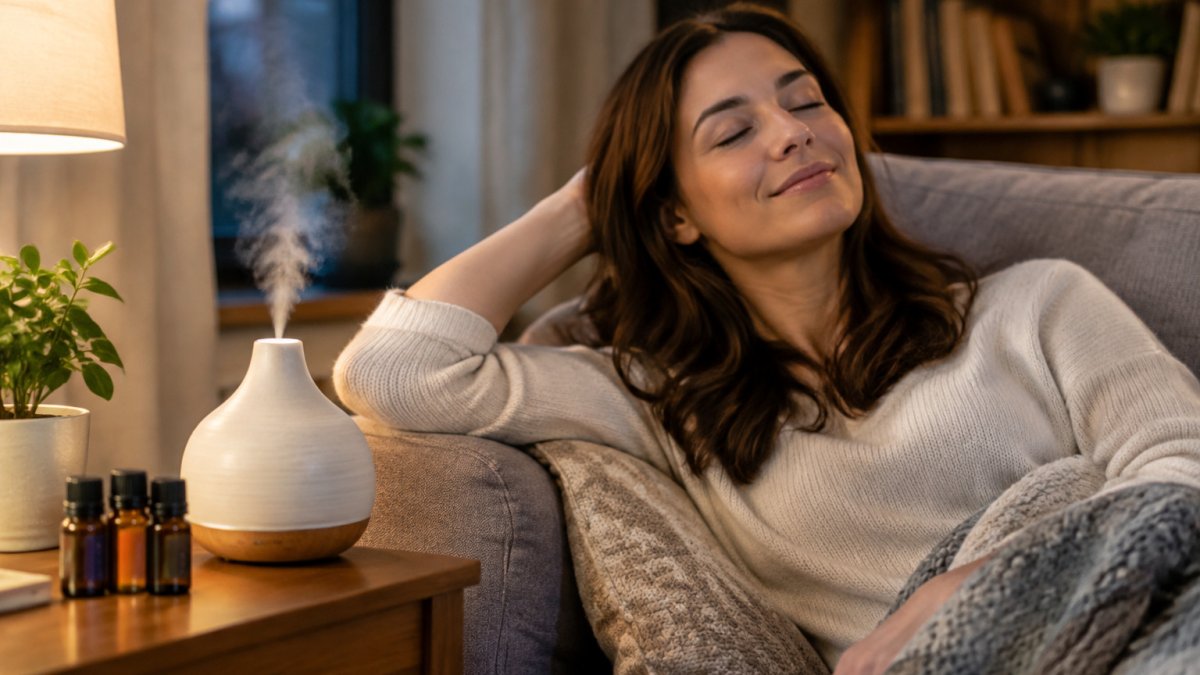
Lavender and chamomile blends are a common starting point for evening wind-down. Bergamot works well in a shared room during the day. Start with fewer drops and add more only if you want a stronger scent.
- Clean the diffuser weekly to prevent mineral buildup
- Keep the unit out of reach of pets and children
- Stop using it if you notice headaches or irritation
Inhalation, Bath and Topical Methods Explained
There are three main ways to use essential oils at home. Each one works differently, so choose the method that fits your day.
Direct inhalation means opening the bottle and breathing in the scent for a few seconds. Place one drop on a tissue or cotton pad and hold it near your nose. Keep the bottle capped between uses.
Bath use works well at the end of the day. Mix 3 to 5 drops into a carrier such as unscented bath oil or a tablespoon of milk before adding it to the water. Adding oil directly to water can cause skin irritation because the oil floats on the surface.
Topical application means applying diluted oil to the skin, usually on the wrists, neck or chest. Always mix oil with a carrier first, such as fractionated coconut oil or sweet almond oil.
Safe Dilution and Patch Testing
Dilution keeps oils gentle on the skin. A common guideline for adults is a 1 to 2 percent dilution, which means about 6 to 12 drops of essential oil per ounce of carrier oil.
Before using a new blend on a larger area, do a patch test. Apply a small amount to the inner forearm, cover it, and wait 24 hours. Redness, itching or swelling means you should wash it off and skip that oil.
Watch out: never apply undiluted essential oil to the skin, and keep oils away from the eyes and mucous membranes.
Where to Apply Essential Oils for Anxiety
Application points matter when you want a calming ritual. Many people apply diluted oil to pulse points like the wrists and the side of the neck, since the warmth helps the scent linger.
Try a simple routine: rub a small amount between your palms, cup them over your nose and take three slow breaths. Then apply a little to your wrists. Pair this with a few minutes of quiet breathing.
Avoid broad application over large areas of skin, and never apply oils to broken or sensitive skin. If you are unsure, ask a pharmacist before you start.
Stress Relief Essential Oil Blend Recipe and Daily Routine
A simple blend is easy to make at home. If you want a daily structure to pair with your oils, how to start a daily meditation practice for beginners walks you through getting started.
Choosing a method. Each method fits a different moment. Direct inhalation is fastest and works anywhere. Diffusion scents a room for 20 to 30 minutes at a time. Diluted topical use lasts longest on the skin and suits a wind-down ritual. Pick one method per context rather than stacking all three.
A stressful moment (2 to 3 minutes). Put one drop on a tissue or cotton pad, hold it a few inches from your nose, and take four slow breaths. Cap the bottle. Stop if the scent feels sharp or you feel lightheaded.
A workday reset (5 minutes). Add 3 drops of bergamot or peppermint to a diffuser and run it for 20 minutes in a ventilated room. If you share the space, ask first, scent preferences vary. Skip this if you notice headaches or irritation.
Bedtime wind-down (10 to 15 minutes). Apply one pump of the diluted roller to the wrists and the sides of the neck, then spend five minutes breathing slowly with dim lights and no screens. Diffuse lavender for 20 to 30 minutes if you prefer scent in the room, and turn the unit off before sleep.
Tracking whether it helps. Pick one method and one time of day, and use it for two weeks. Rate your stress from 1 to 10 before and after each session in a notes app or on paper. A pattern of lower ratings after the session is a better signal than a single good night.
When to stop. Stop the routine if you notice skin irritation, headaches, nausea, or a new cough, and talk with a clinician if stress or sleep problems persist. Consistency matters more than strength: a five-minute routine done daily often feels more helpful than a long session done once a week.
The article describes four practical moments for using oils, each with a different method and time.
| Moment | Method | Time |
|---|---|---|
| Stressful moment | Tissue or cotton pad, held near nose | 2 to 3 minutes |
| Workday reset | Diffuser in a ventilated room | 5 minutes |
| Bedtime wind-down | Diluted roller on wrists and neck | 10 to 15 minutes |
| Tracking results | One method, one time of day | Two weeks |
Using Essential Oils for Relaxation and Sleep, Plus Safety Precautions
Many people use essential oils as part of a bedtime ritual. Lavender in a diffuser or a diluted roller on the wrists is a common choice.
Some people also support their evening routine with minerals. Nature's Lab Gold Magnesium Glycinate - 120 Capsules is a magnesium glycinate supplement you can consider alongside your oil routine, and it is priced at $16.99.
Safety is where most aromatherapy guides stay vague. The practical rules below are the ones that matter most at home.
Dilution and skin safety. For adults, a common range is 1 to 2 percent essential oil in a carrier oil, roughly 6 to 12 drops per ounce of carrier. Sensitive skin, the face, and the neck do better at the lower end. Never apply undiluted essential oil to skin, and keep oils away from the eyes, nostrils, and mucous membranes.
Patch test before first use. Apply a small amount of the diluted blend to the inner forearm, cover it, and wait 24 hours.
Ingestion. Do not swallow essential oils unless a licensed healthcare professional has told you to. Many oils are toxic in small amounts, and some interact with medications.
Pregnancy and nursing. Check with an obstetric clinician before using any essential oil. Some oils are traditionally avoided during pregnancy, and the evidence for safe use is limited.
Children. Keep bottles out of reach, and do not apply essential oils to infants or young children without pediatric guidance.
Pets. Many essential oils, including tea tree, eucalyptus, peppermint, and citrus, can be harmful to cats and dogs.
Asthma and respiratory conditions. Strong scents can trigger symptoms in some people. Start with one drop in a large, ventilated room, and stop if you notice coughing, wheezing, or shortness of breath.
When to stop. Stop using an oil if you notice headaches, nausea, dizziness, skin irritation, or a new cough. Symptoms that persist after you stop, or that are severe, warrant a call to a clinician.
Learn more about natural approaches in Natural Sleep Aids for Stress Relief: A Comparison to see how oils fit beside other options.
Starting Your Calming Routine with Quality Oils and Supplements
Start small. Pick one oil, one method and one time of day. Use it for two weeks, then decide whether it fits your life.
Store oils in dark glass bottles, away from heat and direct sunlight. Tightly capped bottles keep their scent longer. Check the label for a shelf life and replace any oil that smells sharp or changes color.
Our recommendation is to keep the routine simple and safe. For a practical start, read 7 Best Essential Oils for Deep Relaxation and Sleep to find oils that suit your evenings. If you want a daily structure, How to Create a Mindful Morning Routine at Home shows how to anchor the habit.
Feeling stressed by a long day at your desk is common, and small habits can help you reset. At thewellbeingshop.com, we curate tools that support calm, intentional routines at home. Explore our selection and find what fits your evenings.
Frequently Asked Questions
What is the best essential oil to relieve stress?
Lavender is the oil most often chosen for stress relief, and it is widely used in diffusers and bath routines. Roman chamomile, bergamot and sweet marjoram are also popular for calming effects. Research on essential oils and stress is still limited and mostly small-scale, so set realistic expectations. Start with one oil, use it at a low concentration, and notice how your body responds over a week or two before adding others.
Where should you apply essential oils for anxiety?
Common options include the wrists, the back of the neck, and the chest, where a diluted oil can be applied and breathed in gently. Many people also inhale oils directly from a cotton ball or a diffuser placed across the room. Always dilute essential oils in a carrier oil such as jojoba or fractionated coconut oil before applying them to skin, and do a patch test first to check for irritation.
Can you put essential oils directly on your skin?
Most essential oils should not be applied undiluted. A common guideline for adults is about 1 percent to 2 percent dilution, roughly 1 to 2 drops of essential oil per teaspoon of carrier oil. Some oils, such as peppermint and clove, can irritate skin even when diluted. Do a patch test on a small area and wait 24 hours before wider use. Keep oils away from the eyes and mucous membranes.
Do essential oils actually work for anxiety?
Evidence is promising in some small studies, particularly for lavender, but results are mixed and high-quality trials are limited. Essential oils should not replace medical care for anxiety disorders. If anxiety interferes with daily life, talk with a healthcare provider. Pregnant people, children, people with asthma, and anyone taking medication should check with a clinician before using essential oils.
