


 Link label

Intentional Living Habits: A Guide to Physical Balance
Last Updated: November 6, 2026
Quick Summary
Intentional living habits for physical balance are daily actions you choose on purpose to keep your body steady, strong, and aligned, covering movement, recovery, and the small routines in between. Build them one at a time: pick one habit and one cue, shrink it until it feels easy, attach it to something you already do daily, and track it with a check mark. Add the next habit only after two weeks of consistency.
- Balance is a skill that responds to reps, so train it on purpose rather than relying on luck.
- A daily stretch of five to ten minutes beats one long session on the weekend.
- Stacking five new habits in week one is the fastest way to quit by week three.
- Start with the single-leg stand and post-meal walk, then add one habit every two weeks.
- Measure progress weekly with the single-leg stand, heel-to-toe walk, and sit-to-stand tests.
Table of Contents
- Why Physical Balance Starts With Intentional Living Habits
- Examples of Intentional Living Habits for Physical Balance
- How to Build a Habit System That Sticks
- 10 Healthy Habits to Try This Week
- Healthy Habits at Home: Setting Up Your Space
- Daily Habits to Improve Life Beyond the Gym
- How to Measure Physical Balance and Track Progress
- Choosing Your First Balance Tools
- Frequently Asked Questions
Why Physical Balance Starts With Intentional Living Habits
Physical balance is the body's ability to stay steady and controlled while you stand, walk, reach, or change direction. It comes from steady practice, not luck. And that practice starts with small, deliberate choices you repeat every day.
This guide from thewellbeingshop.com breaks those choices down into a simple system. You will learn which habits matter, how to build them, and how to track real progress at home.
Here is the core idea: balance is a skill, and skills respond to reps. The trouble is that most people never train it on purpose. They train strength or cardio, then wonder why they feel unsteady on stairs or stiff after long desk hours. A few minutes of targeted work, done consistently, changes that.
Examples of Intentional Living Habits for Physical Balance
Intentional living habits for physical balance are daily actions you choose on purpose to keep your body steady, strong, and aligned. They cover movement, recovery, and the small routines in between.
The list below is not about doing more. It is about doing the right things at the right time.
Movement and Mobility Habits
Start with movement you can repeat. Single-leg stands while the kettle heats. A short walk after lunch. Ten slow ankle circles before you stand up from your desk.
Mobility work matters just as much. Tight hips and stiff ankles throw off your stability more than most people realize. A daily stretch of five to ten minutes beats one long session on the weekend.
If you work remotely, structured daily movement is easier to keep than a vague plan. Our guide to daily movement exercises for remote workers gives you a set you can do between meetings.
Recovery and Rest Habits
Balance training is a stress on your body. Recovery is where the gains lock in. Sleep quality, rest days, and stress management all support steady footing.
A common mistake is skipping rest because progress feels slow. In practice, tired muscles wobble. Build rest into the plan instead of treating it as lost time.
- Aim for a consistent bedtime, even on weekends
- Take one full rest day each week
- Use deep breathing for five minutes before bed
- Alternate hard balance work with easy walking days
How to Build a Habit System That Sticks
A habit system is a fixed set of cues and routines that make the right action automatic. Most routines fail because they rely on motivation. A system relies on structure.
Follow these steps:
- Pick one habit and one cue. Example: after you pour morning coffee, do ten single-leg stands.
- Shrink it until it feels easy. Two minutes counts.
- Attach it to something you already do daily.
- Track it on a simple calendar with a check mark.
- Add the next habit only after two weeks of consistency.
Need a model to copy? Our breakdown of how to create a mindful morning routine at home shows what a repeatable structure looks like in practice.
Watch out: stacking five new habits in week one is the fastest way to quit by week three. One habit at a time is the rule.
10 Healthy Habits to Try This Week
These ten habits are simple, short, and safe to start now. Pick two or three, not all ten. Each one is chosen because it trains a specific piece of physical balance: ankle stability, hip mobility, single-leg control, postural endurance, or recovery.
- Single-leg stand while brushing your teeth. Stand on one foot for the first half of brushing, switch for the second half. Hold a countertop if needed. This trains ankle and hip stabilizers in a low-risk setting.
- Ten-minute walk after one meal. Walking after eating supports digestion and gives your gait cycle a daily rep. Keep the pace easy enough to talk.
- Five slow squats before every coffee refill. Sit back as if reaching for a chair, keep knees tracking over toes, stand tall. This builds the leg strength that catches you when you stumble.
- Five minutes of calf and hip stretching each evening. Tight calves limit ankle range, and stiff hips force your torso to compensate. Hold each stretch 20 to 30 seconds without bouncing.
- A glass of water with every meal. Mild dehydration can leave you lightheaded, which shows up as wobble during standing tasks. Pair water with meals so it becomes automatic.
- Stand and move for two minutes every hour of desk work. Set a timer. Walk to the kitchen, do ten heel raises, or march in place. Long sitting stiffens hips and ankles.
- Three minutes of slow breathing before bed. Inhale through the nose for four counts, exhale for six. This calms the nervous system and supports sleep quality, which affects next-day steadiness.
- Consistent sleep and wake times. Aim for the same window seven days a week. Most adults need seven to nine hours; a consistent schedule matters as much as total hours.
- Heel-to-toe walks down a hallway. Walk a straight line placing the heel of one foot directly in front of the toes of the other. Do one pass each direction. This trains dynamic balance and narrows your base of support safely.
- Phone away for the last thirty minutes of the day. Dim light and a wind-down routine support melatonin release and sleep onset, which in turn supports recovery from balance training.
Ten healthy habits sound like a lot. Two done daily beats ten done once. A common pattern is to start with the single-leg stand and the post-meal walk, then add one habit every two weeks once the first two feel automatic.
Adaptations by ability and life stage. Beginners and older adults should hold a sturdy counter or chair for single-leg stands and heel-to-toe walks until confident. People returning after a break should start with the walk and the breathing habit, then add strength work. If you have a diagnosed balance disorder, neuropathy, or recent joint surgery, treat this list as a conversation starter with your clinician rather than a prescription.
Watch out: doing single-leg stands or heel-to-toe walks in socks on tile or on a slippery floor invites a fall. Use a firm, clear surface and keep a counter within arm's reach.
Healthy Habits at Home: Setting Up Your Space
Your environment decides whether habits happen. If your mat is buried in a closet, you will skip it. If it sits in the open, you will use it.
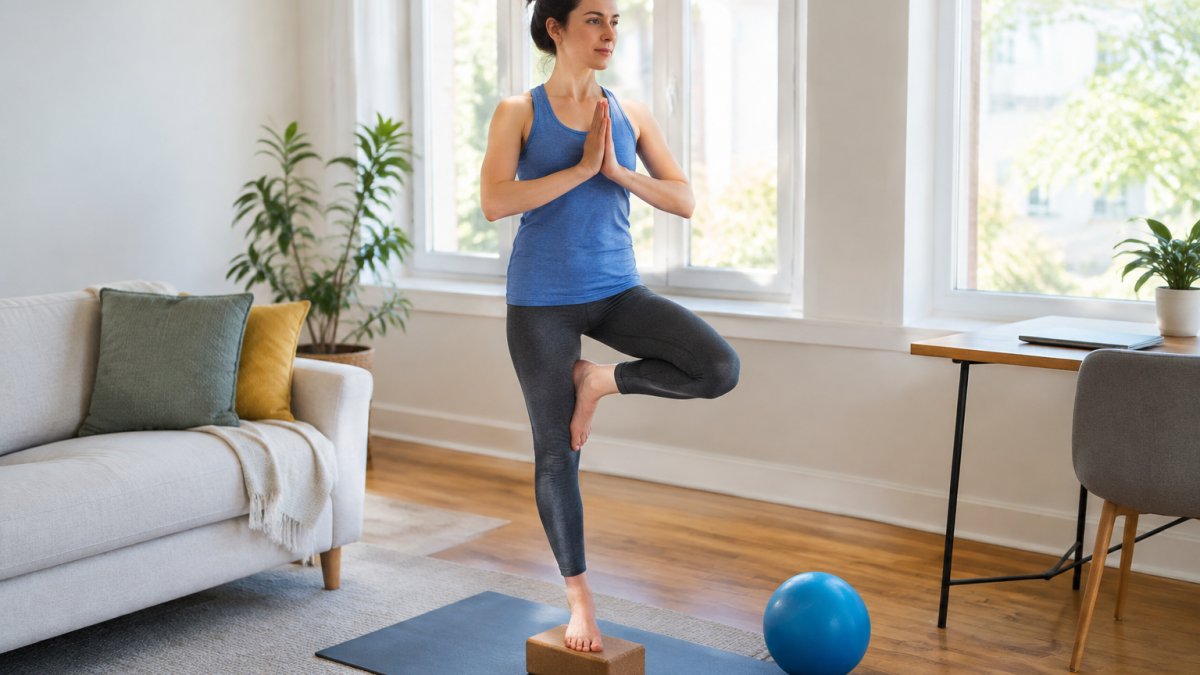
Set up one small, clear space. A corner with a mat, a ball, and blocks is enough. Keep it visible and keep it easy to reach.
Use cues, not willpower. Attach the habit to something already in your environment. Put your balance mat next to the kettle so morning single-leg stands happen while water heats.
Design for the balance habits you chose. If your habit is the post-meal walk, leave walking shoes by the door and check the weather the night before.
Low-cost alternatives. You do not need a dedicated room. A hallway works for heel-to-toe walks. A sturdy kitchen counter works for supported single-leg stands.
Remove fall hazards. Balance practice goes wrong when the floor is cluttered or slick. Clear loose rugs, cords, and pet toys from the practice area.
Set up work and rest zones. If you work from home, separate the desk from the practice corner so the mat is not a visual reminder of unfinished work.
Watch out: a mat left in a high-traffic walkway is a trip hazard, and a ball left on the floor near stairs is worse. Store tools where they are visible but out of the path of travel.
For a deeper look at arranging your home around better routines, read how to design a home environment for healthy habits.
Daily Habits to Improve Life Beyond the Gym
Daily habits to improve life go beyond workouts: how you sit, how you stand, how you carry groceries, how you climb stairs.
Treat everyday movement as training. Carry bags evenly on both sides. Stand up without using your hands when you can. Take the stairs when your knees feel good.
Mental and emotional well-being belong here too. Steady breathing and short walks lower stress, and a calmer body balances better. Our article on balancing physical and mental health daily covers that connection in more depth.
How to Measure Physical Balance and Track Progress
You can measure balance at home with simple, repeatable tests. Track the same test the same way each week.
Try these:
- Single-leg stand: time how long you can hold each side with eyes open, then closed.
- Heel-to-toe walk: count how many steps you take in a straight line without a wobble.
- Sit-to-stand: count how many times you can rise from a chair in thirty seconds.
Write the numbers down. If one side is clearly weaker, give it extra practice.
Watch out: testing on a slippery floor or in socks on tile invites a fall. Use a firm, clear surface and keep a counter nearby.
Choosing Your First Balance Tools
You do not need much to start. A small ball, a pair of blocks, and a band cover most home balance work.
A mini Pilates ball supports core strengthening and balance work. Cork blocks give you firm, non-slip support for alignment and supported poses.
Our Pilates ball, ring and resistance band set bundles the basics in one kit if you want to start with a single purchase. The Delta 20cm mini Pilates ball is a good low-cost first pick. The cork yoga block set suits anyone who wants stable support for stretches and balance holds.
Best for: beginners building a home routine. Skip if: you already own a full setup.
Start with one tool. Add more when the habit holds.
Steady balance is built, not found. The challenge is starting small and staying consistent when work and life get busy. At thewellbeingshop.com, we curate fitness and recovery tools designed for exactly that: small daily habits that add up to real change. Our mini Pilates balls, cork blocks, and bundled sets give you simple, durable gear for a home practice that lasts. Get started with thewellbeingshop.com and build a steadier, stronger you, one habit at a time.
Frequently Asked Questions
What are some examples of physical wellness habits?
Physical wellness habits include daily walking, strength training two to three times a week, stretching, and balance drills like single-leg stands. Add hydration, consistent sleep, and short breathing breaks to manage stress. At home, a mini Pilates ball or cork yoga blocks can make these habits easier to repeat. The goal is consistency, not intensity: small daily actions build physical balance over time.
How can I build healthy habits into my daily routine?
Attach a new habit to something you already do. Do a 30-second balance hold while the coffee brews, stretch during a meeting break, or use a mini Pilates ball for core work before your lunch. Start with one habit, keep it under five minutes, and track it for two weeks. Once it feels automatic, add the next one. This stacking approach supports physical balance without overhauling your schedule.
How do I create a balanced wellness routine at home?
Cover four areas: movement, recovery, nutrition, and stress management. A simple home routine might include a 10-minute mobility session, a short walk, a protein-rich meal, and five minutes of deep breathing. Keep equipment visible so it is easy to use. A cork yoga block set or Pilates ball stored next to your desk removes friction and makes physical balance practice part of your normal day.
How long does it take to improve physical balance?
Single-leg stands, heel-to-toe walking, and core work on a mini ball train the muscles and reflexes that keep you stable. Progress depends on consistency, so short daily sessions beat one long weekly workout. If you have an injury or balance disorder, check with a healthcare provider before starting.
